





Weekly market update
Investment markets and key developments
Weekly Market Update: AI credit fears hit shares, Investors flocking to safe haven (because of CoreWeave?), Oil still high but global growth still resilient, and Weak jobs data gives RBA room to pause.
10 min read

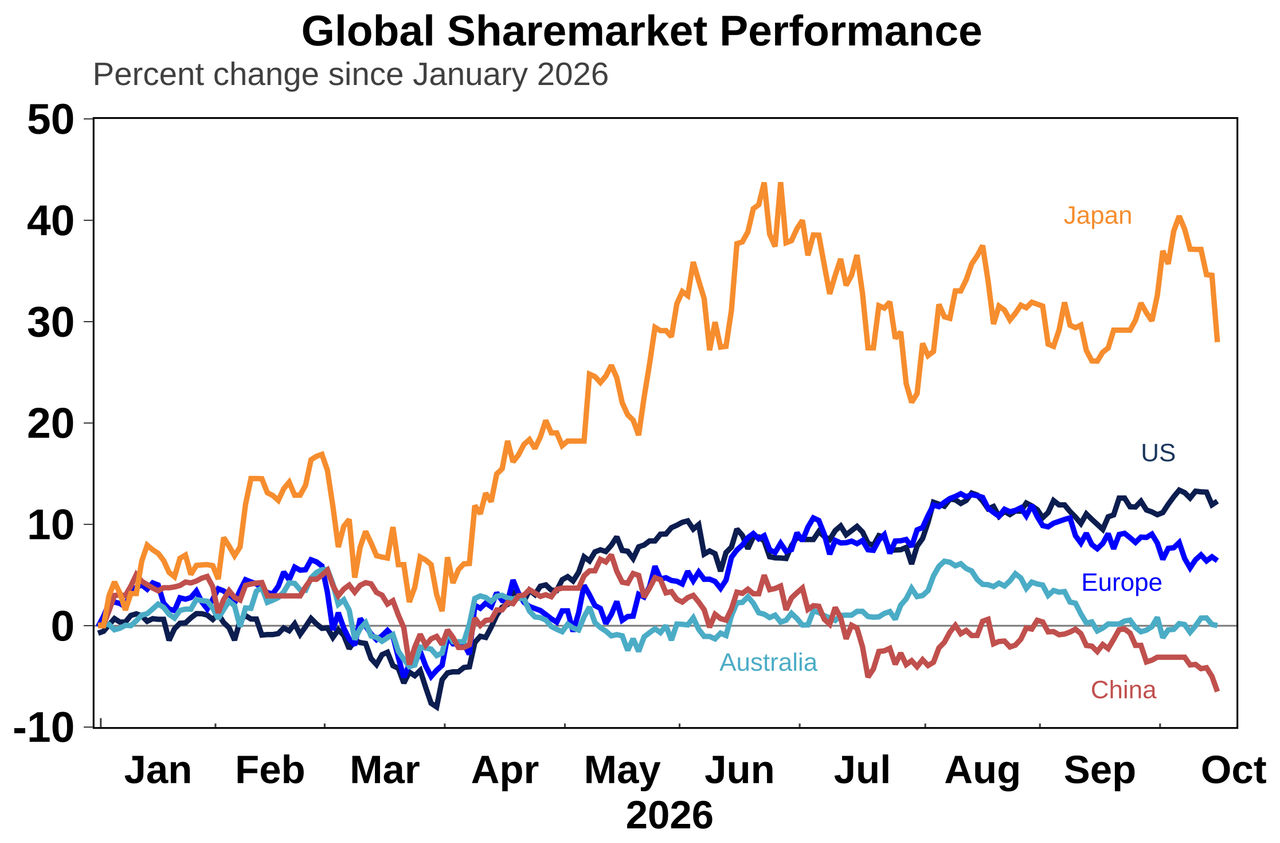
Global shares were generally weaker this week as investors shifted away from risk, with technology stocks leading the decline while defensive sectors and safe-haven assets such as bonds and gold gained some support. The S&P 500 fell 0.9% over the week, European shares lost 0.1%, while the tech-heavy NASDAQ dropped 2.4%. East Asian markets also came under pressure given their AI exposure, with Chinese shares down 3.1%, Japanese equities falling 5.1%, and South Korea's KOSPI triggering circuit breakers and leaving the index 15.8% below a week ago. Surprisingly, the ASX 200 finished the week slightly up (1%), having already underperformed in previous weeks, and also likely because rate hike probabilities were cut back. Australia saw similar sector rotations to global markets, with sharp declines in IT and industrials offset by gains in consumer staples, healthcare, energy, and financials.
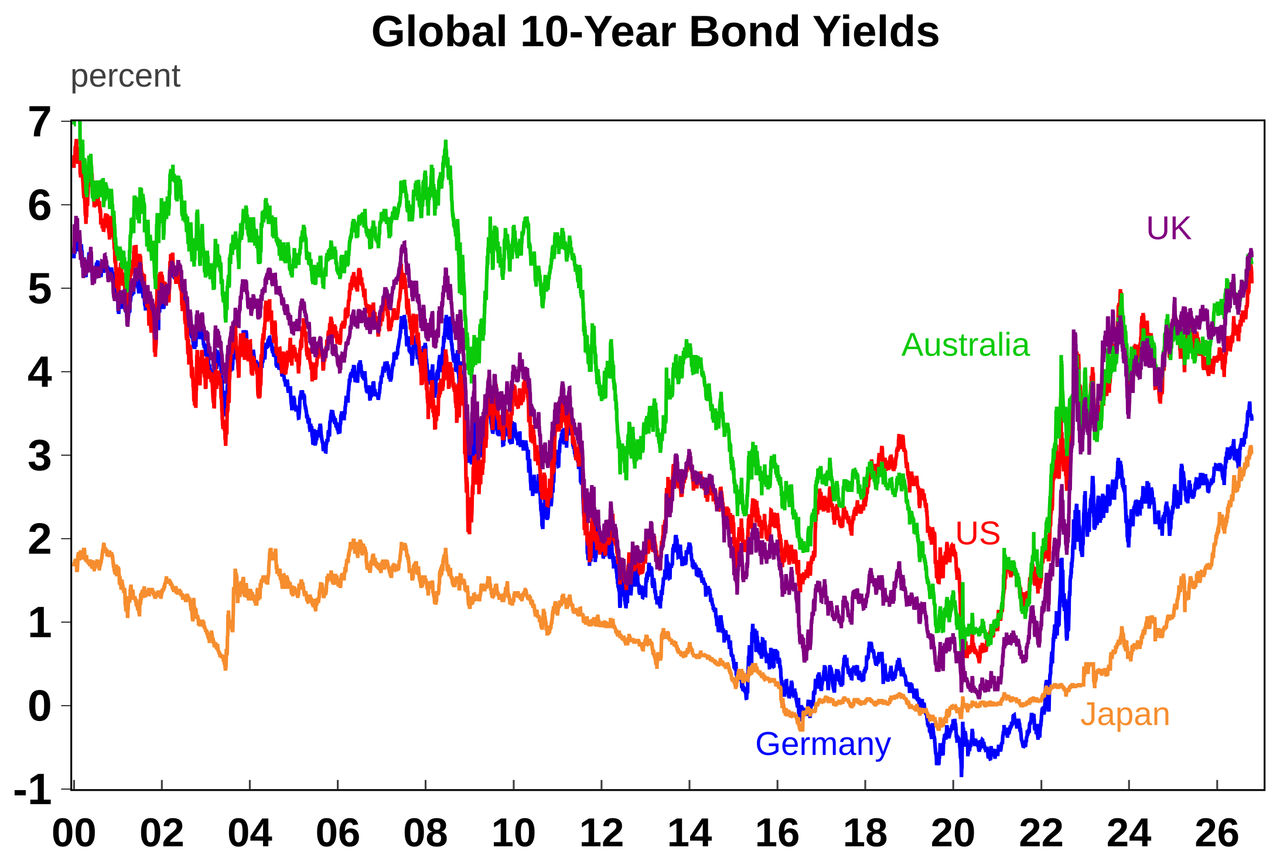
It was surprising to see bond yields ending the week lower, despite inflation data and Fed commentary this week both pointing to a more hawkish stance. US core consumer and producer price inflation were both hotter than expected, pointing to a core PCE reading for September of ~3.2%yoy (remember the Fed’s target is 2%), while Fed regional presidents in San Francisco and Cleveland both signalled worries about consecutive supply shocks pushing inflation expectations higher. Over the week, yields initially climbed higher but then fell substantially, with the US 10 year dropping by 18bps to 5.06%, the lowest level in more than three weeks. As a result, Japan, UK, Germany, and Australian government bonds all rallied over the week.
The big falls in bond yields suggest investors are more concerned about the downside AI risks than inflation at the moment. This week, those concerns came into focus at CoreWeave, a cloud computing business. The company borrows heavily (they have issued more than $10bn of high-yield corporate bonds this year) in order to buy NVIDIA’s GPUs and lease them to hyperscalers who train AI models. Concerns about rising debt triggered a selloff in its unsecured bonds due in 2032 to below 80 cents on the dollar (commonly thought of as the distressed threshold), despite still strong growth in revenues. Markets were also pricing in an almost 60% probability of default by CoreWeave in the next five years.
But none of these concerns are new. We have seen this film before with DeepSeek, Moonshot Kimi, and last week’s failed Firmus IPO in Australia. Put simply, investors have long worried that: 1) AI revenues won't be sufficient to recoup the massive upfront investment. 2) AI infrastructure may need to be written down as it ages and depreciates in the meantime (which lowers book value massively), and 3) Rising government bond yields and wider corporate credit spreads are increasing financing costs, making it harder to borrow, refinance, and keep the AI infrastructure buildout going. With capital costs close to 15% (CoreWeave's current 5-year yield to maturity), companies face a very high bar to generate returns just to break even on new investments.
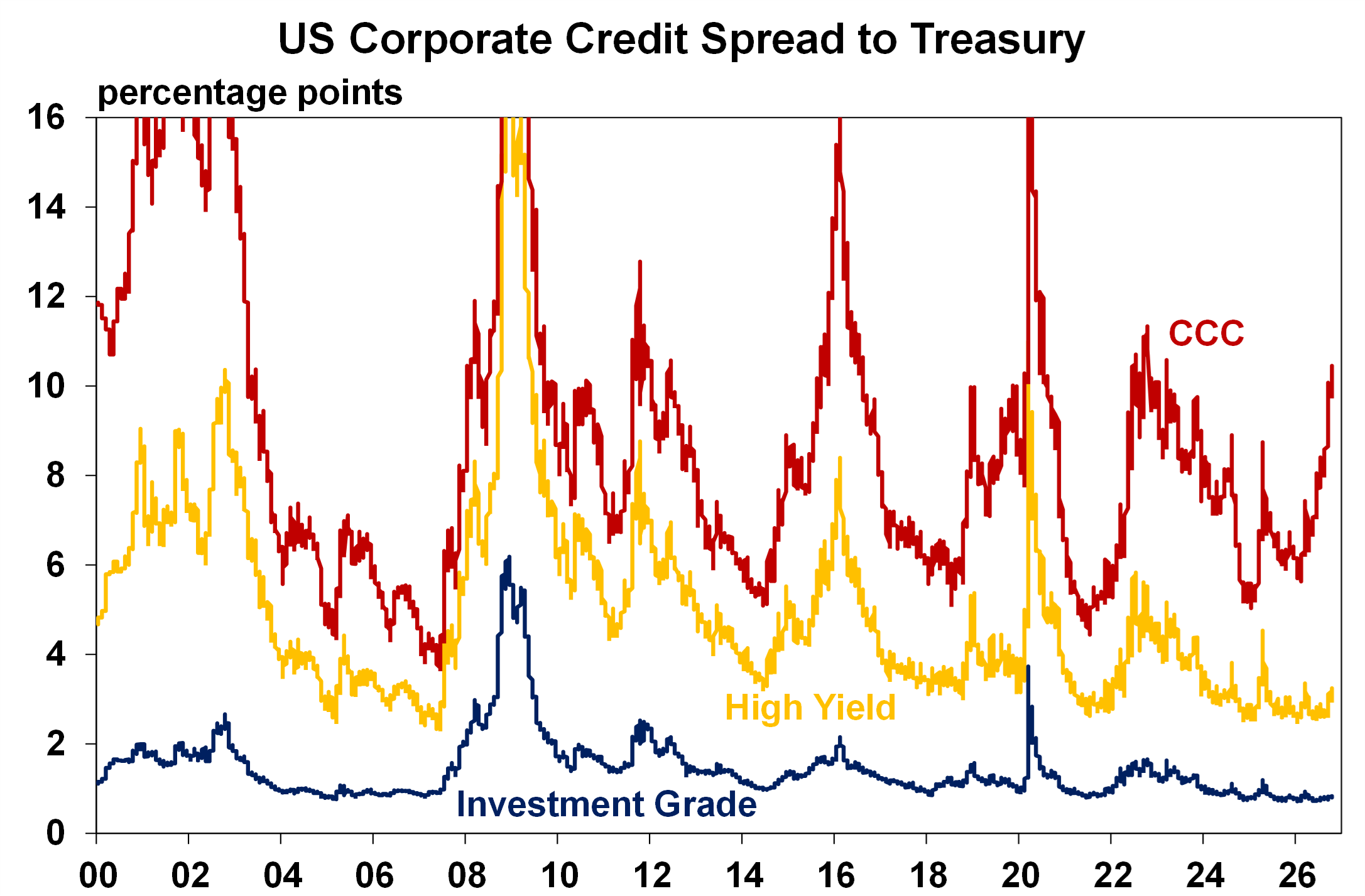
There is also a risk of contagion through bond markets. On one hand, there are signs this may already be happening with last week’s France government bond selloff spilling into the European credit markets, or the recent widening in CCC spreads now starting to affect the wider high yield market, including BB-rated borrowers such as CoreWeave.
This is unsurprising as the AI buildout is rather concentrated. For example, both last week's focus on Firmus, the Australian data centre operator still struggling to secure funding after its abandoned IPO, and this week's spotlight on CoreWeave highlight similarities in their funding models, backbone infrastructure, and operating models. Both companies rely heavily on debt financing, have recently pursued public listings (CoreWeave listed last year), depend on NVIDIA GPUs, and sell AI computing capacity to a small group of hyperscale customers, including Meta and OpenAI.
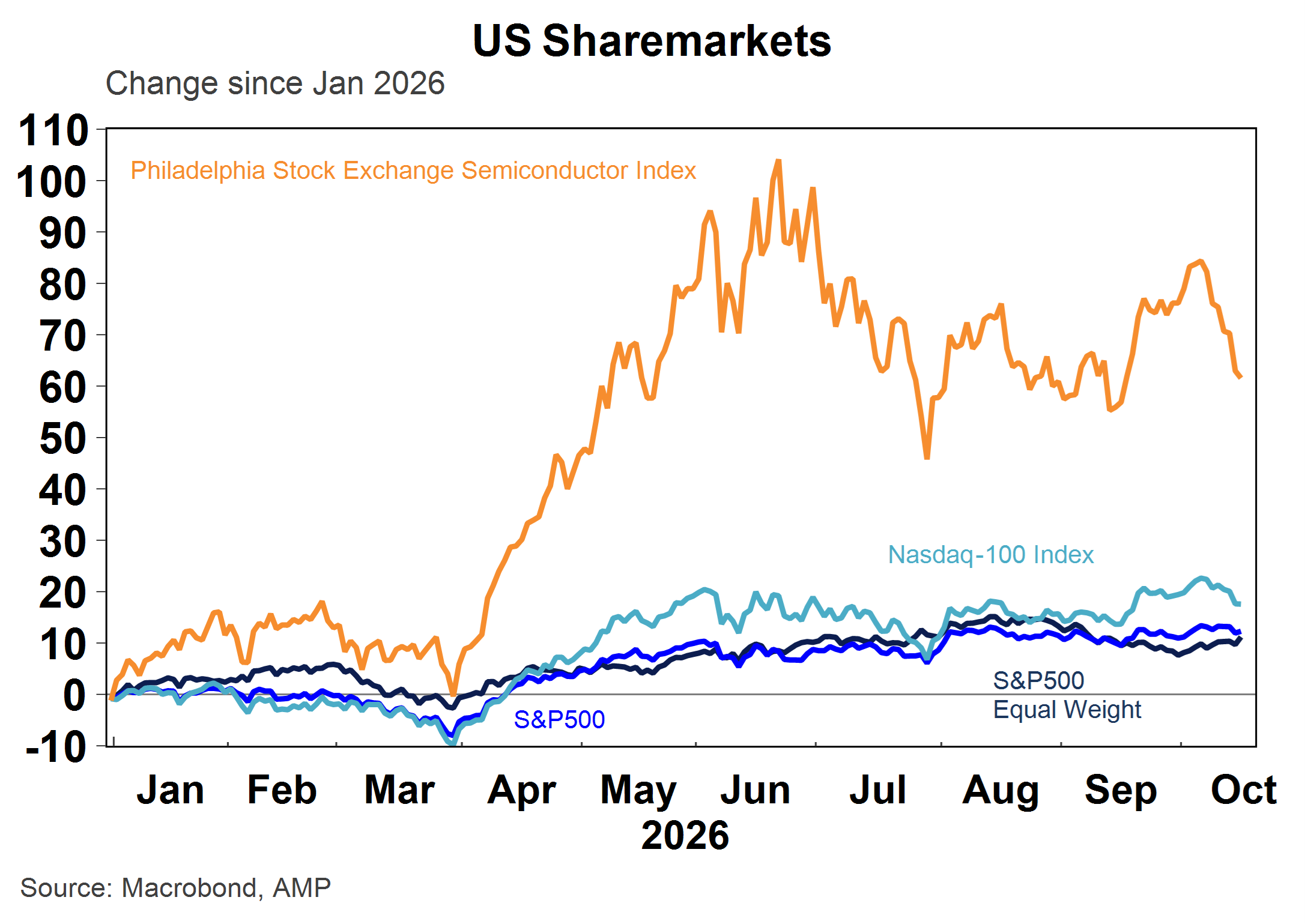
There are also constant fears that stress in credit markets could spill over into equities: the Philadelphia Semiconductor Index, tracking shares of 30 largest semiconductor designers and manufacturers, officially entered a technical bear market this week, falling by 20.9% from its peak in June.
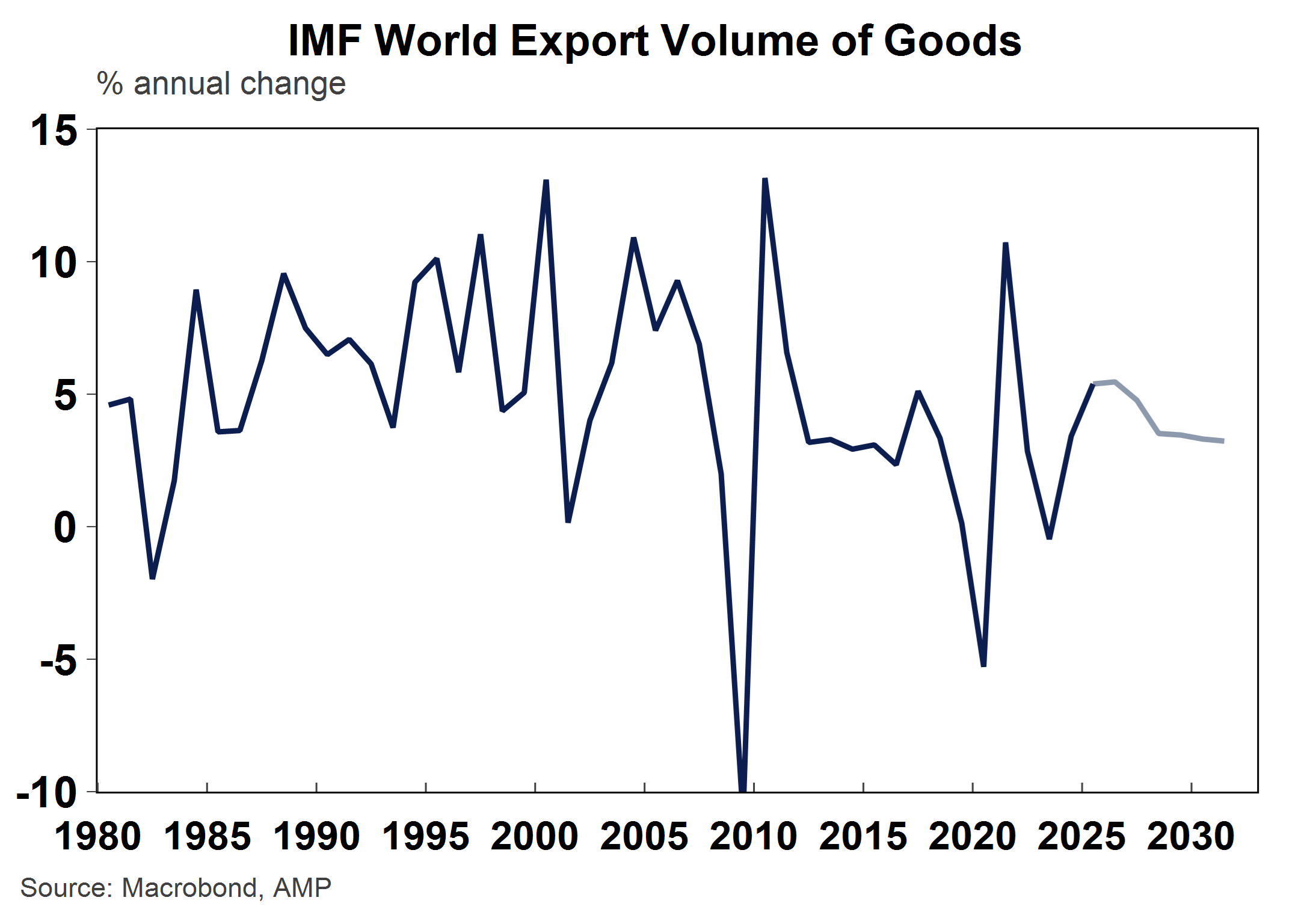
Cross border capital flows are also adding to the risk of contagion across countries: The IMF, in its latest biannual report, forecast strong global trade volume growth of 4.6%yoy in 2026 and 4.7% in 2027, despite ongoing geopolitical tensions and tariffs. Meanwhile over the last month China, Korea, and Taiwan all posted record highs in trade surpluses thanks to rising chips exports. Because these economies save a much larger share of income (~40% of GDP) than the US, much of those surplus funds are invested into US financial assets, helping fund AI investment and enabling hyperscalers to purchase more chips. The circular flow of funds creates a feedback loop and means that any signs of stress can spread quickly across borders.
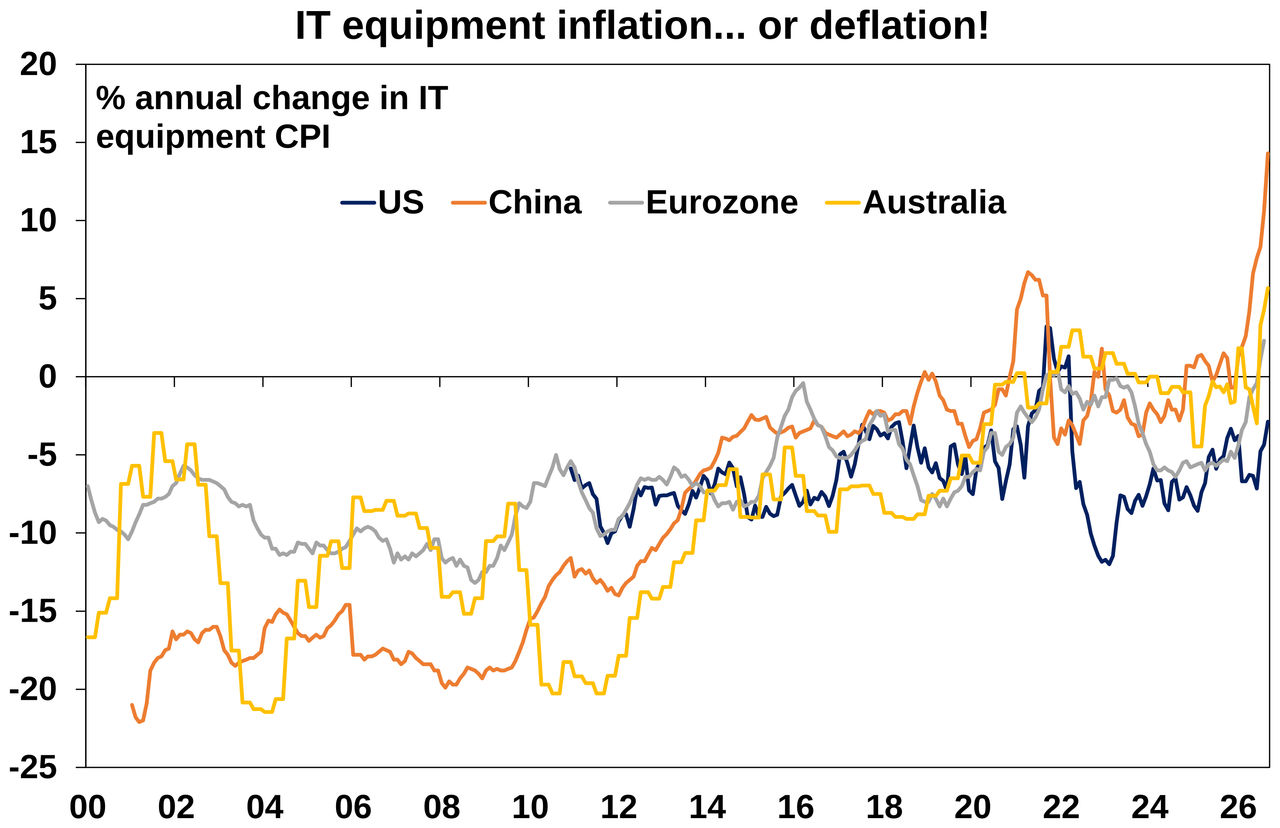
AI is also a source of short-term inflationary pressures for consumer prices, which could push central banks to hike further than otherwise. Recent inflation reports from China, the US and Australia have shown IT equipment inflation surging after decades of deflation, driven by the higher demand for chips and IT accessories. There are also anecdotal reports of higher regional electricity costs in the US given AI data centre demand. Over the long term though we think the inflationary impact is much milder, given that the computing cost for every AI query is still trending down consistently over the last year.
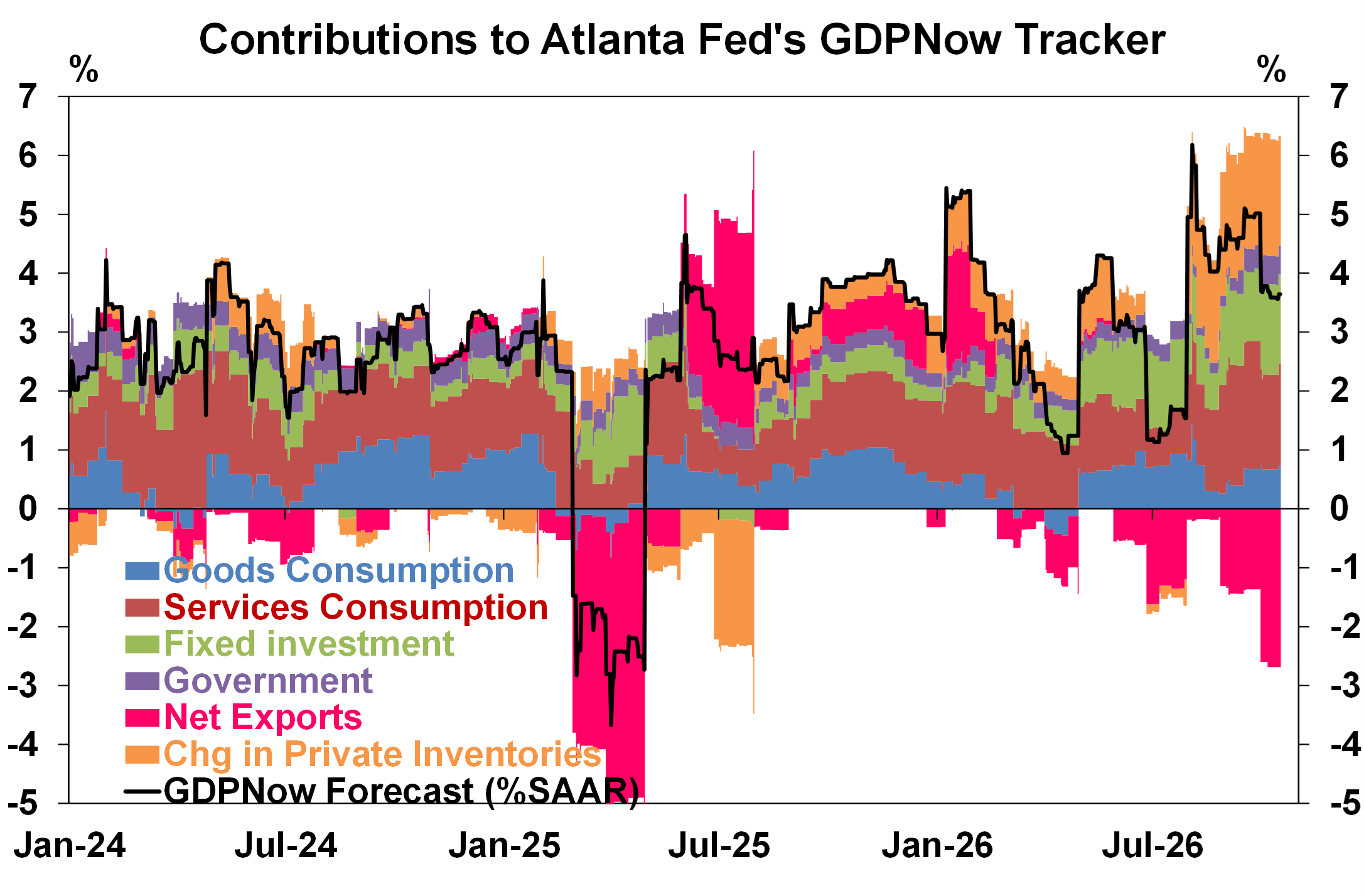
Moreover, with any new wave of investments into new asset classes comes worries and stress, and we are still optimistic on shares on a 12-month basis. We think the AI capex boom can continue for another 2-3 years, given solid fundamentals from the US and global economy. In fact, US GDP nowcast is still running at a very solid 3.6%yoy, supported by household spending on goods & services and business investment, not just AI-related construction. Meanwhile, the IMF also upgraded its global growth forecasts this week (see the Global Economic Events section below). Investment grade credit spreads are still rather contained which is a source of reassurance given that most hyperscalers are IG-rated.
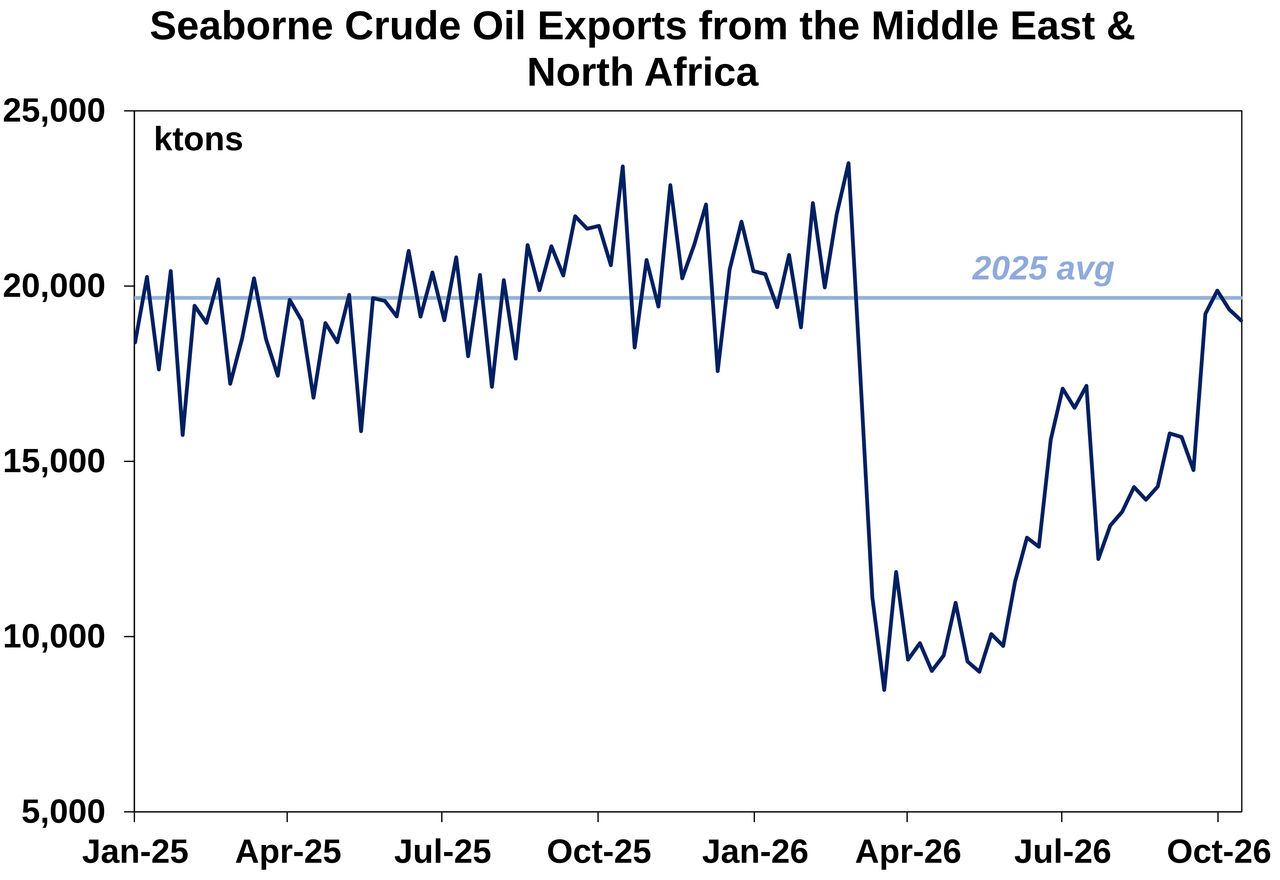
Oil prices are still elevated with Brent crude at almost $106/bbl, despite oil flows recovering back to 2025 average levels. We have previously mentioned the drivers of high oil prices being higher logistics and insurance costs, especially as Iran continued to hit certain shuttle ships travelling through the Strait of Hormuz (eg. this week a Singaporean container sank after being hit by projectiles).
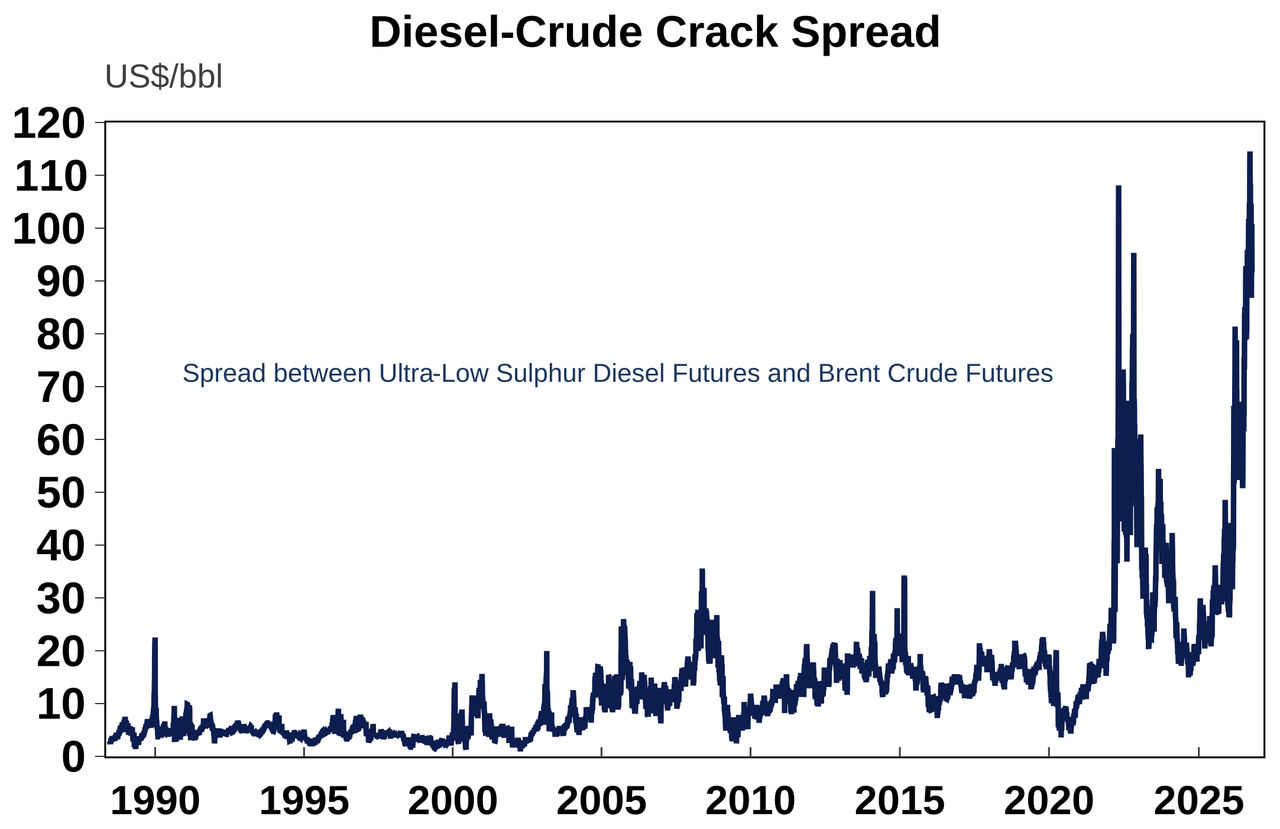
In addition, diesel prices remained at the highest level since the outbreak of the Russia-Ukraine War. Disruptions in the Strait of Hormuz, coupled with recent Ukrainian strikes on Russian refineries, have driven up the cost of refining crude into end products. So despite oil flowing, the world is still experiencing the impacts of elevated energy costs, with farmers and truckers among the hardest hit. President Trump sought to ease the situation by pausing sanctions on Russian diesel exports and authorising the release of 300k tonnes of diesel immediately, followed by 500k tonnes in November and a further 3 million tonnes “within a short period of time”. However, the combined total amounted to just one day of global diesel consumption!
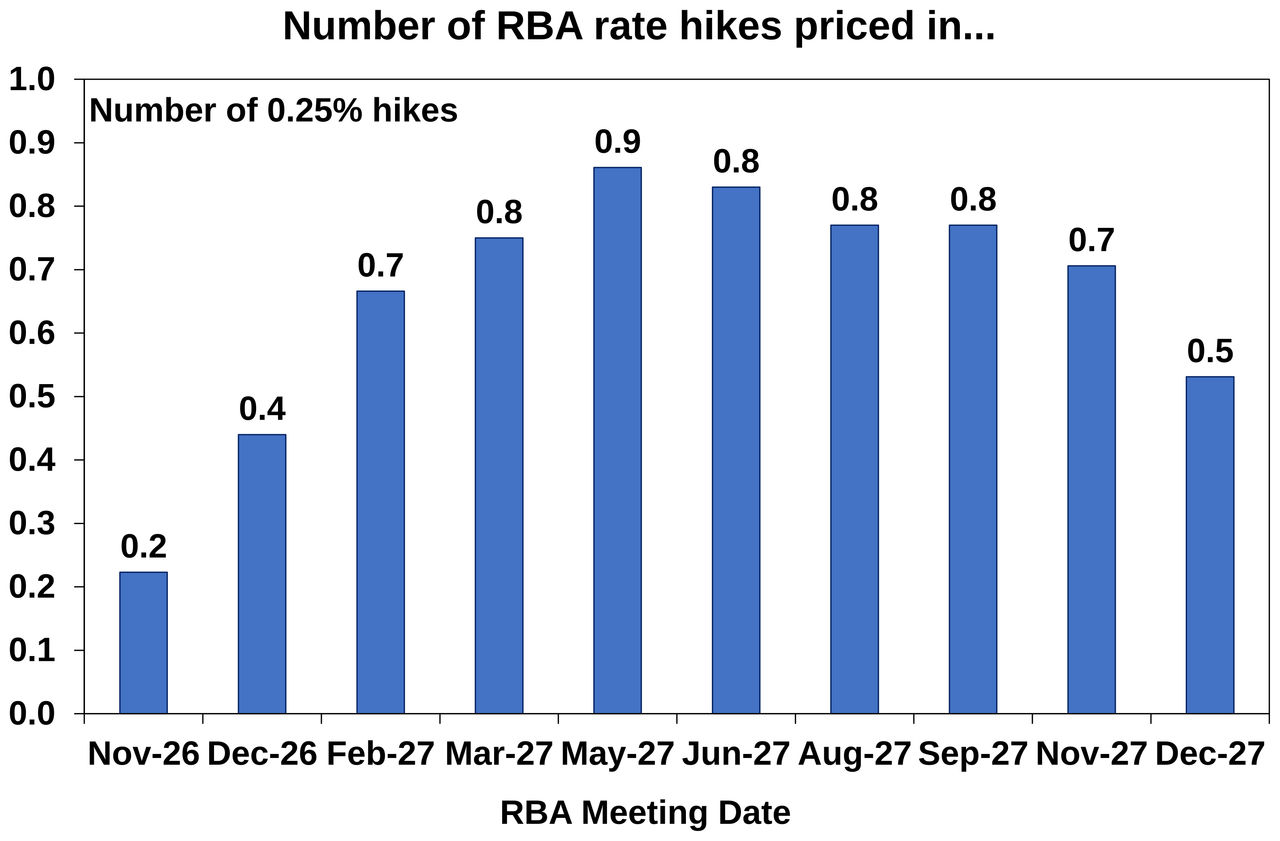
In Australia, would the RBA be concerned by this week’s weaker jobs and sentiment data, both of which fell to their lowest levels since Covid? Probably not too much – as indicated by the very hawkish minutes from the September RBA meeting, when the Board unanimously raised the cash rate to 4.6%. Although the Board judged financial conditions to be “somewhat restrictive” and acknowledged softer consumer spending and labour market conditions, it was clearly more concerned that capacity pressures remained elevated. It viewed July’s stronger-than-expected underlying inflation as evidence of domestic capacity constraints rather than global energy pressures and stated that unemployment needed to rise and growth slow for inflation to return to target. Even if rates rise further and the labour market weakens, the RBA is unlikely to flinch, noting that mortgage holders were “financially stronger than others”, had substantial savings buffers and would remain resilient even if house prices fell 20%. Put simply, the Board sees Australia’s inflation problem as persistent, home grown and has to be fixed through lower economic growth, rather than a temporary external shock.
However, these minutes predate the August inflation data, which suggested July’s 0.5% monthly trimmed mean rise was an outlier, with growth slowing to 0.2% in August. Since then, unemployment has remained at 4.7% for two months, PMI and NAB price surveys have shown no further acceleration in output prices, while Cotality’s asking rent growth slowed sharply to 0.5% in 3Q26 (from 1.6% and 2.1%qoq prior). The RBA will likely see this weakness as necessary to curb inflation, but it also suggests that rate hikes are indeed working and there is no urgency to tighten further. We therefore expect the RBA to hold in November, albeit with a hawkish statement, rather than hike again.
Major global economic events and implications
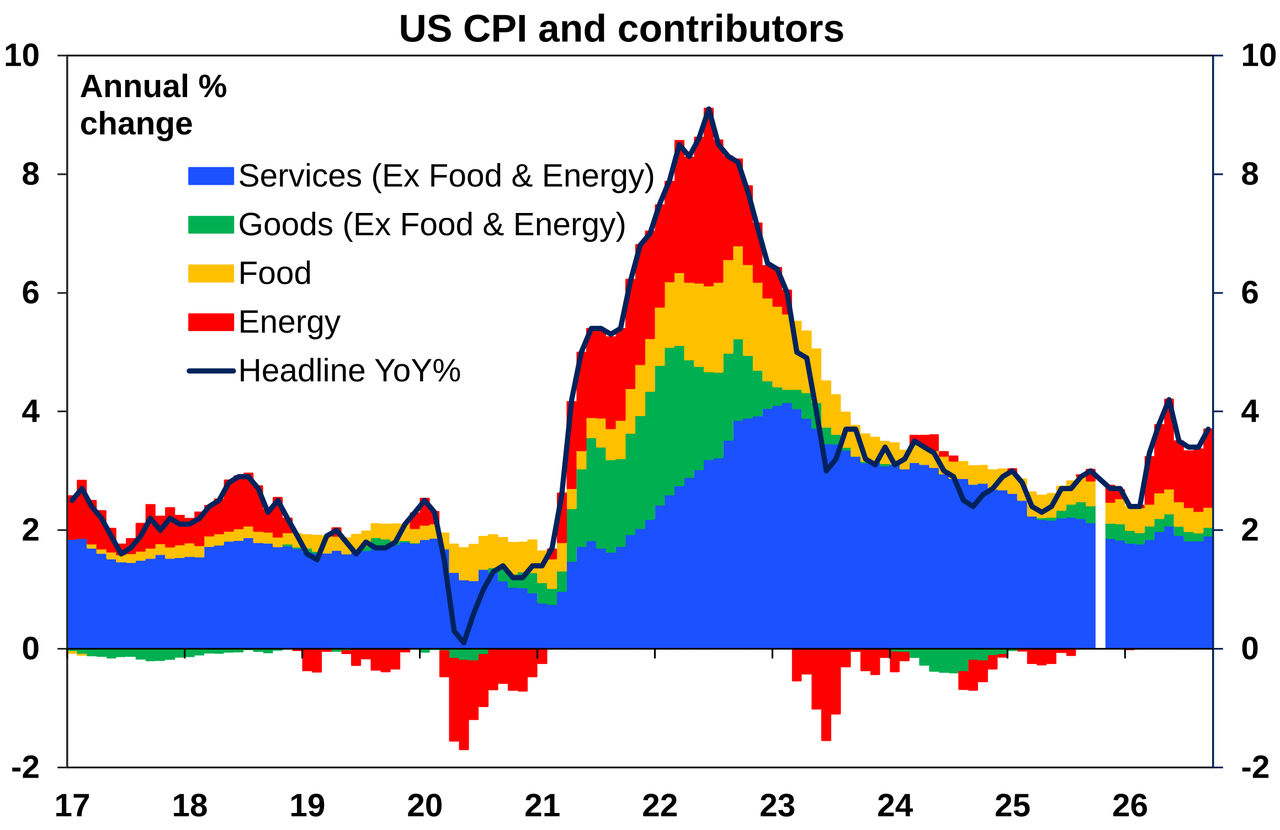
US consumer price index for September came in slightly above consensus, keeping the Fed on a tightening bias but the hike probably would come in December rather than next month. Headline CPI spiked to 0.6%mom or 3.7%yoy (from just 3.4% prior), driven by higher energy costs, which was largely expected. However, core inflation came in at 0.3% over the month or 2.6% on an annual basis, slightly hotter than expectations for a 0.2%/2.5% result. Inflation is still mostly driven by core services including rent, medical care, transportation and education – most of these are essential rather than discretionary spending. So, while there are still upside pressures from energy costs and their passthroughs, we don’t think that a 2.6% core CPI figure is alarming enough for the Fed to raise rates twice in a row.
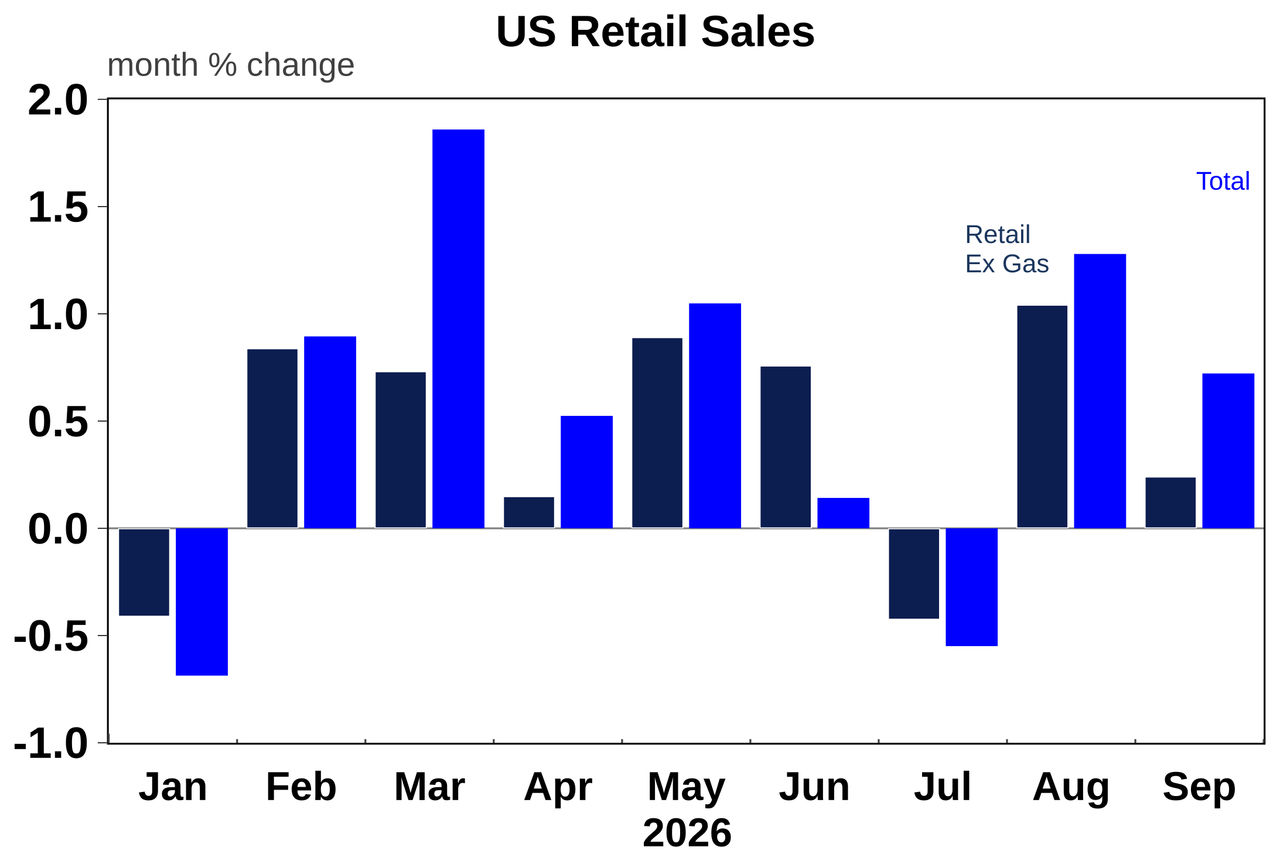
Retail sales also beat expectations, growing by 0.8% in September (vs 1.3% prior and 0.3% consensus forecast). The composition of sales was mixed: higher gasoline prices contributed to most of the growth and retail excluding gasoline was only up 0.2%mom, but there was also strong growth in certain discretionary sectors including electronics (potentially thanks to the new iPhone!) and restaurant spending. Consumers seemed to be somewhat price cautious, with very soft internet sales (0.3%mom vs 2% prior), likely because households were postponing purchases ahead of sales events.
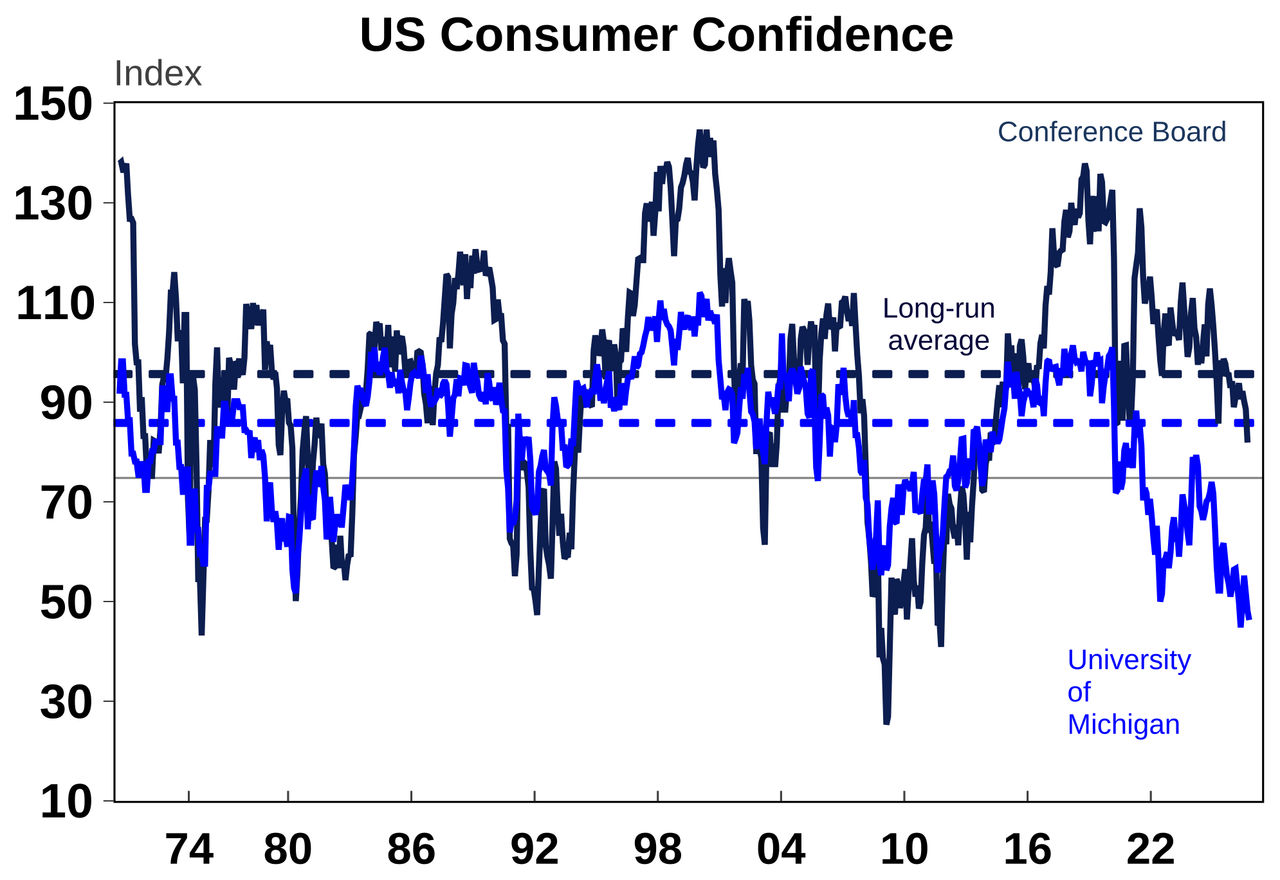
Inflation and retail sales were both strong concurrent indicators, but the leading US consumer confidence figure fell close to a record low (surpassed only by the reading at the start of the Iran War five months ago). The decline was driven by weaker plans to buy durable goods and falling confidence among lower-income households. The price sensitivity of consumers and the weak sentiment readings show that energy prices are squeezing some households’ budgets, although this uneven impact has yet to appear in the hard data.
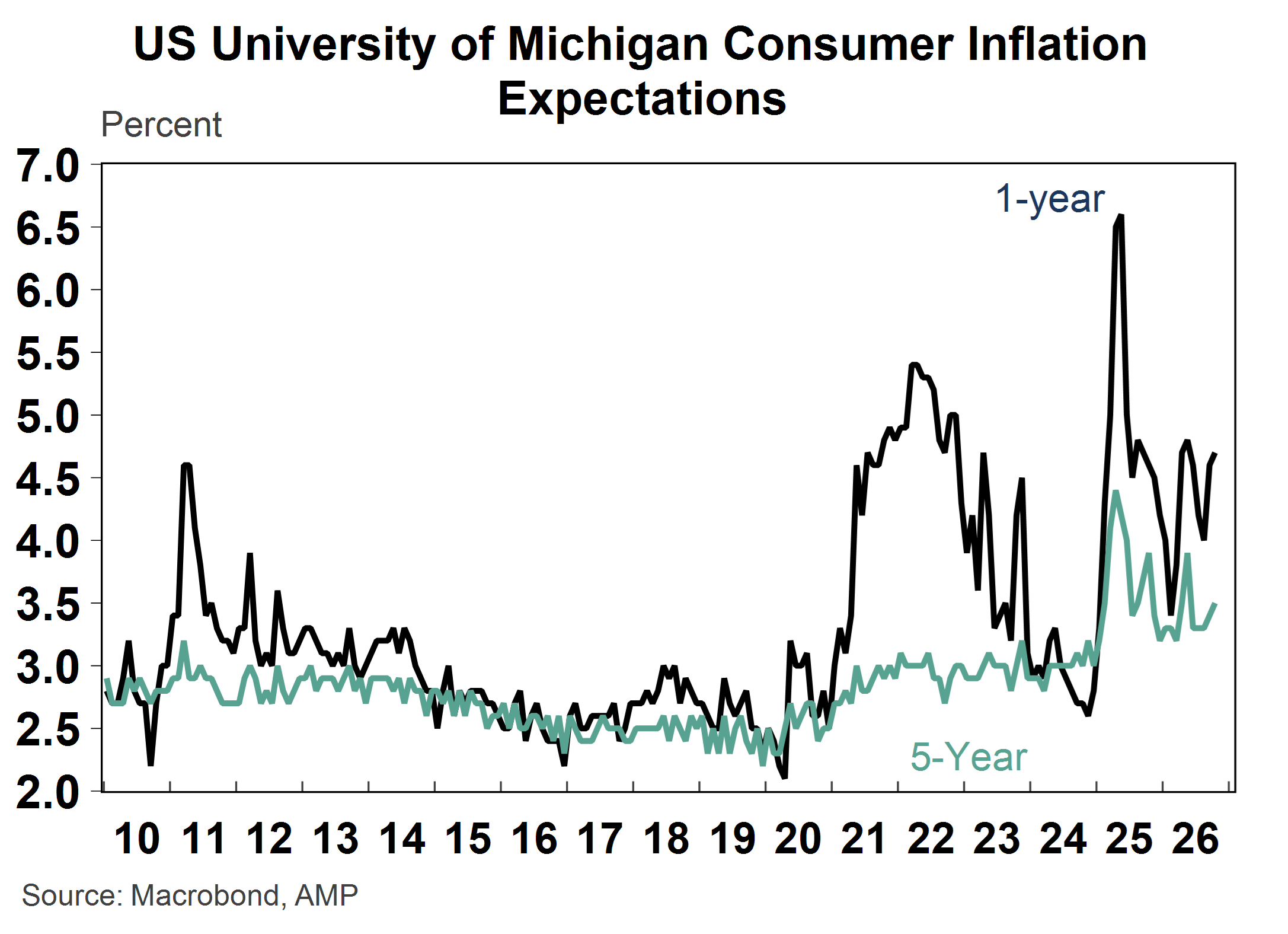
Notably, one-year and five-to-10-year inflation expectations rose for a second consecutive month, to 4.7% and 3.5%, respectively – early signs that expectations may be becoming unanchored, prompting some hawkish comments from Fed officials this week.
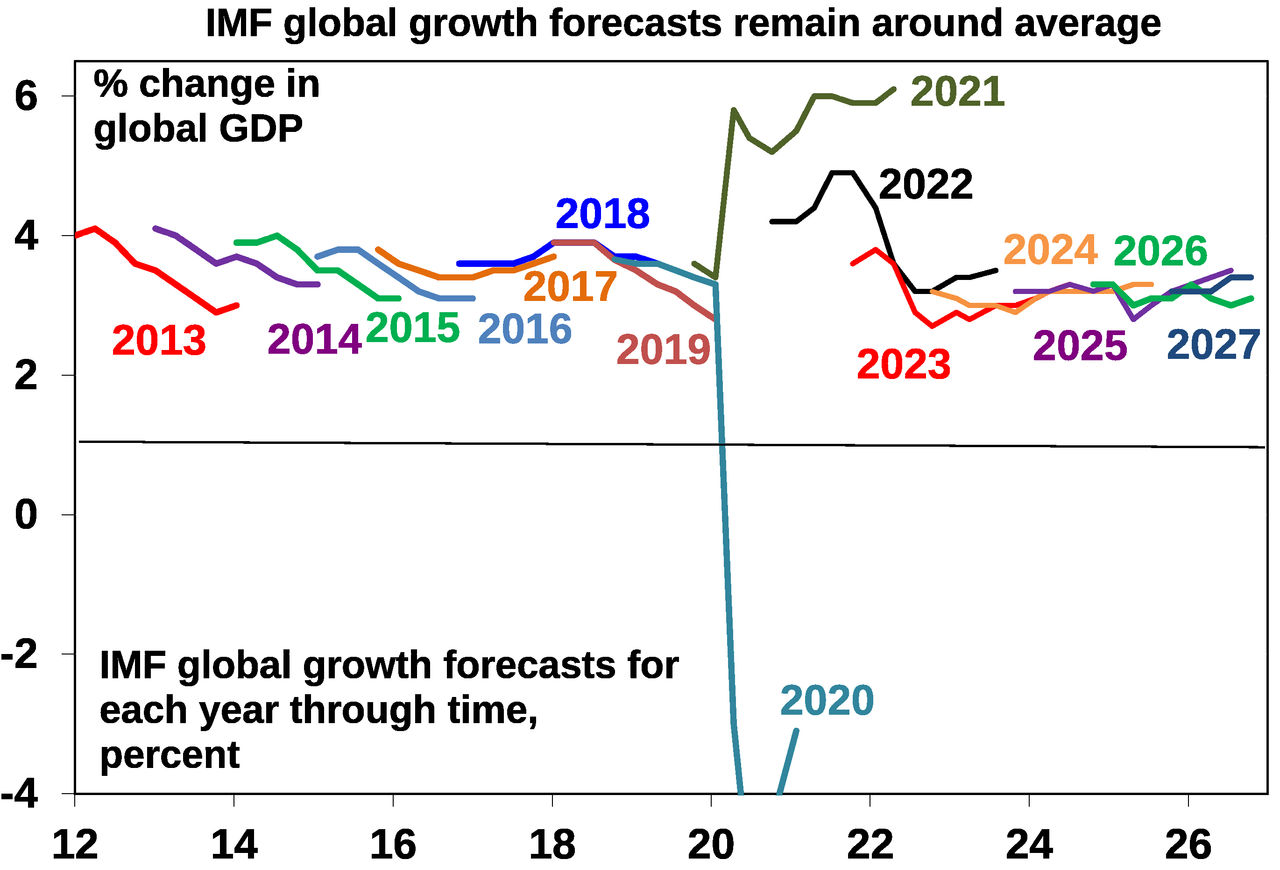
The IMF upgraded the economic outlook for this year slightly (to 3.1%yoy from 3.0% prior) and kept 2027 growth unchanged at 3.4% - basically still forecasting average growth despite energy shocks, higher headline inflation (4.7% in 2026), and central banks’ rate hikes – no wonder why global shares are still doing okay! Related to this, UK GDP also surprised higher at 0.7%qoq for the three months ending in August (vs 0.5% expected). The global economic resilience reflects lower oil dependence, reduced tariff rates compared with 2025, accommodative financial conditions, rising investment in AI and related infrastructure, and fiscal stimulus. However, that fiscal support comes with a cost, with the IMF warning that it is contributing to rising government debt which is already a major risk to markets. IMF research also noted that broad price-suppression measures intended to ease cost-of-living pressures (eg. Australia’s fuel excise cut between April and August) ultimately do not solve the underlying problem. These policies are costly, difficult to unwind and disproportionately benefit higher-income households rather than those under the greatest financial pressure.
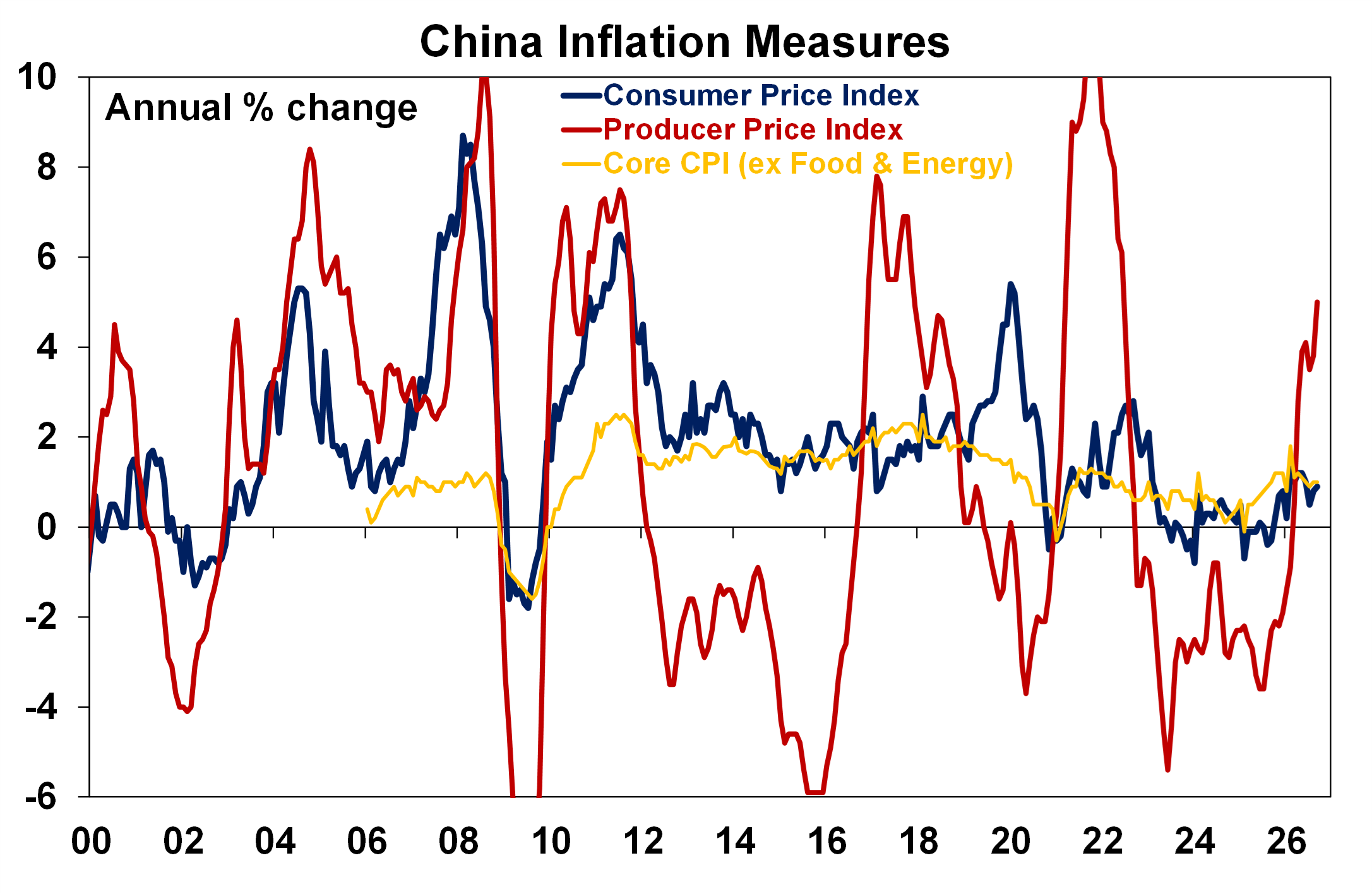
The global inflationary effects of higher oil prices and the AI boom were evident in China’s September data. Producer price inflation jumped to 5%yoy from 3.8% prior. Note that China’s PPI is closely correlated with, and often leads, inflation in developed economies, given China’s role as the “factory of the world”. Consumer price inflation was softer at 0.9%yoy, up from 0.8%, amid subdued domestic demand. Among the consumer spending basket, fuel prices (+14.9%) and communications equipment (+14.3%) recorded the strongest increases.
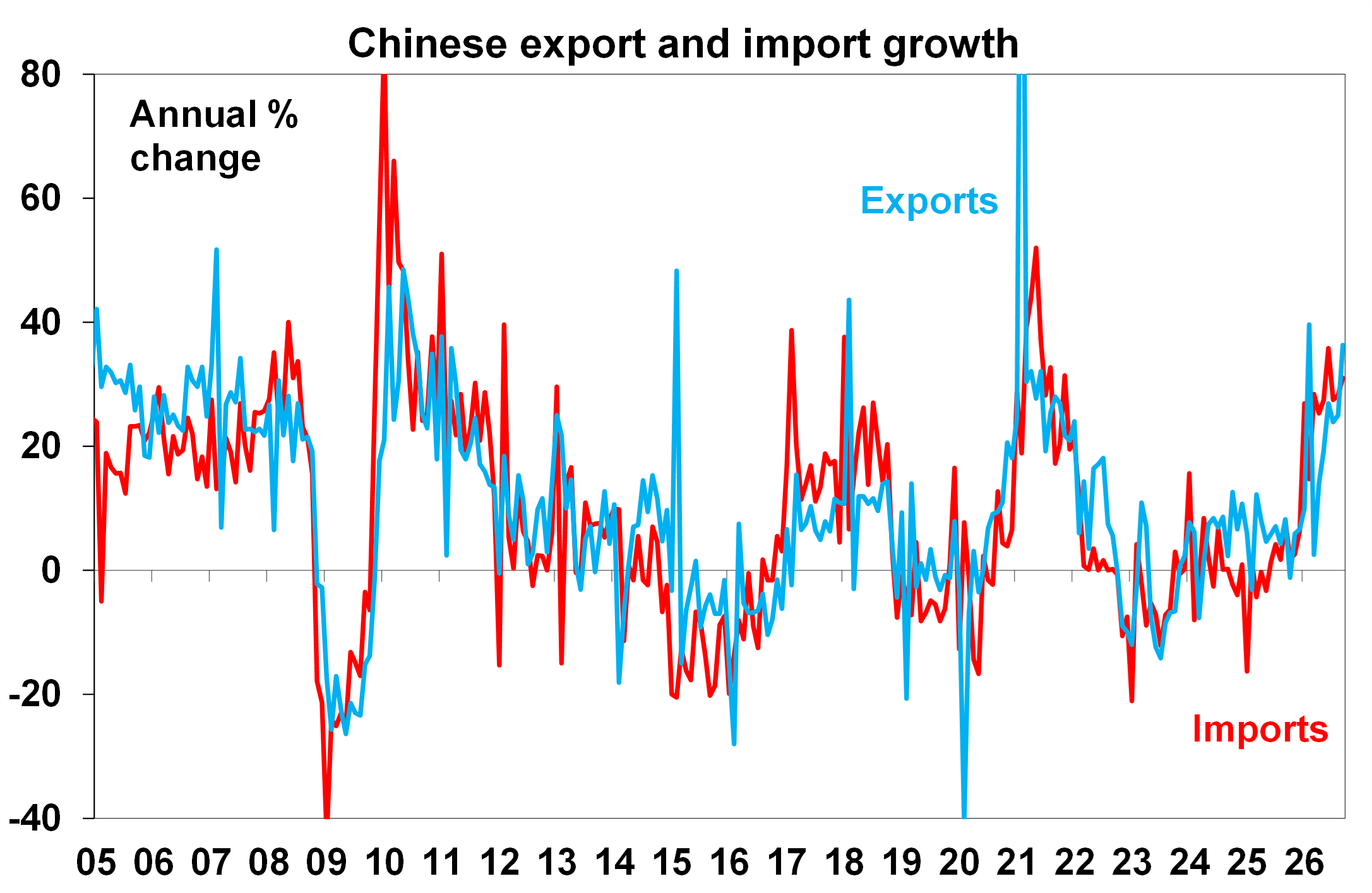
China’s trade surplus also rose to a new record high in September, driven by a 36% annual exports growth. Notably, growth accelerated across the board, including for refined petroleum, fertiliser and mechanical products. The usual strong performers also surged, with IT equipment exports up 93%yoy and chip exports rising a whopping 136%. Exports to the US and the EU also rose strongly over the year, increasing 40% and 25%yoy, respectively, despite rising trade tensions.
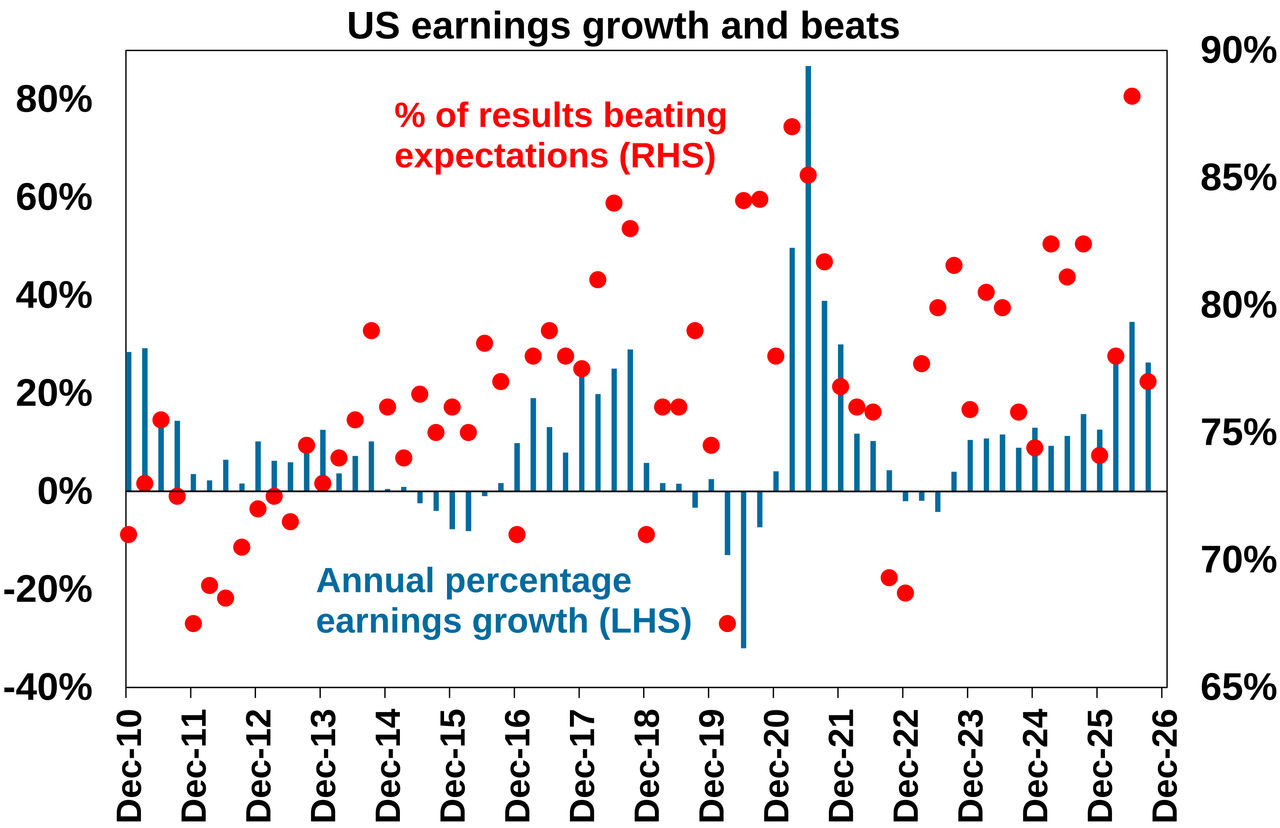
The 3Q earnings season in the US kicked off with mostly banks reporting this week (accounting for ~7.9% of S&P 500 market cap). Overall, 77% of companies are beating forecasts (similar to the historical average). Over the quarter, most banks reported stronger equities trading revenues (reflecting higher volatility) while fixed income revenues were down (unsurprising given the global bond selloff). Looking ahead, consensus forecasts are for revenues to grow by 12.1%yoy and earnings to rise 26.3%, heavily driven by tech and energy.
Australian economic events and implications
Australian labour market data slowed to the weakest level since Covid on multiple measures. The unemployment rate rose to 4.7% in September, while August’s rate was also upwardly revised to 4.7% from 4.6% prior, a meaningful increase from the 4.3% average in the first half of this year. Employment declined by 39k over the month and is now declining by 9 thousand per month on average. Over the year, employment rose by only 1.2%, far lagging the 1.7% population growth rate. And hours worked even declined 0.4% over the last three months.
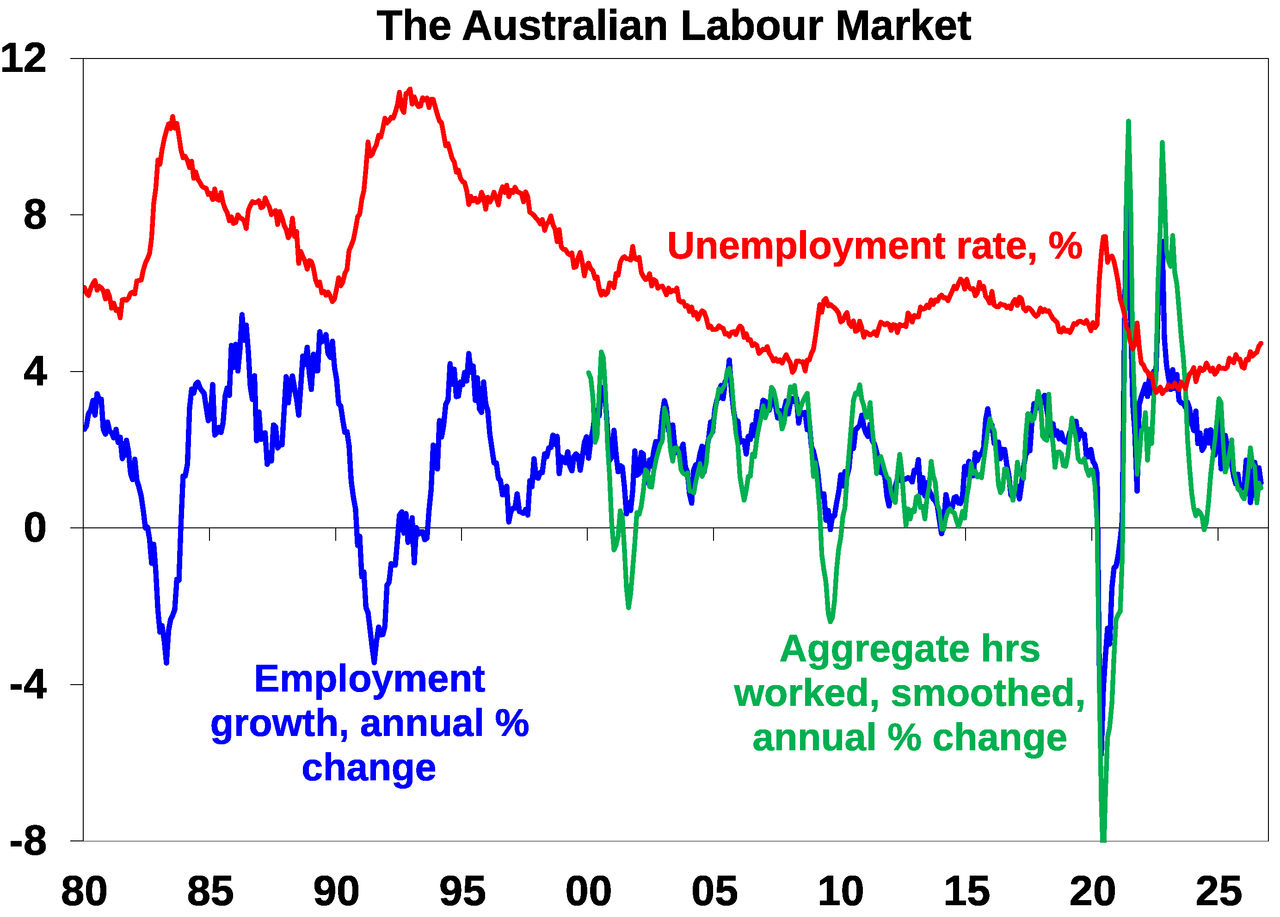
Overall, it is clear that rate hikes are starting to negatively impact the economy, with more weakness expected ahead, as the NAB employment survey this week showed that employment intentions turned negative for the first time in two years.
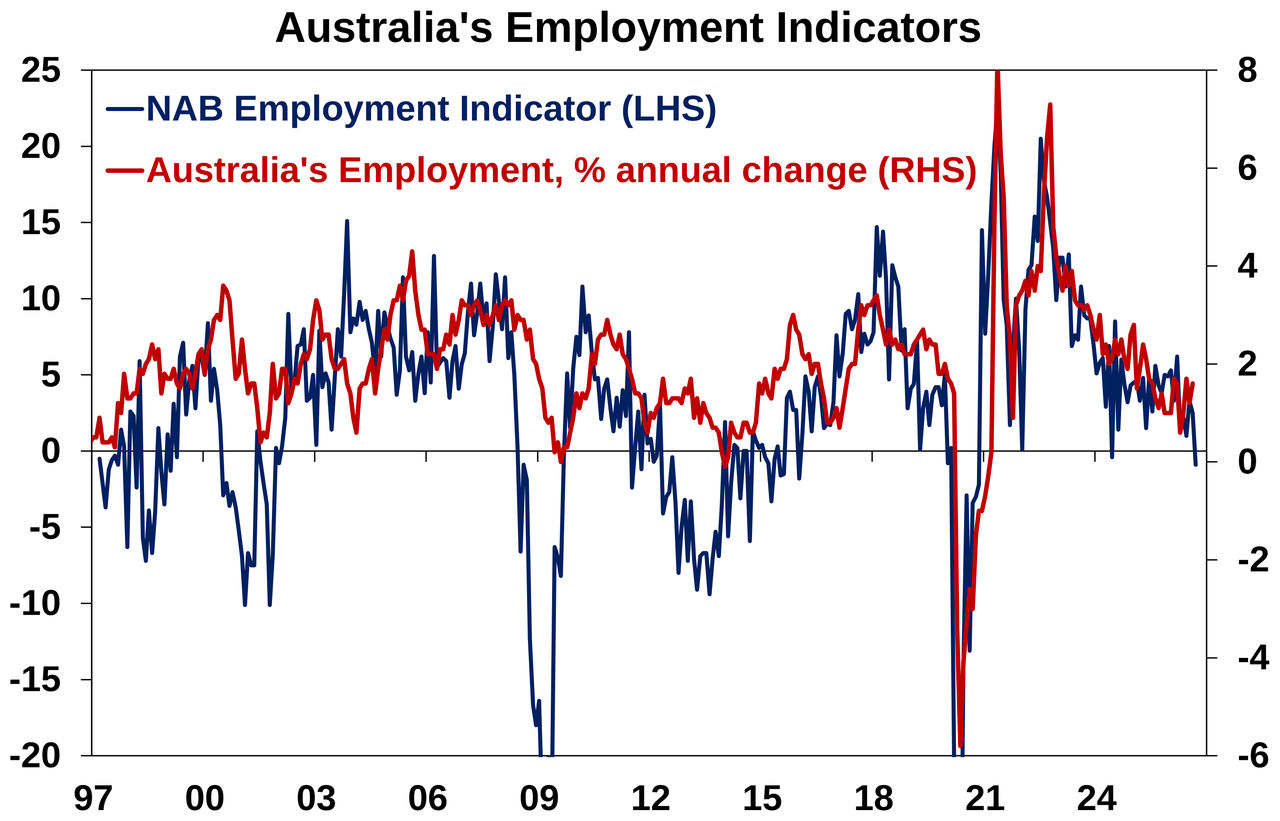
Overall, it is clear that rate hikes are starting to negatively impact the economy, with more weakness expected ahead, as the NAB employment survey this week showed that employment intentions turned negative for the first time in two years.
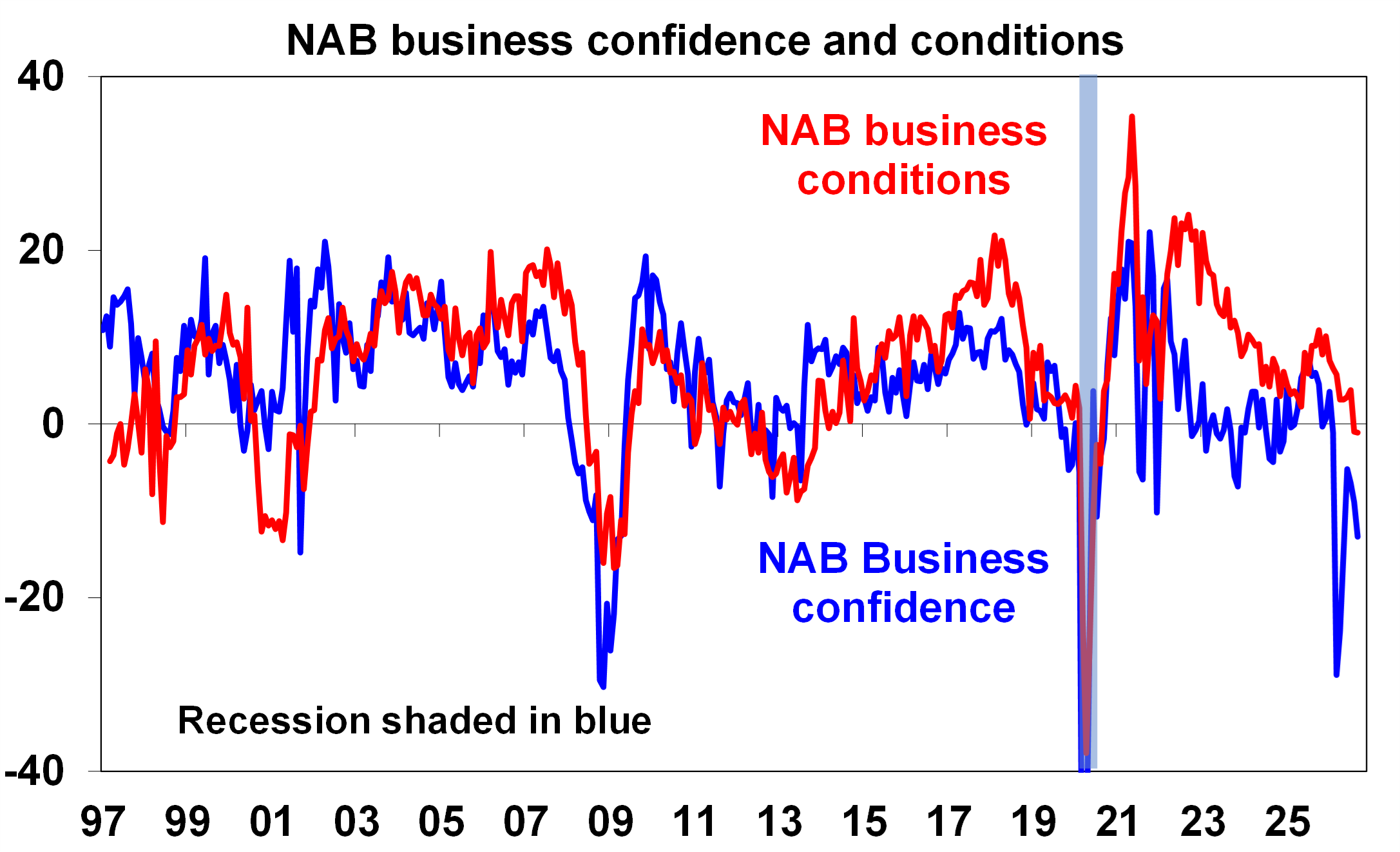
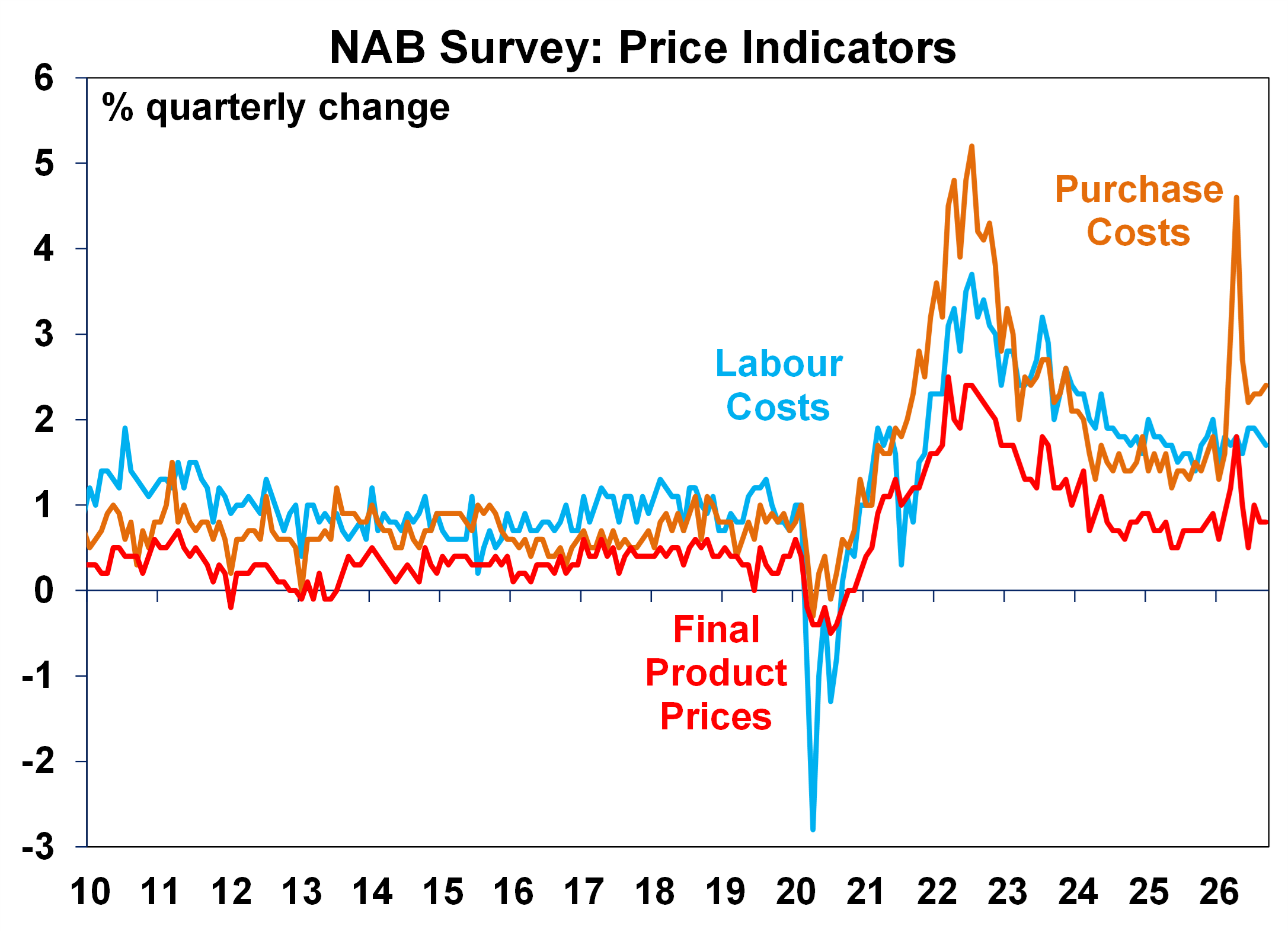
The silver lining from slower conditions is that cost pressures aren’t accelerating either. Despite a small pickup in purchase costs, labour costs declined slightly and final product prices were unchanged. We expect inflation pressures to soften over the coming months which could allow for a hold in November from the Reserve Bank.
What to watch over the week ahead?
US earnings season continues as we get the first tech companies’ results coming out on Tuesday, including Meta, Tesla, IBM and AT&T. Tech earnings for this quarter are still expected to outpace the broader market at 46.6%yoy.
US housing starts and building permits (Tuesday), followed by pending home sales (Wednesday), are expected to reinforce the picture of a subdued housing market, as 30-year mortgage rates kept climbing (they are now ~7.5%, only surpassed by a brief spike in 2023 and were last seen at similar levels in 2000).
Preliminary readings for the Global Purchasing Managers Index are out on Friday, which will likely show continued expansions in manufacturing and services sectors, but elevated input costs for firms.
China’s 3Q GDP and September’s retail sales, industrial production, fixed asset investment and home prices will be released on Monday. We expect 3Q GDP momentum to accelerate slightly to 1%qoq (from 0.9% prior) as oil flows recovered, translating to an annual pace of ~4.5%.
Outlook for investment markets
Global and Australian share markets are at risk of a further correction given the lack of any resolution to the Iran War and high oil prices, rising bond yields and stretched valuations, sticky inflation and central bank rate hikes, political uncertainty associated with the midterm elections and worries about the impact of AI and whether there is an AI bubble. However, returns should still be okay for the next 12 months as a whole thanks to continuing economic growth with recession likely to be avoided, albeit it’s a rising risk in Australia, and strong global profit growth and likely rate cuts next year.
Bonds are likely to see subdued returns.
Unlisted commercial property returns are likely to be solid helped by strong demand for industrial property associated with data centres. Rising bond yields could become a constraint though.
Australian home prices are expected to fall around 10-15% top to bottom, of which they have already done 5.2%, out to the June quarter next year as a result of poor affordability, RBA rate hikes, reduced investor demand flowing from the winding back of negative gearing and the capital gains tax discount and poor confidence. Rising distressed sales risk also becoming a drag.
Cash and bank deposits are expected to provide returns around 4-5%.
The $A is likely to rise reflecting the wider interest rate differential to the US, although Fed hikes may limit this. Fair value for the $A is around $US0.72.


You may also like
-

6 New Year resolutions that could improve your finances Six simple financial tips that could help you save more, spend smarter and feel more in control of your finances in the new year. -

Weekly Market Update - 09-10-2026 - AMP Weekly Market Update: US shares near record highs but risks are bubbling, tech rally remains narrow, credit markets turn wary on AI & Firmus IPO shelved, French bond yields surge, and another immigration debate. -

Five things that could stop the data centre boom Discover five major challenges that could slow the data centre boom, from power constraints and regulation to costs, talent and infrastructure.
Important information
Any advice and information is provided by AWM Services Pty Ltd ABN 15 139 353 496, AFSL No. 366121 (AWM Services) and is general in nature. It hasn’t taken your financial or personal circumstances into account. Taxation issues are complex. You should seek professional advice before deciding to act on any information in this article.
It’s important to consider your particular circumstances and read the relevant Product Disclosure Statement, Target Market Determination or Terms and Conditions, available from AMP at amp.com.au, or by calling 131 267, before deciding what’s right for you. The super coaching session is a super health check and is provided by AWM Services and is general advice only. It does not consider your personal circumstances.
You can read our Financial Services Guide online for information about our services, including the fees and other benefits that AMP companies and their representatives may receive in relation to products and services provided to you. You can also ask us for a hardcopy. All information on this website is subject to change without notice. AWM Services is part of the AMP group.