





Weekly market update
Investment markets and key developments
It was another rocky week across markets. For most of 2026, the narrative has been that investors have benefitted from strong earnings and AI investment. But now, rising oil prices, rising bond yields and central bank rate hikes are making the outlook more fragile.
12 min read

Investment markets and key developments
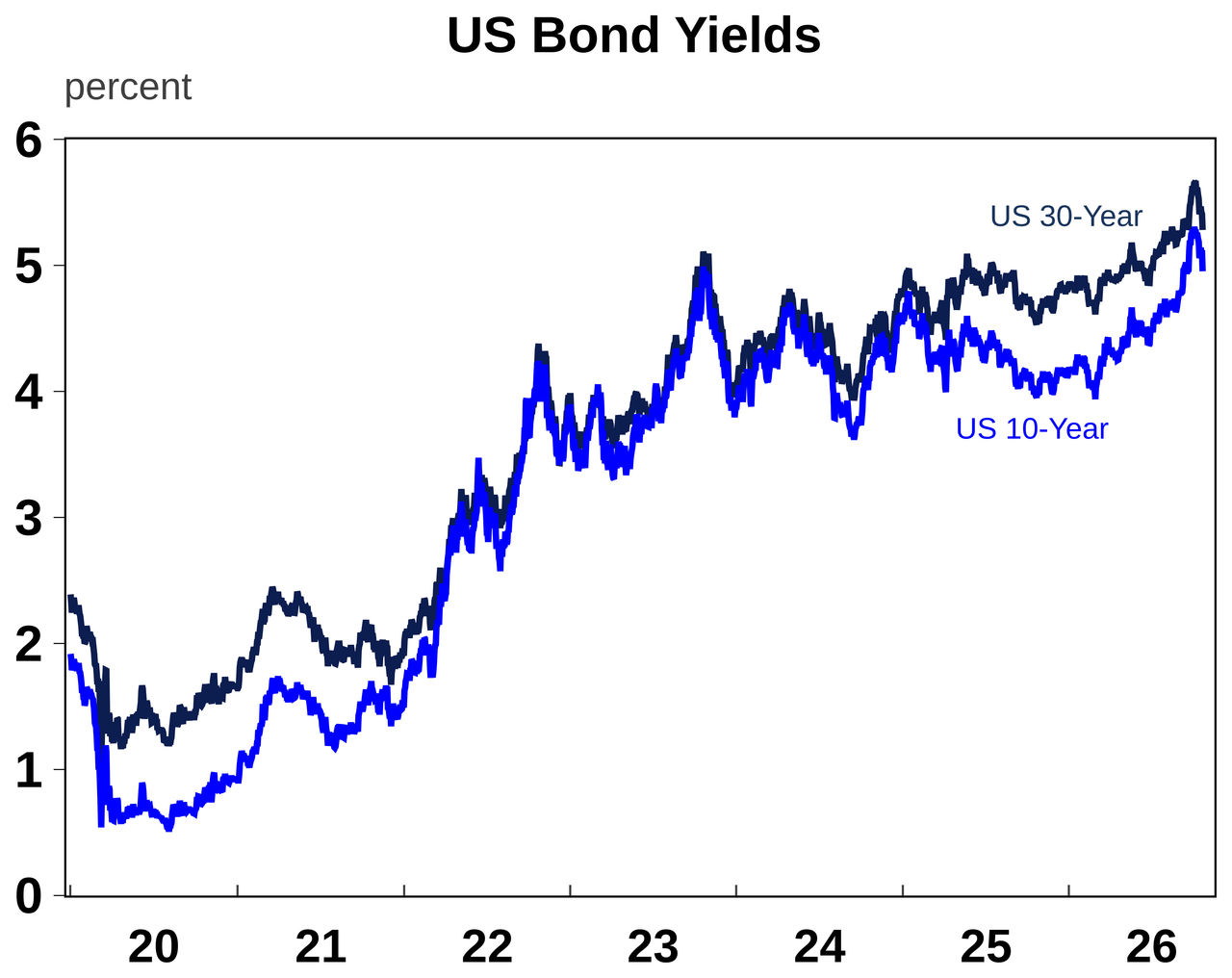
It was another rocky week across markets. For most of 2026, the narrative has been that investors have benefitted from strong earnings and AI investment. But now, rising oil prices, rising bond yields and central bank rate hikes are making the outlook more fragile. US shares were basically flat this week and haven’t moved much over the month. The tech sector did worse, with tech-heavy Nasdaq down 0.5% this week and 3.2% lower over the month. Investors are looking for more safe havens, with more rotating into US bonds, particularly as yields look attractive at these high levels. As a result, US 10-year bond yields fell nearly 12 basis points this week (down to 4.96%). The US dollar was unchanged this week but the $A was up again to 70 US cents. Australian shares were down by 0.5% this week, with energy, materials and IT down but better growth in communication, industrials and financials.
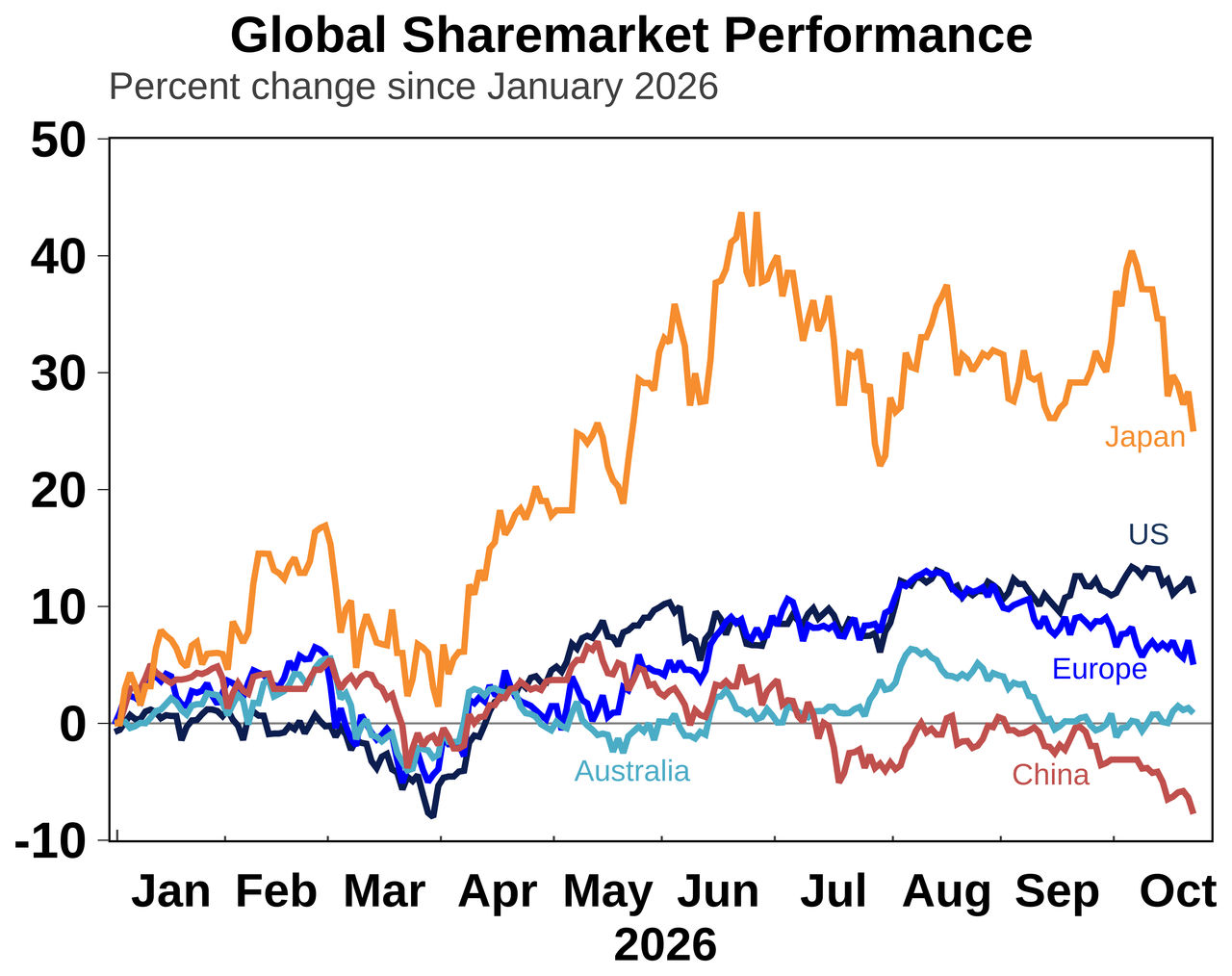
It’s been a disappointing year for Australian equities which have barely risen. US shares continue to outperform, up by nearly 12%. Japan has been even stronger, up 25% while Europe is up around 5%.
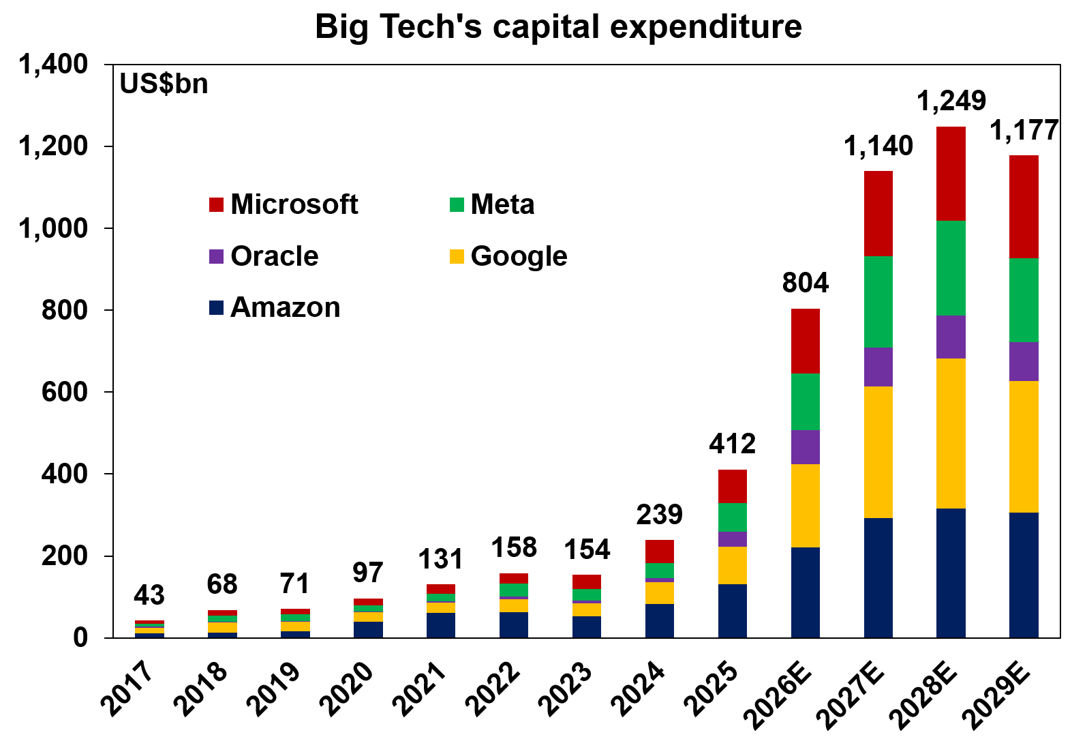
Going into the last two months of this year, the downside risk for markets has moved from an earnings-led market correction to a broader repricing of interest rates, inflation and risk premiums. In particular, the market is getting concerned that there has been too much spending on data centres, power, GPUs and other parts involved with the AI build-out and that demand will not be there to justify this spending in the future. Basically, that there has been over investment.
Higher interest rates are adding another layer of pressure. Projects and businesses that looked viable when the cost of capital was low become much harder to justify when financing costs rise. This is starting to show up in parts of the corporate bond market, particularly among the lowest-quality borrowers. Credit spreads on CCC-rated and lower US corporate bonds have risen sharply to around 11 percentage points over Treasuries, while spreads across the broader high-yield market have risen much more modestly.
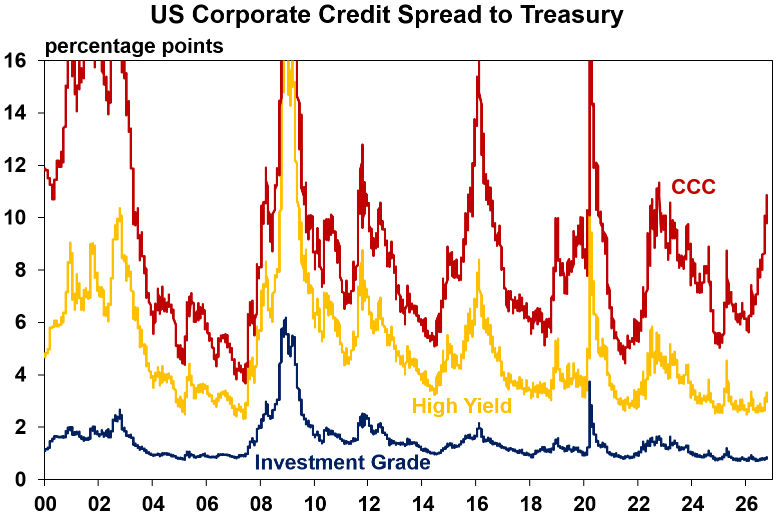
This is one of the effects of higher interest rates: they expose businesses that were sustainable when money was cheap, but struggle when the cost of capital rises. So far, however, this looks more like pockets of stress than a broad-based credit crisis. But it’s something to watch.
There have been plenty of tech wobbles in recent weeks. Last week it was concerns about CoreWeave, a specialised AI-native cloud computing provider. This week it was the listing by Elice Group, a South Korean AI computing supplier, dropped. The strains in the AI ecosystem are showing up in some parts, especially in leveraged businesses with rising fixed commitments from high capex spending.
Back at home, the local tech worry was Australian data centre operator NextDC, which had a huge fall in its share prices (down by over 40%) after its FY27 earnings guidance was slashed after a proposed expansion at its Melbourne data centre could not get the electricity supply it required, due to intense community backlash.
Interestingly, earnings guidance from US-listed tech companies this week was solid, including from SpaceX and Meta. Investors remain focused on whether the enormous amount of hyperscaler capex expected in 2027 can translate into sufficiently strong AI revenues and earnings to justify the scale of investment.
All of this means that the AI trade isn’t necessarily over, but it is changing. It is no longer a case of “buy everything”. There are trades within the AI trade and investors need to be much more selective about who is actually making money from the technology. But it is hard to get too bearish on equities overall just yet, with earnings growth still positive and the hard economic data holding up well.
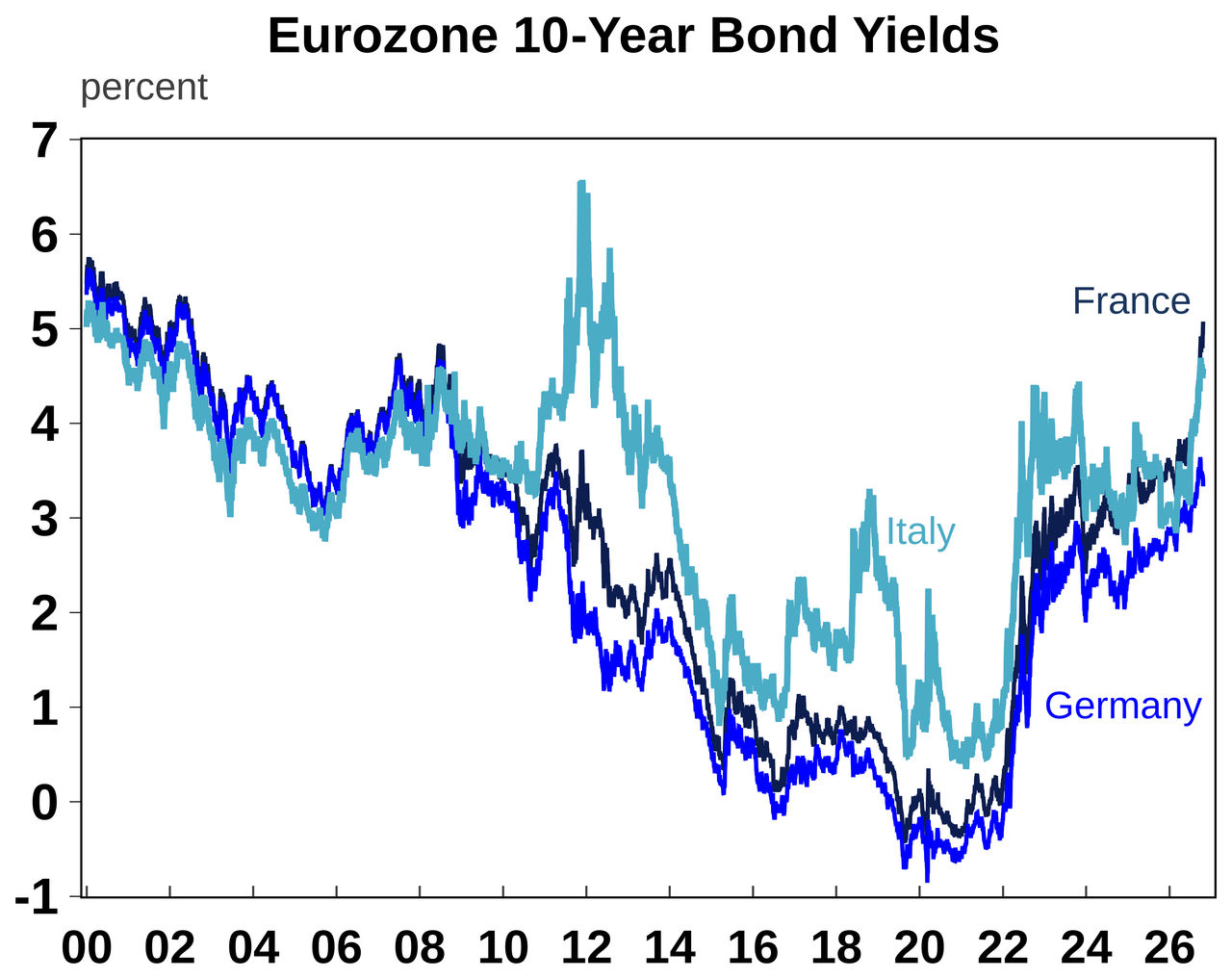
Are we in for another Eurozone crisis? French 10-year bond yields have risen above 5%, their highest level since 2002. French bond yields were already rising from a difficult fiscal backdrop and political uncertainty ahead of the 2027 Presidential election, which currently indicates a victory by populist Marine Le Pen. But yields got another leg up after the civil unrest last weekend/ with hundreds of thousands of people nationwide initially protesting deteriorating education conditions which then morphed into cost-of-living concerns and declining public services.
The question for markets is whether the unrest and bond-market pressures spread to other European countries, pushing up their borrowing costs as well. There have been some signs of spillover into other European bond markets (but this could also reflect the global rise in bond yields), but so far nothing resembling the broad-based sovereign stress seen during the Eurozone debt crisis. French equities have also come under pressure, although the weakness has occurred against a generally softer backdrop for European equities.
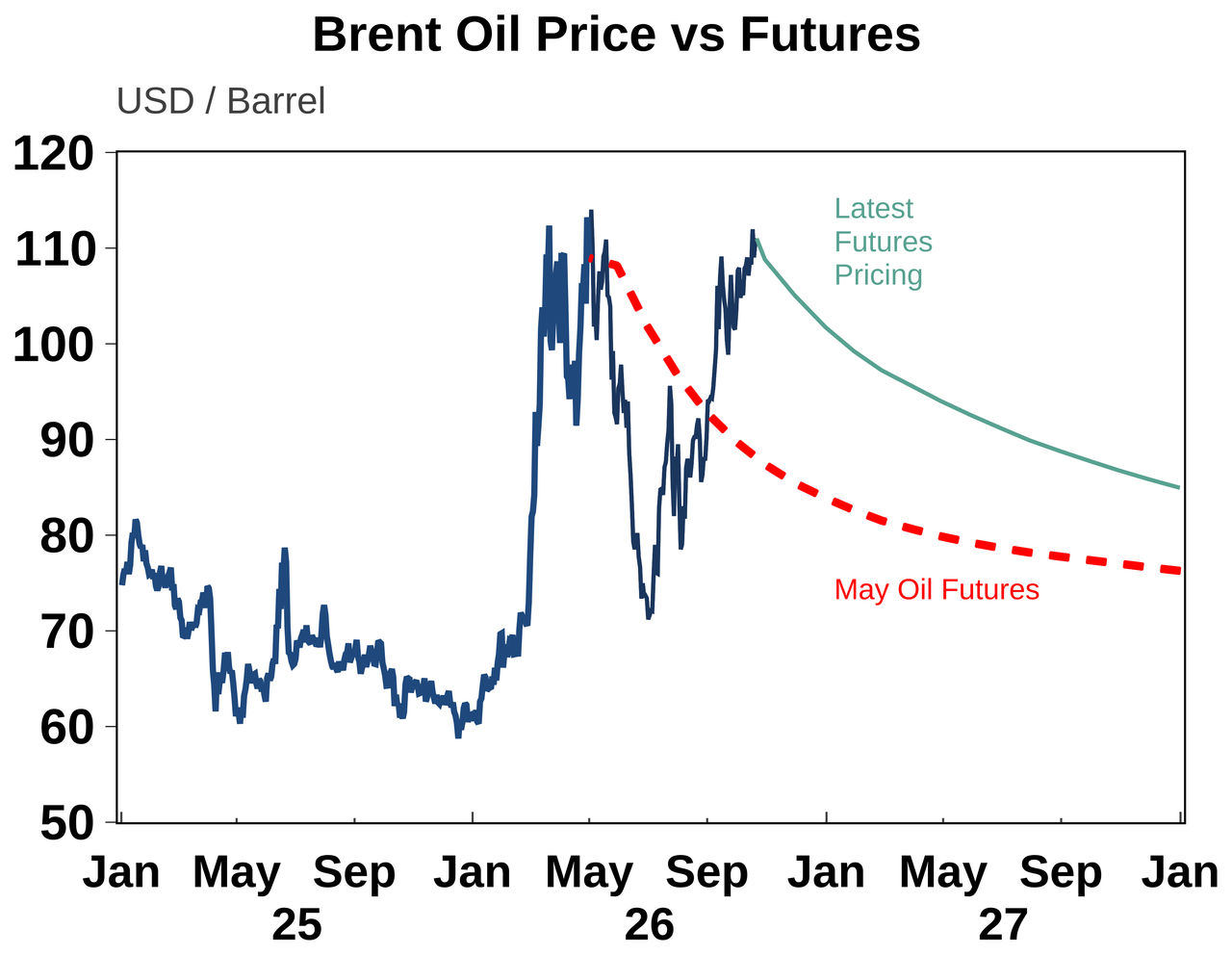
Oil prices were up this week, with Brent over $110/barrel. Hopes for a US/Iran deal briefly resurfaced during the week which helped to put some downward pressure on prices. But this was quickly dismissed, after concern that Trump could resume strikes after the mid-terms with ongoing Houthi rebel attacks on Saudi Arabia and US State Department notice for non-emergency staff and families to leave Saudi Arabia. We expect oil prices to remain high at over $100/barrel, which will keep petrol and diesel prices elevated.
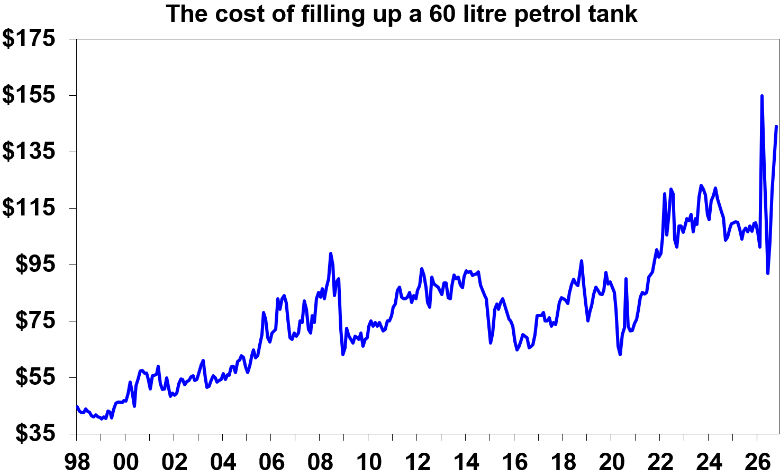
Australian petrol prices are around $2.40/Litre, with the cost to fill up a 60L tank now back up to ~$140, around its highs but not quite reaching the $155/week back in March when the Iran war first broke out. Not good for consumer confidence.
Major global economic events and implications
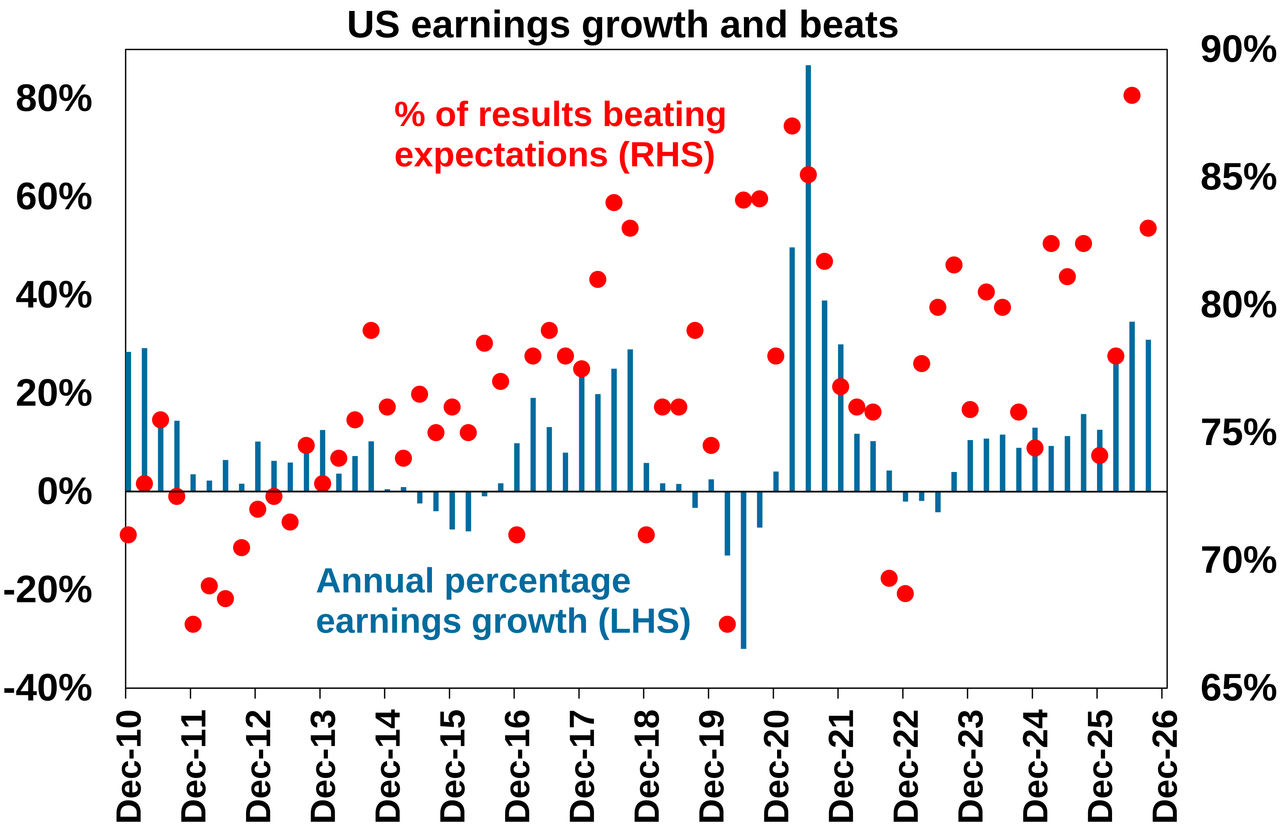
It was a big week for US earnings. 25% of the top 500 US companies have reported third quarter earnings. Results have been strong, especially across financials. 83% of companies beat expectations, which is higher compared to normal. Earnings growth is beating expectations and is likely to be up by 30% over the year to September. US earnings growth is its highest level in over 2 decades (excluding the initial post-recession bounce). It’s hard to get too bearish on stocks with these types of numbers.
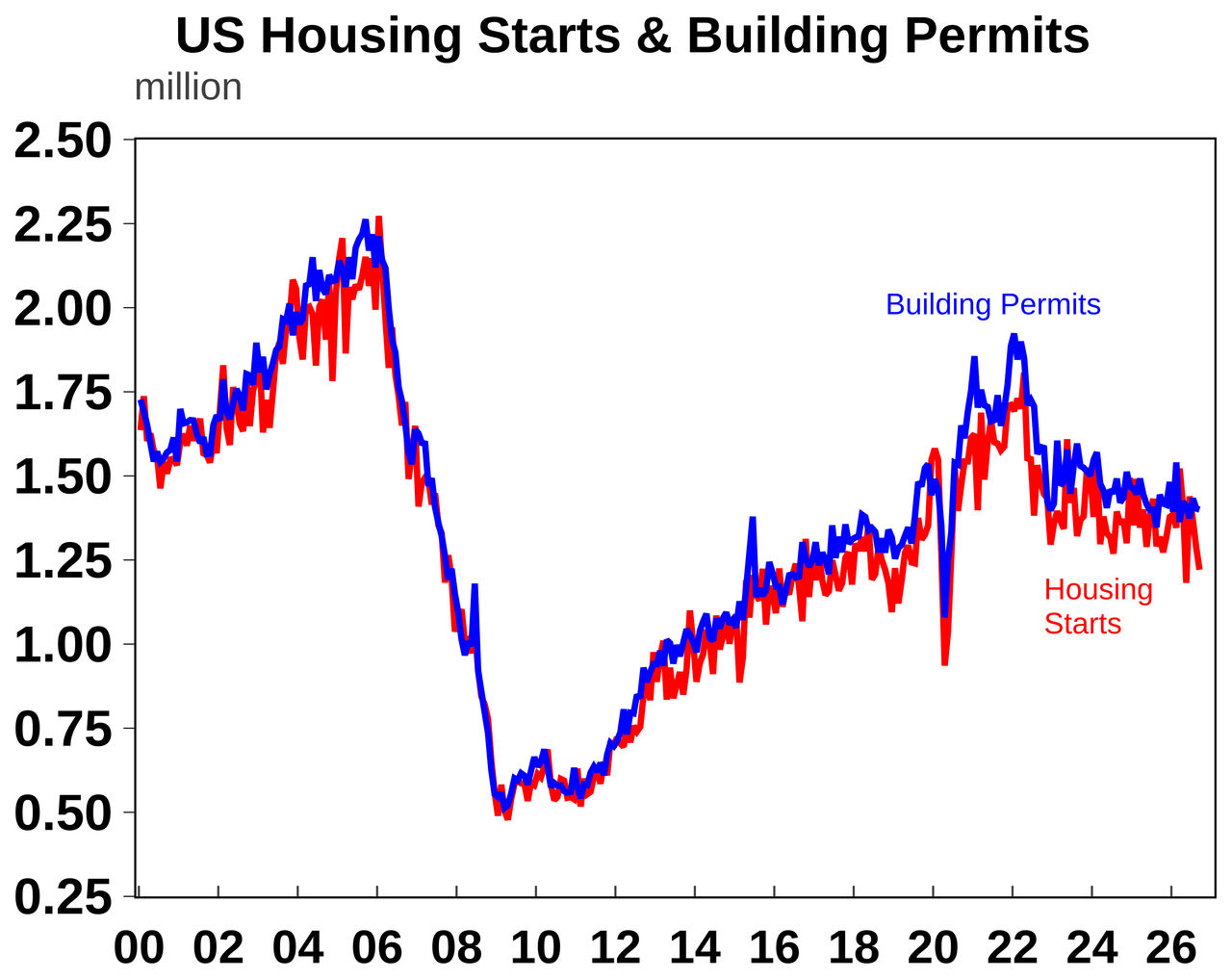
US housing data was poor again. Housing starts fell by 5.2% and building permits were down by 0.2% in September. This is not surprising given that mortgage rates are at 7.5% and the highset since ~2000.
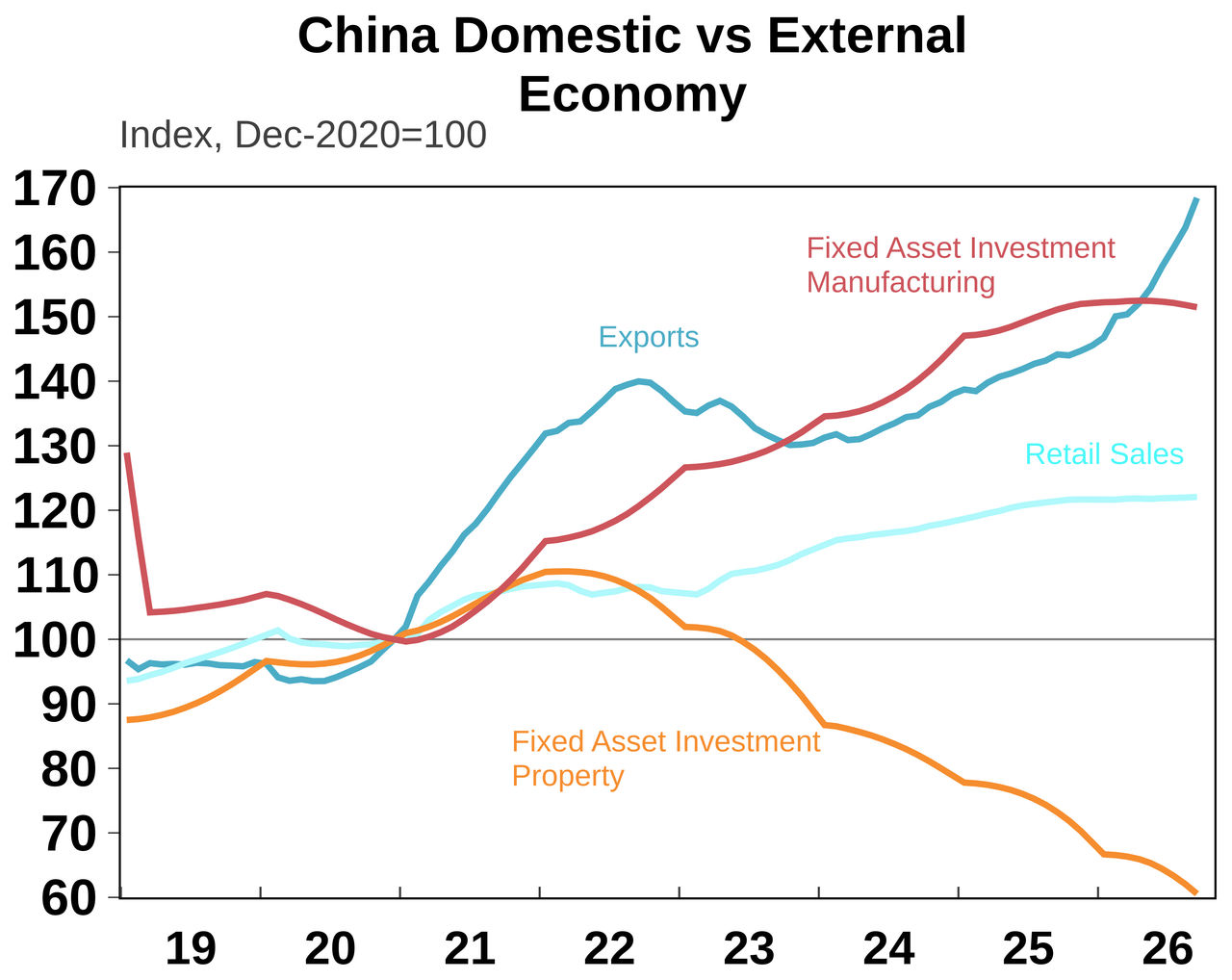
China’s monthly activity data came in stronger than expected and shows that the economy rebounded in the September quarter. Annual GDP growth rose to 4.5% (from 4.3% last quarter). Retail sales were 1.1% higher over the year to September (well above 0.4% last month), industrial production rose by 5.5% (also an improvement on last month), fixed asset investment was still weak, falling by 7.2% over the year to September and property investment was down by 20.6% over the year. Overall, domestic demand is still weak but external growth is better. The other issue is that data improvement in September appears to be seasonal. Historically, Beijing has pushed the economy into September – November after a mid-year slowdown by increasing stimulus and local government bond issuance, so the rebound in activity may not be persistent.
New Zealand headline inflation rose by 0.7% in the September quarter (a touch below the 0.8% expected) and annual growth slowed to 3.7% (from 4.1% last quarter). Non-tradable inflation (goods that are not subject to being imported/exported and reflect more domestic inflation concerns) is still high, up by 1% over the quarter while tradable prices rose by 0.2%. The Reserve Bank of New Zealand is expected to raise interest rates again before the end of the year as inflation rates are still too higher overall, especially for non-tradables.
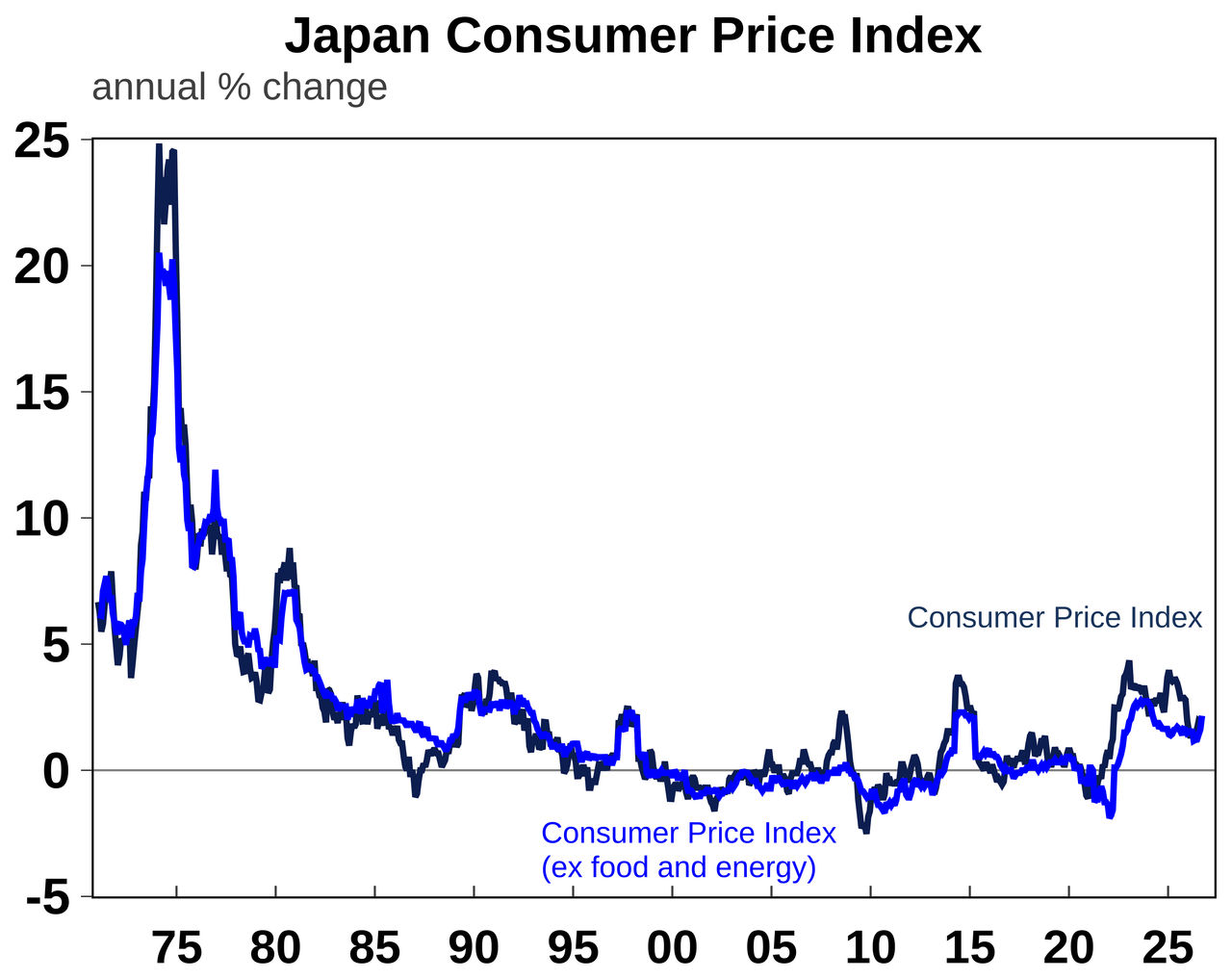
Japan’s CPI rose by 2.1% over the year to September, as expected. Core inflation (ex food and energy) was up 2.2% over the year. Both are higher compared to last month and strengthens the case for a December rate hike from the Bank of Japan.
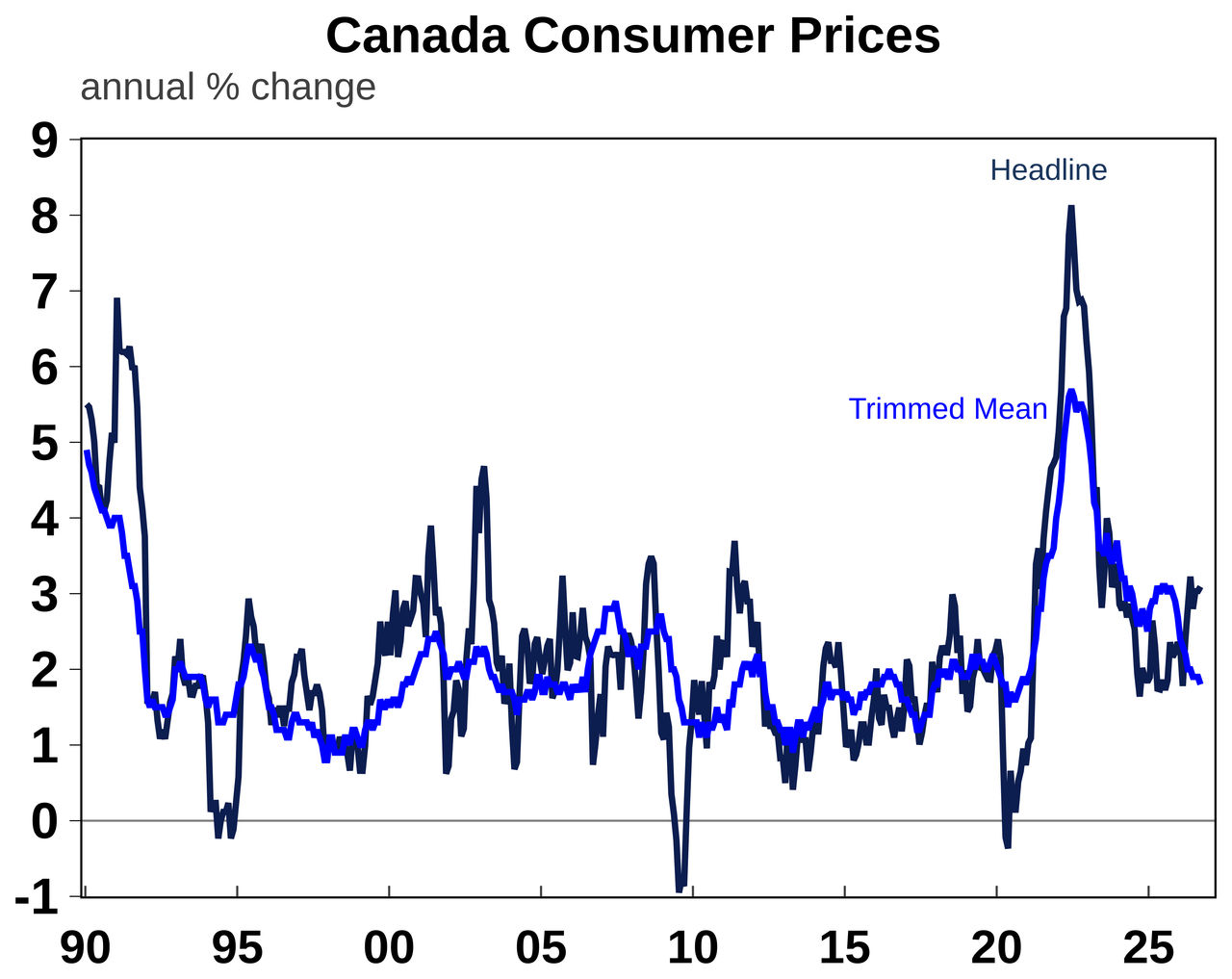
Canada inflation figures showed headline price growth of 3.1% in September, slightly up from 3% last month, mostly from the result of higher energy prices. Core annual inflation measures are tracking at 2% (at target) but underlying inflation pressures are building and the Bank of Canada is expected to start hiking rates in 2027
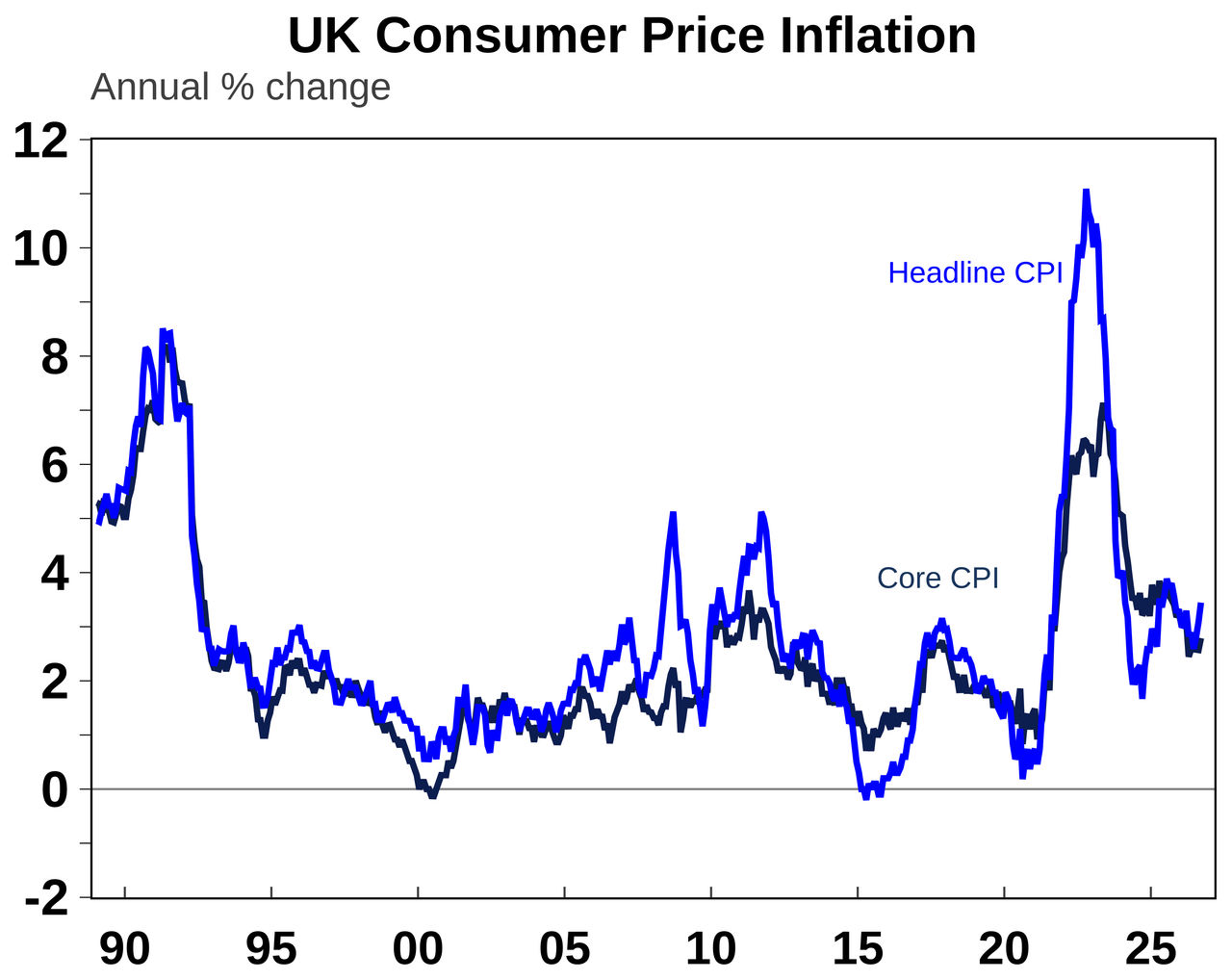
UK consumer prices rose by 0.4% in September and 3.5% over the year. Core inflation was 2.8% - unchanged from last month. This was a little higher than expected, with higher energy prices now flowing into core prices, especially food.
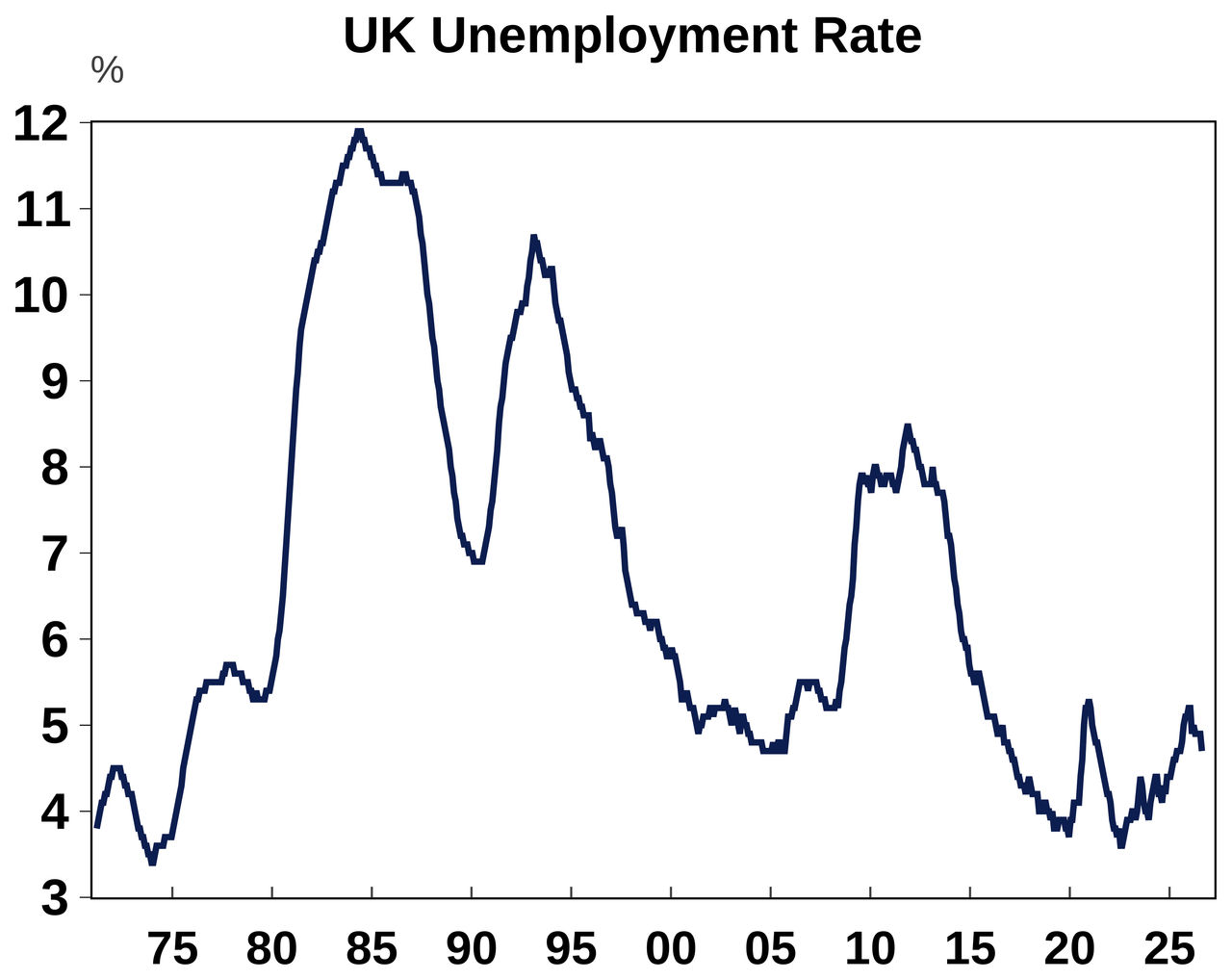
The UK labour market data was a bit stronger. The unemployment rate fell to 4.7% from 4.9% in the three months to August (better than expected). Average weekly earnings also eased to 3.7% over the year to August, from 3.9% in the prior month. The UK labour market is stabilising after a period of easing, rather than in a period of strength. Rate hikes are expected in early 2027.
Australian economic events ad implications
RBA Deputy Governor Andrew Hauser spoke at Citi's Investment Conference this week. Given his track record of shifting market expectations, investors paid close attention to his remarks, which struck a hawkish tone and reinforced the possibility of further interest rate increases.
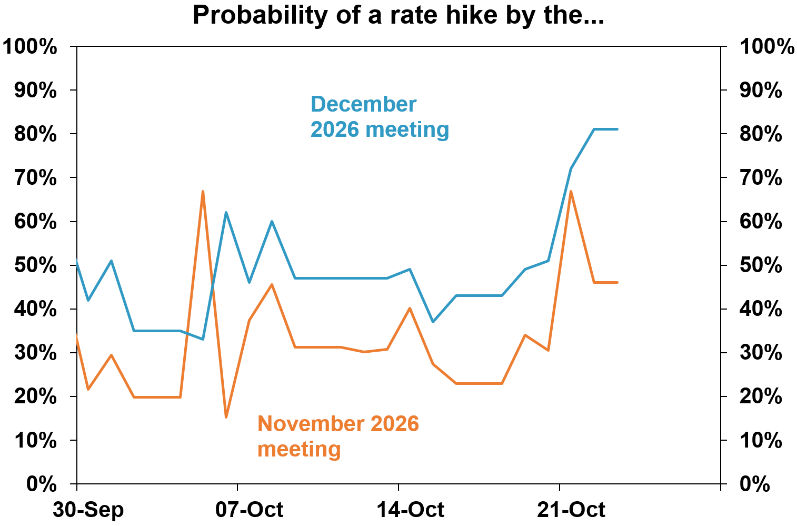
Following his comment, financial markets are now pricing in ~40% chance of a November rate hike, and it got all the way up to nearly 70% after Hauser’s speech (compared to 30% beforehand). Another rate rise in Australia would take the cash rate from 4.6% to 4.85%.
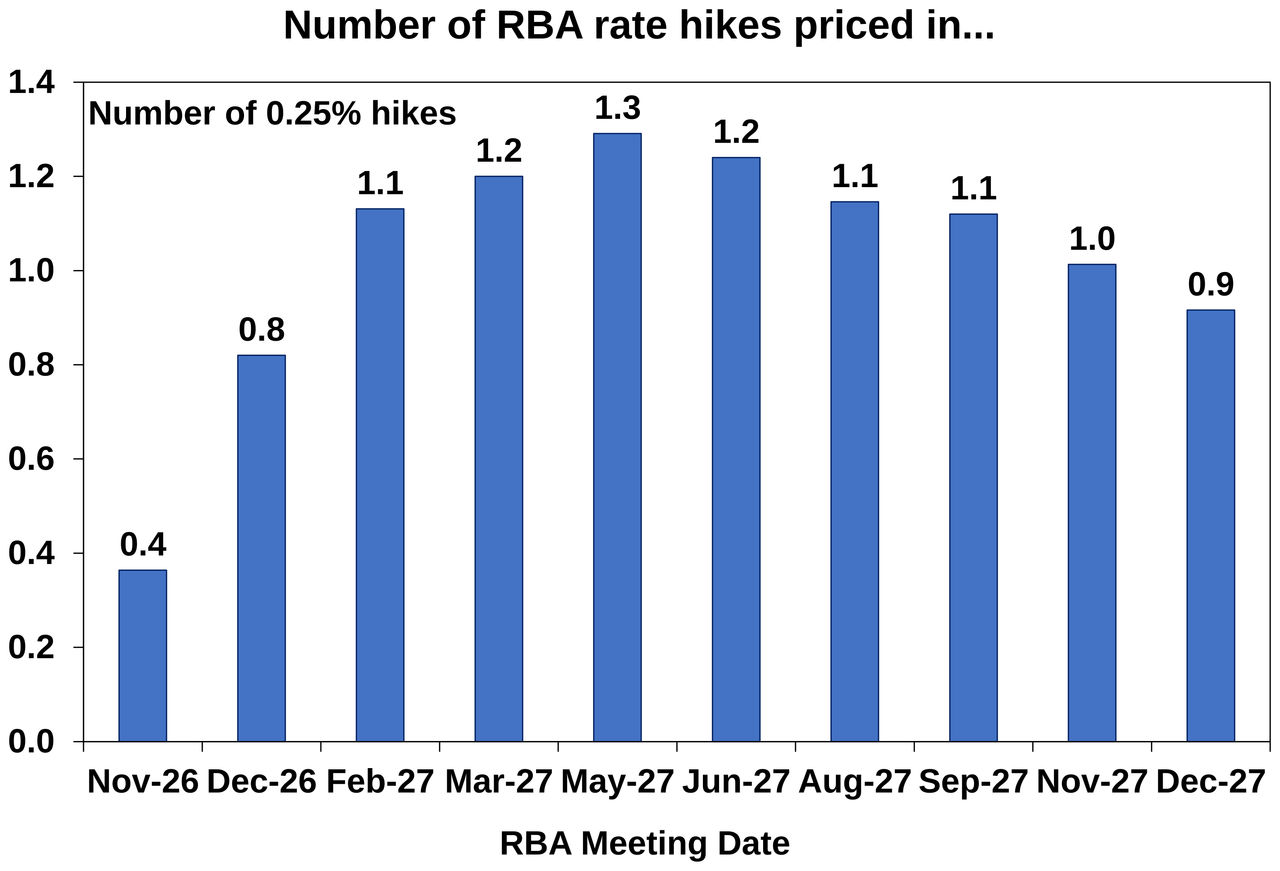
Markets clearly aren't convinced the hiking cycle is over, with around an 80% chance of another hike by December now priced in (see chart below). We think the central bank is done. Activity is slowing and, after four rate increases, including one just last month, it makes sense to give those hikes time to work through the economy. But the risk is firmly on the upside, and another hike over the next few months can't be ruled out.
Hauser’s main comment around inflation was that the [inflation] outlook looks “materially worse” than the RBA had projected in August. The July data was higher than expected, which led to the RBA rate hike in late September. The August data was more or less in line with expectations and some components looked better, especially for dwelling construction costs and rents. And the September inflation data is out next week. So, the RBA has already responded to upside inflation risks with the last rate hike. The question is whether the next inflation reading is stronger than the RBA is currently assuming.
In terms of comments around some of the slowing in activity data, like consumer and business confidence, the labour market and home prices – these were all mentioned but Hauser also said “we need a period of “below trend growth to bring inflation down” – so he wasn’t sounding the alarms on the activity indicators.
Everything rests on the September quarter inflation data next week (preview on that below).
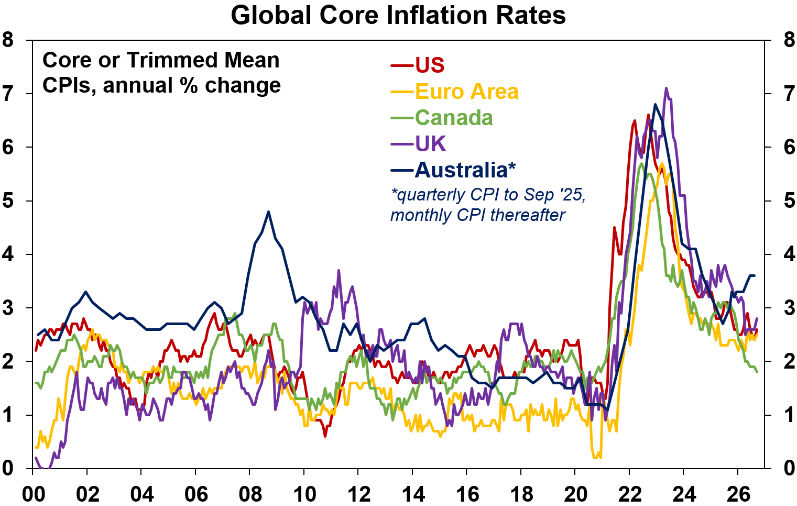
RBA Assistant Governor (Financial Markets) Chris Kent spoke to News 24, mostly about the central bank’s quantitative easing program during the pandemic. There was no major policy signal in the commentary, but it did reinforce the message from the RBA that the world appears to be operating with higher for longer neutral interest rates, from higher inflation, fiscal expansion and AI-related investment. The RBA thinks that financial conditions are somewhat restrictive, but the question is whether they are restrictive enough to return inflation to target. This is what the central bank is watching.
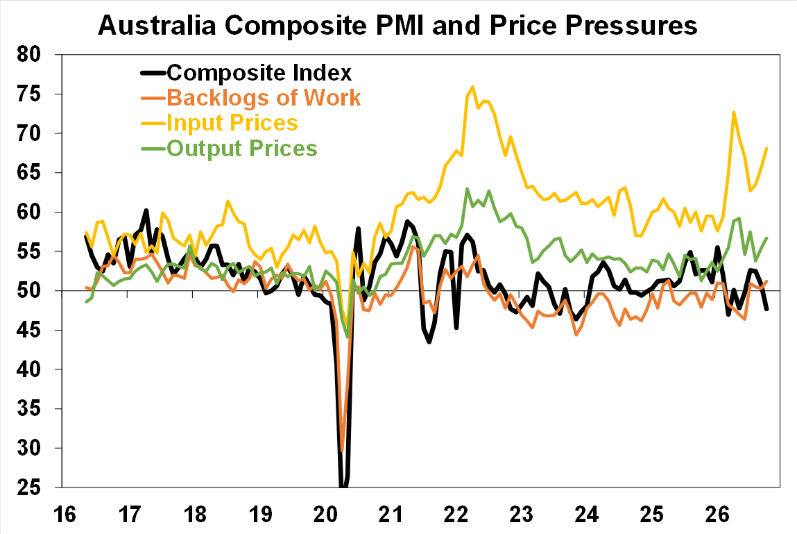
Australia’s PMI data shows the difficult issues facing the RBA. Activity is slowing, and the composite index fell into “contraction” at a reading of 47.7 (from 51.3 last month), with both manufacturing and services down. But output and input prices rose again – not a good sign for inflation. So growth is weakening, but the inflation problem has not gone away.
What to watch over the next week?
It’s a big week for global data. October Flash PMI’s will show how activity is progressing in manufacturing and services across the world. US and European manufacturing and services readings have been solid which is a good signs that global growth is holding up and far from recession-like levels.
The US Federal Reserve has its meeting (Wednesday) and is expected to keep the fed funds rate unchanged at 3.75%-4%, after a hike last month. The hike in September reflected rising inflation risks against a backdrop of a resilient economy. But, a follow up rate increase is not likely at this month’s meeting, as financial conditions have already tightened after the last rate rise alongside the increase in bond yields (see the chart below) and the Fed would be happy to wait and bide its time to see how inflation changes over the next few months. But don't expect clear forward guidance from new Fed Chair Kevin Warsh. Unlike his predecessor, Warsh has largely avoided signalling the likely path of interest rates, preferring to emphasise the incoming economic data.
The first estimate of third quarter GDP data is due. The Atlanta Fed GDPNow indicator of GDP is running high at 3.5%. And markets are expecting third quarter GDP around 3% - from 2.2% last quarter.
October PCE prices should show annual growth of 3.6% to September, from 3.4% last month with core PCE at 3.1% - way above the Fed’s 2% target.
The Australian September quarter inflation figures are key and will make the final call about the RBA’s next monetary policy meeting in early November. We expect September quarter inflation figures will rise by 1.2% over the quarter (up from 0.6% last quarter). Annual growth we expect to slow to 3.9%, from 4% last quarter, but this is still high. The key drivers are a big increase in transport costs, with fuel expected to be up by 8% because of the reinstatement of the fuel excise, urban transport fares will be higher as many states pulled back support and spare parts and services prices were also higher from increased demand. AI inflation will also be evident with an expected rise in audio, visual and computing equipment costs. And household services also look to have had a strong quarter. Fruit and vegetable prices will be down, garments will be lower (due to seasonal factors) and medical products and equipment are also likely to show a decline.
We expect the quarterly trimmed mean to be up by 1% and annual growth at 3.6%. This is really the key number to watch. The RBA’s August forecast was too low but we think that their current inflation forecast is close to ours. If the trimmed mean is higher than 1%, than a November rate hike is likely. But on our current forecast, we see the RBA debating the need for another rate increase in November but ultimately keeping rates unchanged. There is still the risk of an increase in December or early 2027, if the data suggests that inflation risks are rising, rather than abating.
Other Australian data is also the producer price figures and private sector credit, which has been slowing in line with slowing housing lending.
RBA Economic Assistant Governor Sarah Hunter is speaking on 60 minutes on Sunday. Next week, Brad Jones (Assistant Governor Financial System) is speaking at the AFR Super and Wealth Summit and the RBA leaders will appear before the Senate next week.
The Bank of Japan meet and are expected to keep interest rates unchanged at 1.25% this month, after a hike just last month. But, further tightening is still on the cards.
Outlook for investment markets
Global and Australian share markets are at risk of a further correction given the lack of any resolution to the Iran War and high oil prices, rising bond yields and stretched valuations, sticky inflation and central bank rate hikes, political uncertainty associated with the midterm elections and worries about the impact of AI and whether there is an AI bubble. However, returns should still be okay for the next 12 months as a whole thanks to continuing economic growth with recession likely to be avoided, albeit it’s a rising risk in Australia, and strong global profit growth and likely rate cuts next year.
Bonds are likely to see subdued returns.
Unlisted commercial property returns are likely to be solid helped by strong demand for industrial property associated with data centres. Rising bond yields could become a constraint though.
Australian home prices are expected to fall around 10-15% top to bottom, of which they have already done 5.2%, out to the June quarter next year as a result of poor affordability, RBA rate hikes, reduced investor demand flowing from the winding back of negative gearing and the capital gains tax discount and poor confidence. Rising distressed sales risk also becoming a drag.
Cash and bank deposits are expected to provide returns around 4-5%.The $A is likely to rise reflecting the wider interest rate differential to the US, although Fed hikes may limit this. Fair value for the $A is around $US0.72.


You may also like
-

Baby budgeting: How to financially prepare for a baby Learn how to budget for a baby, prepare for parental leave, estimate childcare costs and build a financial buffer before becoming a parent. -

Weekly Market Update - 16-10-2026 - AMP Weekly Market Update: AI credit fears hit shares, Investors flocking to safe haven (because of CoreWeave?), Oil still high but global growth still resilient, and Weak jobs data gives RBA room to pause. -

6 New Year resolutions that could improve your finances Six simple financial tips that could help you save more, spend smarter and feel more in control of your finances in the new year.
Important information
Any advice and information is provided by AWM Services Pty Ltd ABN 15 139 353 496, AFSL No. 366121 (AWM Services) and is general in nature. It hasn’t taken your financial or personal circumstances into account. Taxation issues are complex. You should seek professional advice before deciding to act on any information in this article.
It’s important to consider your particular circumstances and read the relevant Product Disclosure Statement, Target Market Determination or Terms and Conditions, available from AMP at amp.com.au, or by calling 131 267, before deciding what’s right for you. The super coaching session is a super health check and is provided by AWM Services and is general advice only. It does not consider your personal circumstances.
You can read our Financial Services Guide online for information about our services, including the fees and other benefits that AMP companies and their representatives may receive in relation to products and services provided to you. You can also ask us for a hardcopy. All information on this website is subject to change without notice. AWM Services is part of the AMP group.