





Weekly market update
Investment markets and key developments
Weekly economic and market update - share correction likely has more to go, AI worries despite good Nvidia earnings & Anthropic IPO, high recession risk in Aust but Sahm is a furphy, RBA may be slow to cut, why the Fed Gov should still cut spending.
12 min read

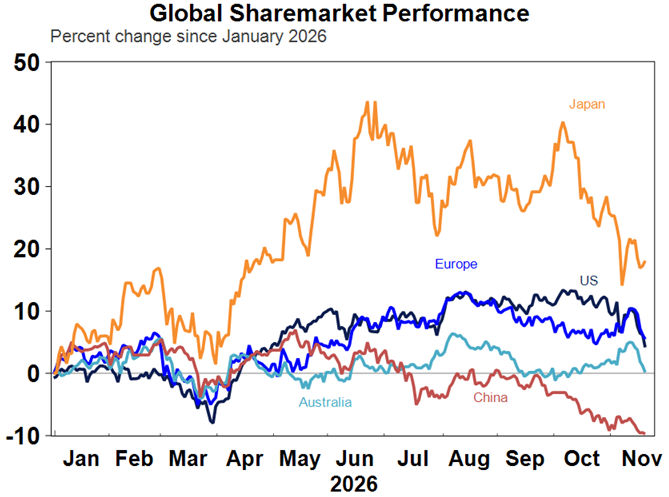
The correction in shares resumed in earnest over the last week as worries about AI, the fallout from former Nvidia CEO Jensen Huang’s departure and concerns about US rate hikes continue to weigh despite stronger than expected earnings from Nvidia and a successful record IPO for Anthropic. This has seen US shares fall 5.1% over the past week with European, Japanese and Chinese shares also down. After several weeks of gains Australian shares also fell sharply by around 5.4% taking them back to around their September low reflecting the poor global lead, falling metal prices and increasing worries about a recession in Australia. The falls on the ASX 200 were led by resource, IT, consumer discretionary and financial shares.
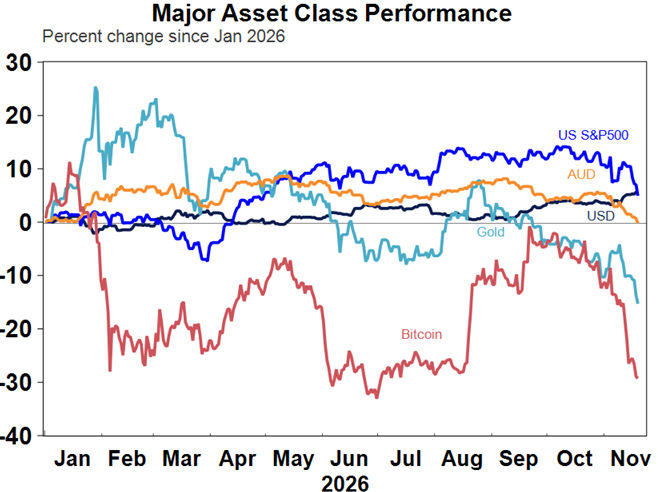
While iron ore prices were roughly flat, the risk off tone saw metal, gold and Bitcoin prices all fall again over the last week as the US dollar surged. Bitcoin is now retesting its mid-year lows and risks re-entering the crypto winter that looked to be over with its surge in August and September. The combination of risk off sentiment, falling metal prices and increasing expectations for RBA rate cuts next year saw the $A fall back to levels seen late last year.
Oil prices fell further. This was despite US strikes on an Iranian missile launch site and ongoing Iranian attacks on its neighbours and shipping in the Strait of Hormuz.
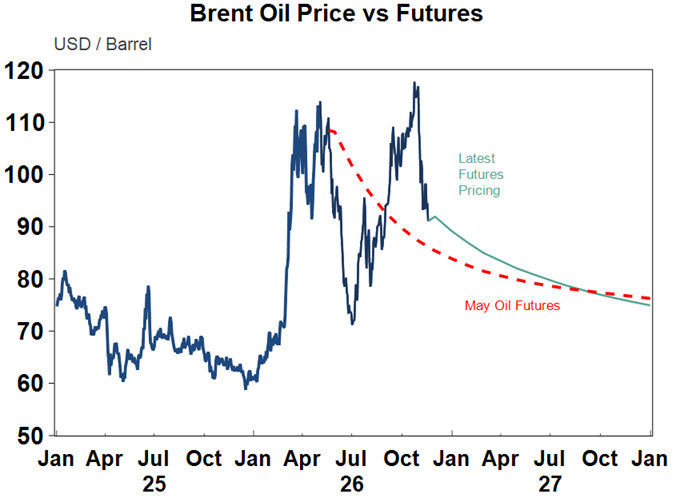
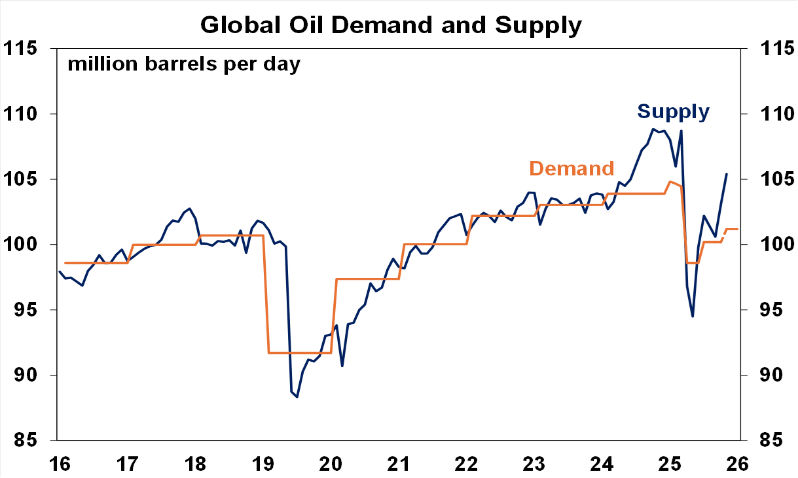
The risk of another spike in oil prices remains high, but IEA data showing rising global oil supply relative to demand is helping keep oil prices down from their recent highs.
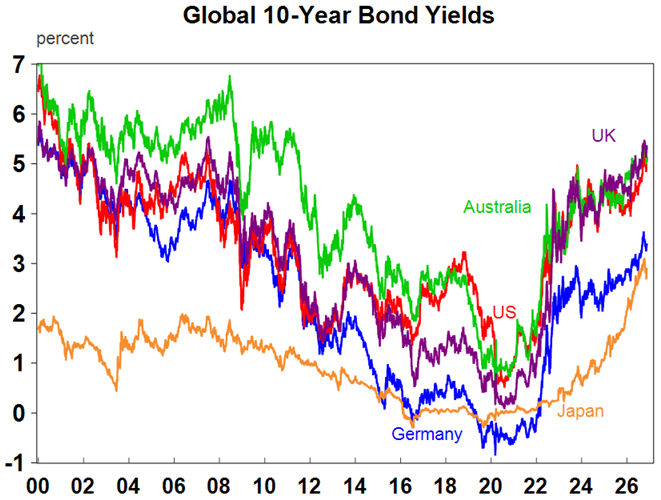
Bond yields fell in the US, UK, Japan and Australia over the last week on the back of safe haven buying and reduced expectations for the RBA cash rate, but European yields saw small increases. The longer-term risks for bond yields remain on the upside though thanks to: the oil shock; upside risks to inflation; central bank rate hikes; concerns that maybe the neutral short-term rate has moved up; worries about big budget deficits; corporate borrowing to fund data centre investment; and a rising trend in Japanese bond yields leading to a reversal of the so-called carry trade.
After the renewed weakness of the last week US shares have had an 8.2% fall, global shares are down 7.5% and Australian shares are down 7.3% but the correction could still have further to run given a long worry list of: high and sticky inflation; the likelihood of more global central bank rate hikes; excessive public debt; a rising long term trend in bond yields; AI bubble fears; concerns about more regulation and higher taxes after the US midterms; and the rising risk of a recession and high rates in Australia. Looking at some of the key threats:
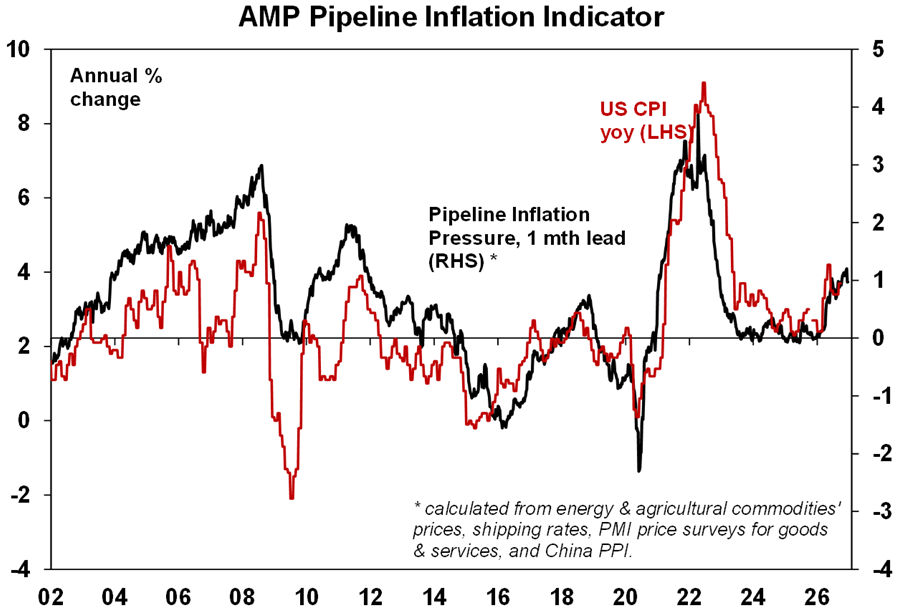
- Inflation is proving too high and sticky – notably in the US and Australia. Our Pipeline Inflation Indicators are yet to decisively turn down in the US or Australia.
- Most major global central banks are likely to raise rates further. This was evident in the minutes from the last Fed meeting with almost all members thinking that further rate hikes will be necessary. And in Australia the minutes from the last RBA Board meeting indicated that most members are still more concerned about inflation and growth and this was the message from RBA Governor Bullock earlier in the week, albeit her comments now look rather dated.
- And in relation to AI there is an ongoing concern that AI related demand won’t be sustained, that valuations are excessive and that the massive data centre buildout will prove unwarranted at the same time that the issues around Nvidia’s former CEO threaten a renewed crackdown on US chip sales to China. The latter could be an issue for a while as investigations into Jensen Huang’s affair with an alleged Chinese spy wind up.
Given these concerns the risk of a further correction in shares in the near term is high. However, there are several positives for shares suggesting that what we are seeing is likely a correction rather than the start of a new bear market. In particular,
- Profit growth in the key US share market remains very strong running at 33%yoy to the September quarter. Tech remains a star performer but much of the upside surprise has been in ex tech & energy.
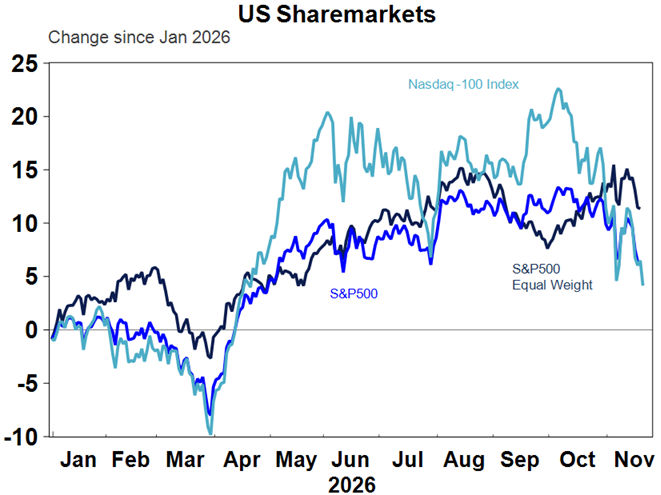
- Strong upside earnings surprises and growth outside tech is supporting a rotation trade in US shares away from tech shares. This is evident in the average US share (as measured by the equal weighed S&P500) holding up relatively well so far.
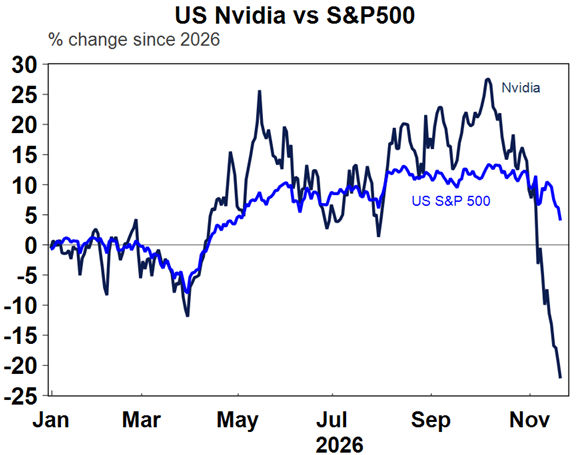
- Nevertheless, Nvidia’s September quarter earnings report showing beats and 100% plus annual growth in sales and profits, upgraded guidance for sales and earnings growth and no signs of any cracks in AI data centre demand suggest AI related fundamentals for now remain strong. And after a 39% fall from its high Nvidia is looking a bit oversold given its profit performance.
- Anthropic’s successful IPO which raised a record greater than expected $107bn and saw its share price rise 17% on the first day of trading (albeit it was initially up 36%) indicates that investor enthusiasm for AI is still strong. And while one can question all the data centre investment there is a strong argument that Anthropic and Open AI are positioning themselves to become the Microsofts of the AI age, thereby locking in users. But, given IPO’s mixed track record - the greater the hype often the worse the post listing performance – I don’t want to push this one too far.
- Recession risks globally are still low with not much evidence of any slowing in the US.
- In Australia softer data including for jobs has come with the silver lining of a brighter outlook for interest rates.
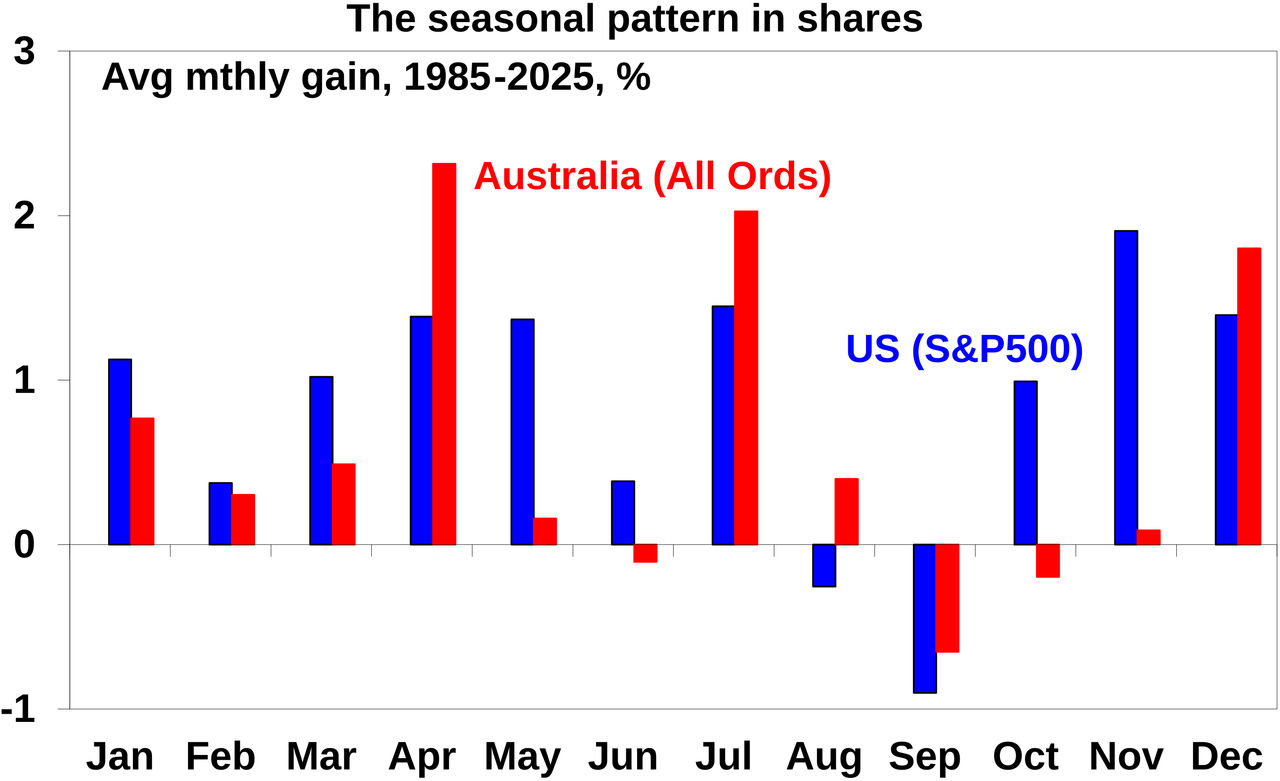
- And finally, seasonality for shares normally starts to turn positive from around here into year end.
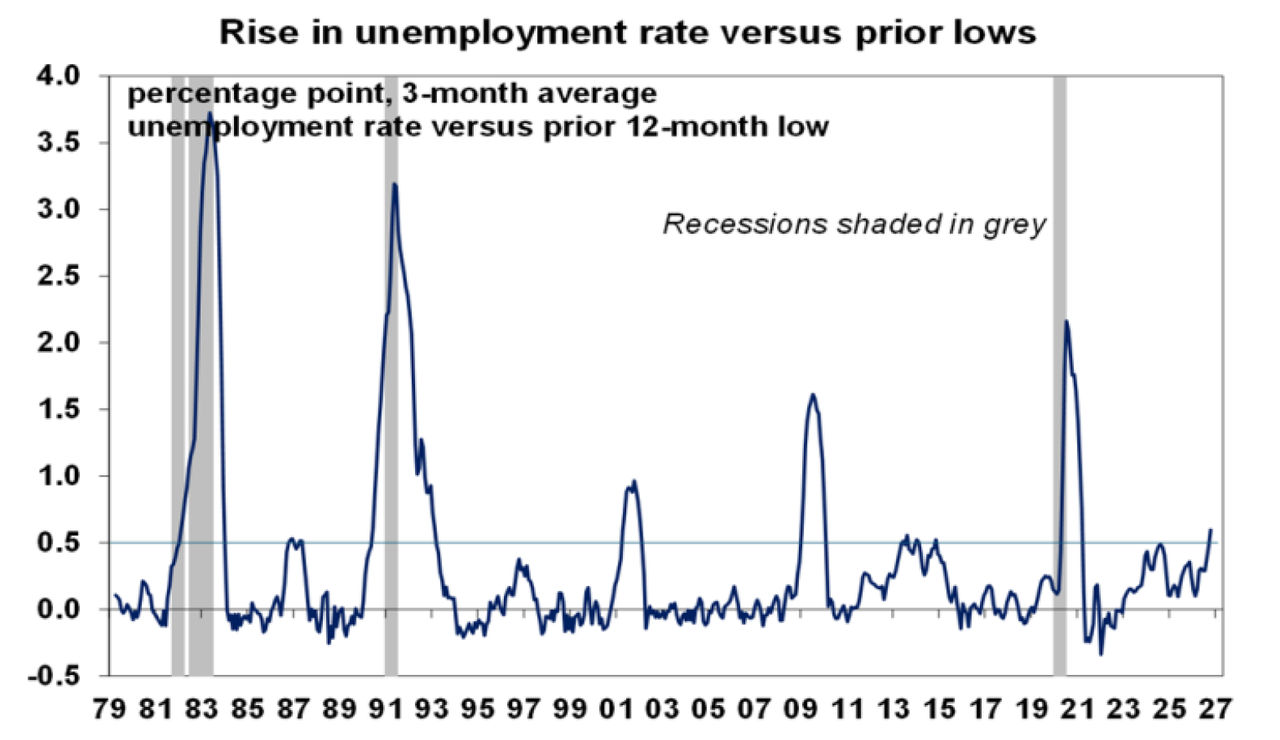
Is Australia at risk of recession? This question is now getting much focus after jobs data in the last week showed a further rise to 4.9% its highest since 2021 with news of ongoing corporate insolvencies and job layoffs, with General Pants being the latest, adding to the gloom. Some have noted that the Sahm rule – which based on US data suggests a recession has started when the 3-month average of unemployment is 0.5% or more above its lowest point in the last year – has been triggered in Australia. But it famously didn’t work two years ago in the US and as can be seen in the next chart it has given false signals on several occasions in Australia (2001, 2009, 2013 and almost in 2024). However, those false signals were neutered by rate cuts which may not come so quickly this time given inflation worries.
More broadly though, a rapid decline in leading, coincident and lagging economic indicators in Australia warn that the risk of recession is real. This is consistent with bad trading updates from numerous Australian companies in the last month or so. As can be seen in the next chart the slump is the worst since the pandemic but is not quite yet as bad as seen around the GFC.
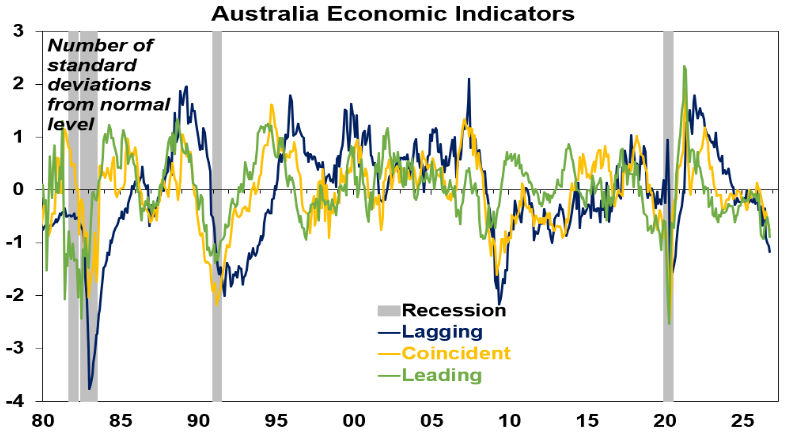
At this stage a recession is not our base case given a strong outlook for business investment due to the AI data centre building boom and okay global growth supporting our exports in contrast to the run up to the early 1980s and 1990s recessions. However, we would put the risk of recession at a high and still rising 40%. This reflects the increasing risk that rate hikes have reached a tipping point which will drive increasing debt servicing problems for at risk households and falling home prices which will in turn reduce consumer spending and an emerging slump in home building.
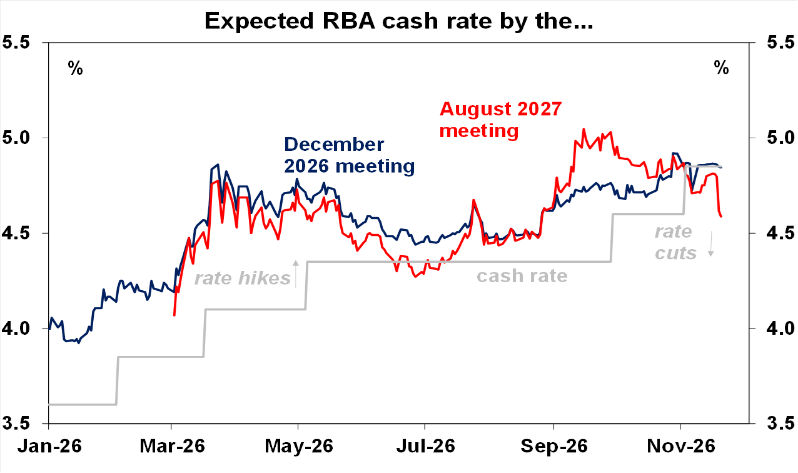
The rising trend in unemployment and increasing reports of layoffs are consistent with rate hikes, high fuel prices and poor confidence working to slow the economy. AI may be impacting too but it’s a side show to these underlying drivers. Rising unemployment points to slower wages growth ahead, rising mortgage arrears and slowing demand along with a rising risk of recession in Australia, all of which will ultimately slow inflation. In other words, the RBA is getting what it wants – weaker demand in order to slow inflation. As such, it confirms our view that the RBA has already done enough and while there is still some chance it could hike again the odds are low with it likely to remain on hold at the December meeting as it assesses the recent flow of data and then remain on hold into next year. Barring a quick lurch into recession or major financial crisis the RBA will be wary of rushing into a rate cut until it sees clear evidence of a broad based fall in inflation. It doesn’t want a repeat of its 2025 experience. That said, we had been thinking that the RBA would not start cutting until November next year, but the weakening jobs market mean it could now come earlier say around August.
Money market expectations for the cash rate have swung precipitously from the prospect of a rate hike to above 5% to now fully pricing in a cut by August next year. In the latest hiking cycle, it has moved ahead of the RBA, but it can be quite volatile.
Does the rising risk of recession mean that the Federal Government should now not cut spending in the mid-year budget update next month? No. Federal Treasurer Jim Chalmers has reiterated that there will be “a substantial saving package”. Hopefully this will be a net reduction in spending - rather than savings in some areas and more spending in others - leading to lower spending in real terms otherwise spending will just keep rising as it has in the last three financial years. The Government should proceed with the cuts for three reasons: to start returning Federal spending to more normal levels to help boost productivity; to allow more room for private sector spending without generating inflation; and to allow the RBA to cut rates earlier than might otherwise have been the case.
Major global economic events and implications
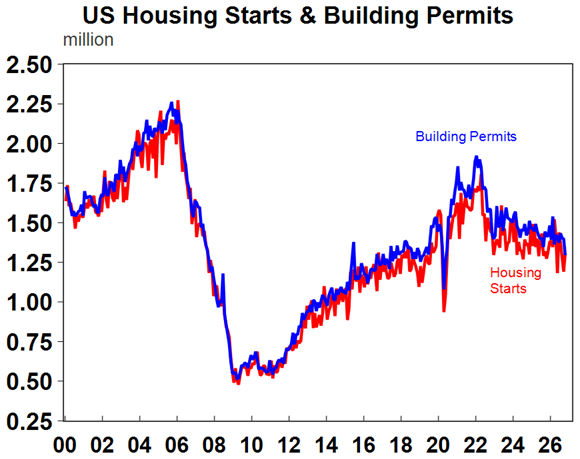
US economic data mostly remains solid. Underlying retail sales growth was strong in October as was manufacturing production. And while manufacturing conditions fell in the November Philadelphia and New York regional surveys it remains sold. And jobless claims remain low. The Atlanta Fed’s GDP Now growth tracker has growth this quarter running along at a solid 3.2% pace. Housing remains weak though with a soft trend in starts, a fall in permits, poor home builder conditions and falling pending home sales.
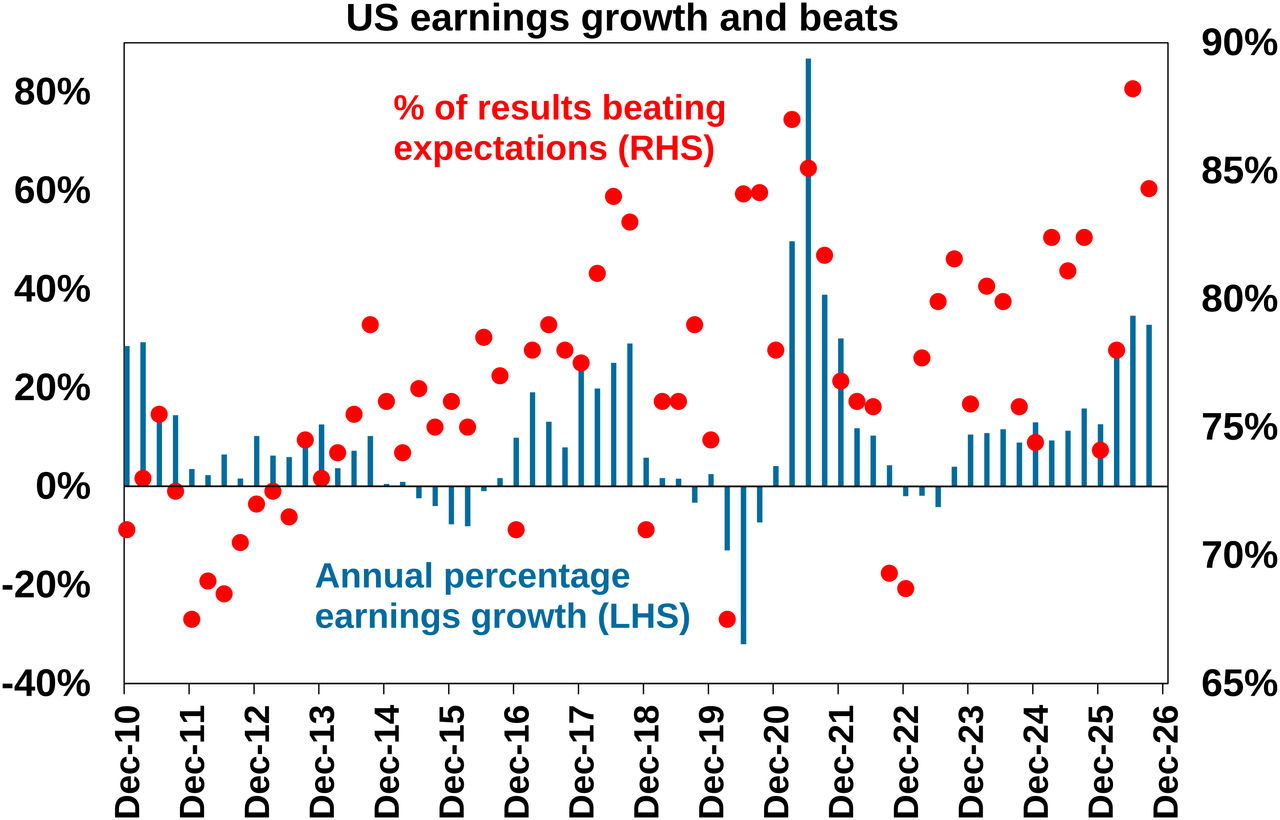
With Nvidia’s results out of the way the US September quarter earnings reporting season is now largely complete. 84% of S&P500 companies beat expectations and earnings growth has come it at nearly 33%yoy, up from 26%yoy at the start of the reporting season. Earnings growth has been concentrated in tech (+51%yoy) and energy (+155%yoy) but the rest of the market still saw earnings up a solid 13%yoy. Interestingly tech has seen some misses and only came in slightly stronger than expected, but earnings ex energy and tech came in nearly twice as strong as expected supporting the rotation trade in US shares from tech to non-tech.
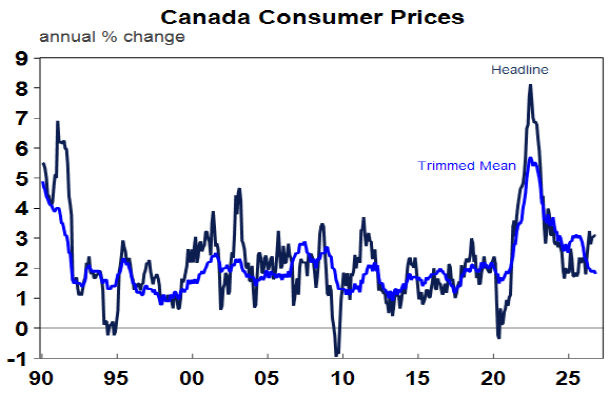
Canadian inflation came in slightly softer than expected leaving the Bank of Canada in no hurry to hike rates again. Key core inflation measures are around 2%yoy or less.
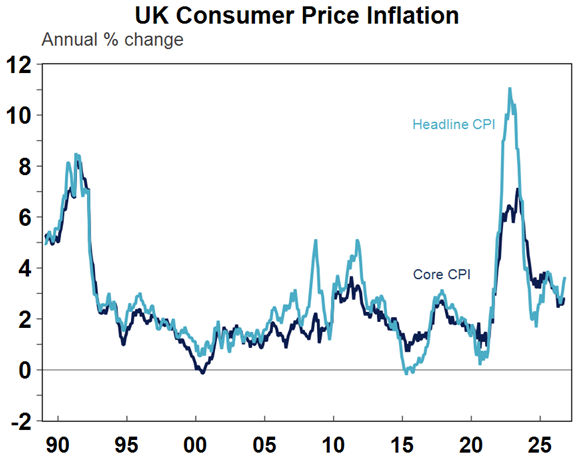
UK inflation is not so good at 3.6%yoy for headline & 2.8% yoy for core and combined with a fall in unemployment leaves the BoE on track to hike again next month.
Japanese September quarter GDP surprisingly contracted by 0.1%qoq with weakness in consumer spending, home building, public demand and net exports. Business investment rose though and there is a good chance that the contraction will be revised away. With Japanese inflation remaining around 2% in October the BoJ remains on track to continue normalising interest rates next month.
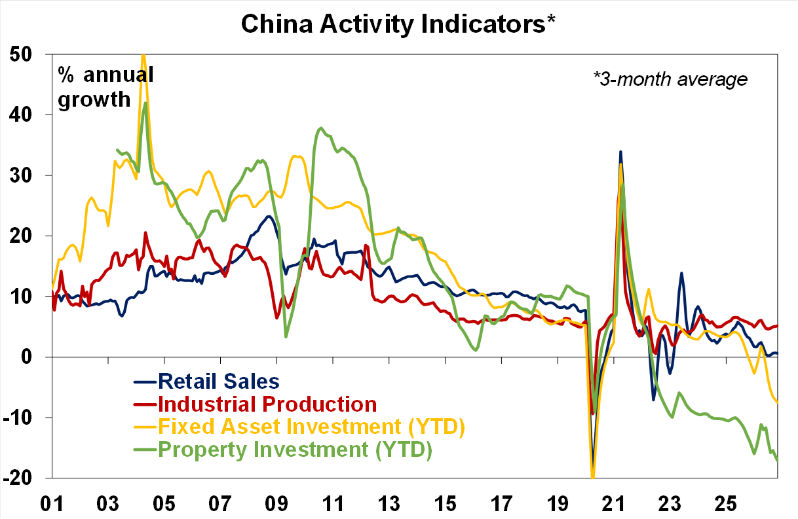
Chinese economic activity data for October was soft with retail sales growth slowing to just 0.4%yoy, industrial production slowing to 4.8%yoy and investment falling faster. The fall in property investment and sales also accelerated. With growth skewed towards a heavy reliance on exports, policy stimulus to boost consumer spending is badly needed. However, it’s likely to remain incremental. At least Chinese home price falls have slowed a bit and measured unemployment is still low at 5.1%.
Australian economic events and implications
Wages growth in the September quarter rose to its highest in three years thanks to the pickup in award and minimum wages growth granted by the Fair Work Commission and strong increases in some state public sector roles.
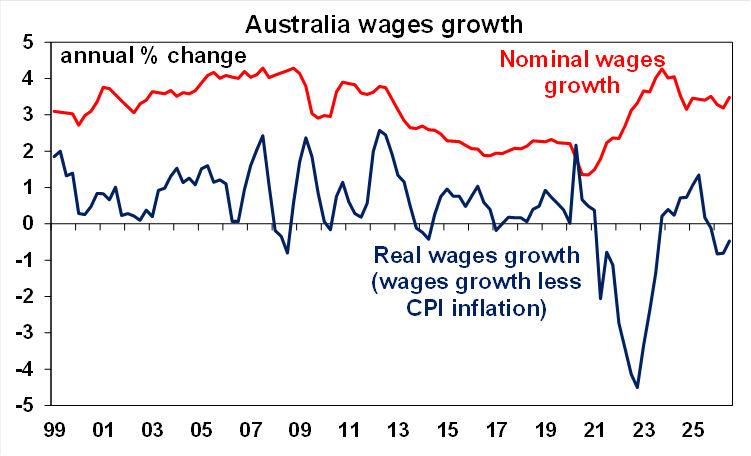
While the Fair Work Commission’s decision to grant faster increases in minimum and award wages this year reflected a desire to boost real wages the risk is that it has an influencing effect in boosting other wages along with workers generally seeking compensation for high inflation. This at a time when productivity is stagnant is a big concern for the RBA. Put simply 3.5%yoy wages growth is consistent with the 2-3% inflation target if productivity growth is 1%yoy because the increased cost to the employer is 2.5%. But if productivity growth is zero the cost to the business will go up by 3.5%yoy necessitating a rise in prices well above the inflation target. So, the strong level of wages growth is a source of upside risk to inflation.
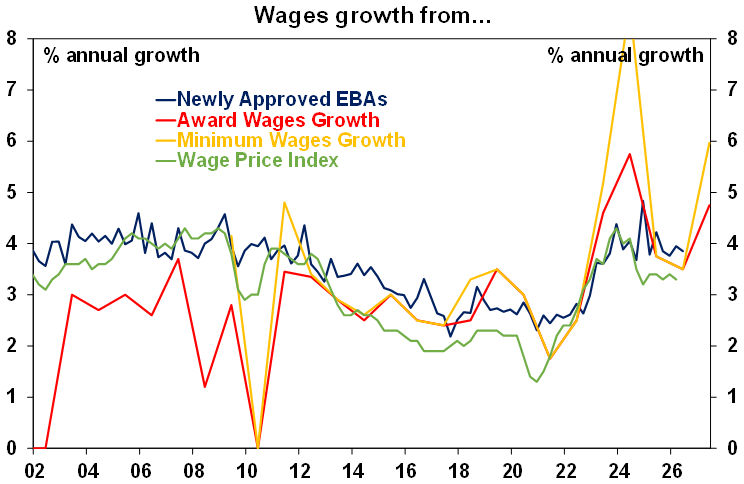
However, wages growth is a lagging indicator and the weakening labour market points to cooling wage growth ahead. And the latest jobs data was bleak with employment down by 44,000, hours worked down, the share of the population employed down & unemployment up to 4.9%, a level which the RBA did not expect till late next year.
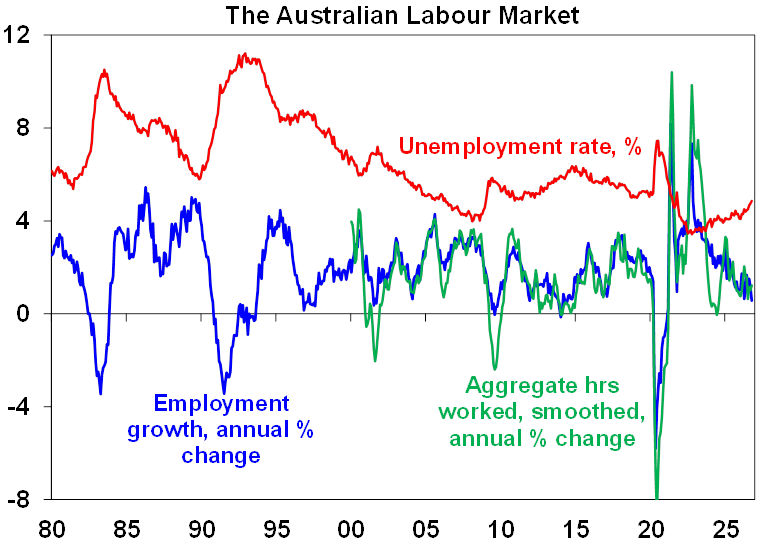
To be sure there may be some statistical quirks exaggerating the weakness with public and school holidays in October and the ABS’ changed labour force survey. And forward looking labour market indicators – job ads, vacancies and hiring plans - are not that weak. So the unemployment rate may pull back a bit next month.
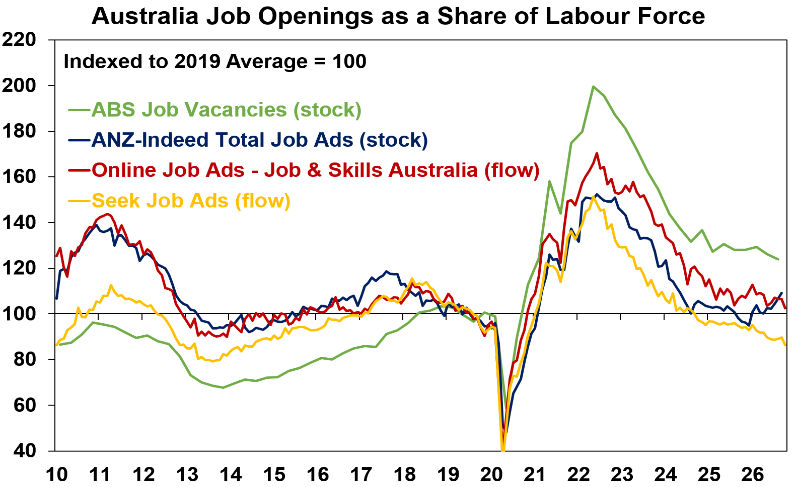
However, the rising trend in unemployment is likely to continue likely pushing above 5.5% next year. It confirms our view that the RBA has already done enough to slow demand and hence inflation and that rates are likely now on hold for a while ahead of rate cuts later next year.
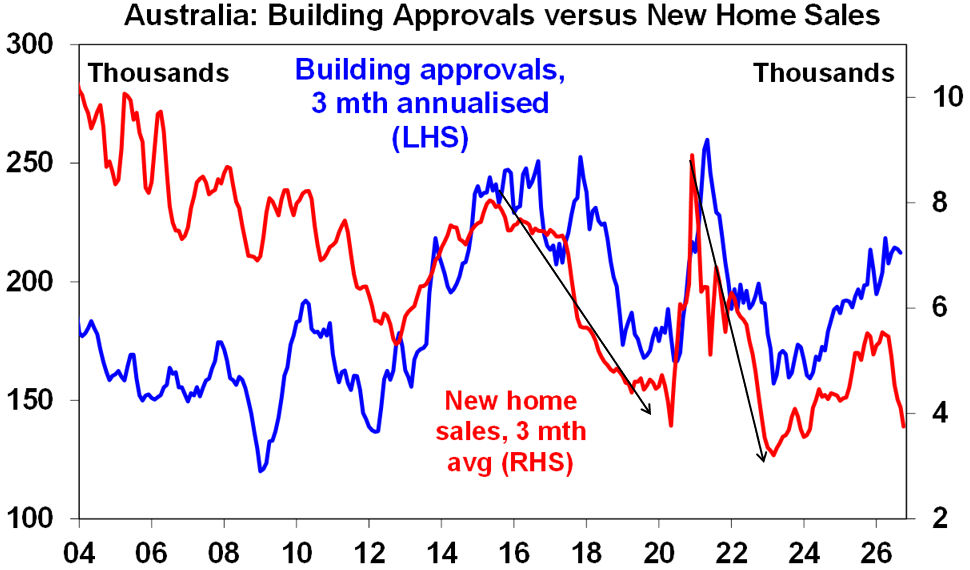
On the housing front new home sales as reported to the HIA fell 19% October, their fifth monthly fall pointing to a slump in building approvals ahead. As can be seen in the next chart, slumps in new home sales in the last two cycles preceded slumps in building approvals. So much for the Housing Accord target of building 240,000 homes a year.
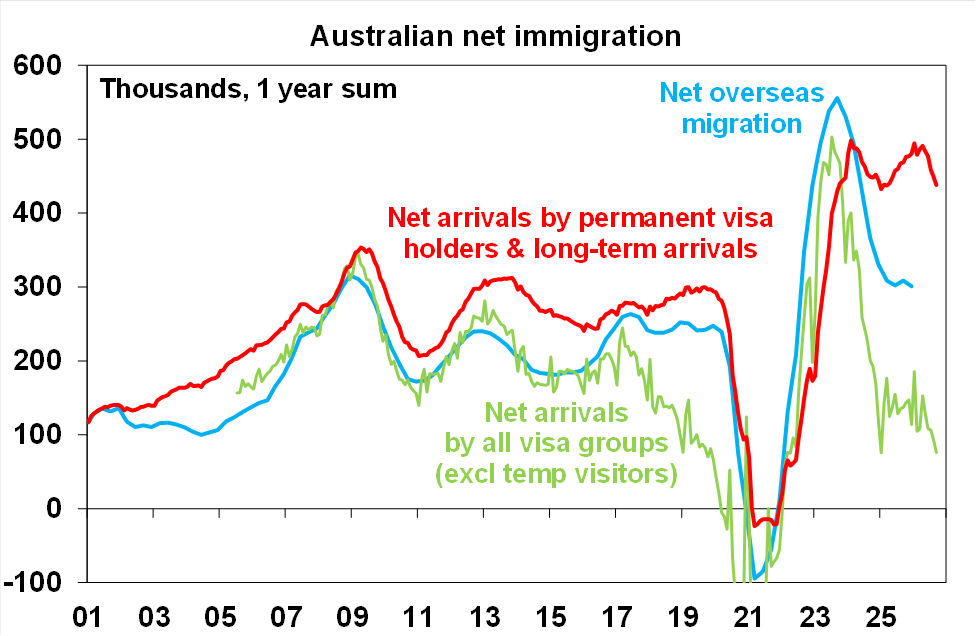
Is net migration having another leg down? While monthly visa data and net long term and permanent arrivals data have been giving mixed messages on net migration (with the truth in between) both have been trending down lately suggesting net migration may be starting to slow more sharply after stabilising over the last 18 months or so.
What to watch over the next week?
In developed countries business conditions PMIs for November will be released and are likely to remain consistent with reasonable global economic growth.
In the US the focus is likely to be on core private final consumption deflator inflation data for October (Wednesday) which is expected to show a 0.3%mom rise with annual inflation rising to 3.2%yoy from 3.1%, which in turn should support expectations for another Fed hike next month. In other data, expect a small rise in consumer confidence (Tuesday) and a continuing rising trend in capital goods orders (Wednesday).
In Australia, CPI inflation (Wednesday) is likely to have risen further in October to 4.8%yoy due to further 8.5% rise in fuel prices. Trimmed mean inflation is likely to remain at 3.6%yoy though adding to the case for the RBA to leave rates on hold in December, particularly given that fuel prices have since fallen back a bit and unemployment has moved even higher. Construction activity in the September quarter (Wednesday) expected to rise 3%qoq with business investment (Thursday) expected to show a 4% rise, with another data centre boost.
Outlook for investment markets
Global and Australian share markets are at risk of a further correction amidst worries about an AI bubble, sticky inflation and central bank rate hikes, the oil shock, the risk of further increases in bond yields and stretched valuations and uncertainty associated with what the blue wave from the midterm elections will bring. However, at this stage its likely just a correction rather than a new bear market thanks to continuing economic growth with recession likely to be avoided, albeit it’s a high risk in Australia, and strong global profit growth and likely rate cuts later next year.
Bonds are likely to see subdued returns.
Unlisted commercial property returns are likely to be solid helped by strong demand for industrial property associated with data centres. Higher bond yields are a constraint.
Australian home prices are expected to fall around 15% top to bottom, of which they have already done 6.7%, out to the September quarter next year as a result of RBA rate hikes, reduced investor demand flowing from the Budget tax hikes and poor confidence. Rising distressed sales risk also becoming a drag.
Cash and bank deposits are expected to provide returns around 5%.
The $A could see more weakness in the near as the Fed hikes versus the RBA. However, it should be supported on a 12-month view as metal prices rebound and fair value is around $US0.72.


You may also like
-

Oliver's Insights - Why free markets deliver higher living standards - AMP Free market economies generate higher living standards as prices allocate resources to their best uses; competition and incentive drive innovation; they result in creative destruction; and markets respond to consumer preferences. -

Weekly Market Update - 13-11-2026 There is a danger in exaggerating the economic impact of the outage – as many of the affected activities will be made up for later and some may claim they got more work done due to the absence of email distractions. However, the global cost is still likely to run into many billions of dollars as email is central to economic activity these days. -

Oliver's Insights - US Midterm Elections The implications for investors of the blue wave in the US midterm elections
Important information
Any advice and information is provided by AWM Services Pty Ltd ABN 15 139 353 496, AFSL No. 366121 (AWM Services) and is general in nature. It hasn’t taken your financial or personal circumstances into account. Taxation issues are complex. You should seek professional advice before deciding to act on any information in this article.
It’s important to consider your particular circumstances and read the relevant Product Disclosure Statement, Target Market Determination or Terms and Conditions, available from AMP at amp.com.au, or by calling 131 267, before deciding what’s right for you. The super coaching session is a super health check and is provided by AWM Services and is general advice only. It does not consider your personal circumstances.
You can read our Financial Services Guide online for information about our services, including the fees and other benefits that AMP companies and their representatives may receive in relation to products and services provided to you. You can also ask us for a hardcopy. All information on this website is subject to change without notice. AWM Services is part of the AMP group.