




Oliver's insights
A hawkish hike from the RBA to 4.6% - this is likely the top, but the risk of another hike is very high
As widely expected, the RBA hikes 0.25% to 4.6%, as upside risks to inflation have “materialised.”
5 min read

Key points
- As widely expected, the RBA hikes 0.25% to 4.6%, as upside risks to inflation have “materialised.”
- The RBA retained a tightening bias noting that inflation Is “still too high” and that it will do what it considers necessary to achieve its mandate, “including increasing the cash rate target further if needed”.
- Our base case is that rates have peaked as the RBA has likely now done enough to weaken demand sufficiently to push inflation back to target by the end of next year.
- But with inflation being above target for five of the last six years the RBA is likely to retain a tightening bias for a while to come, so the risk of another rate hike is very high.
Introduction
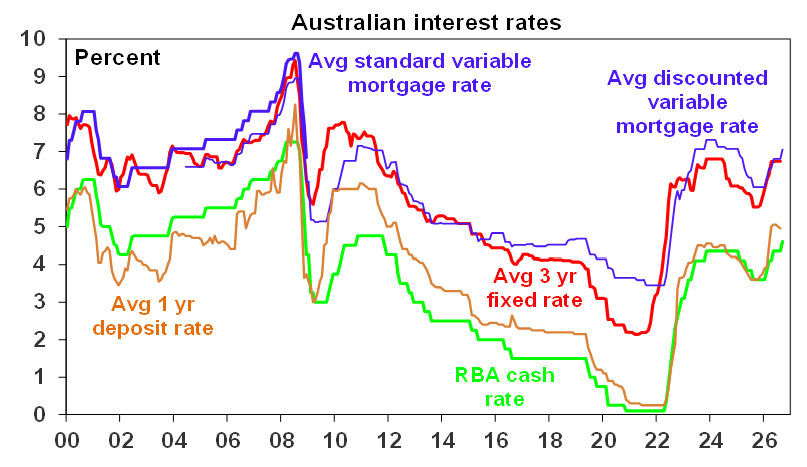
The RBA’s decision to hike by another 0.25% to 4.6% was no surprise with the money market pricing in a 93% probability of a hike and all 29 economists surveyed by Bloomberg expecting the same. The cash rate is now at its highest since October 2011. One more rate hike would take it to its highest since November 2008. Once passed on to mortgage rates, the latest hike means roughly an extra $110 a month in mortgage interest payments for mortgage holders with an average $700,000 mortgage and a total increase of $440 a month since January or $5300 year.
Why the RBA hiked rates again
In hiking rates again, the RBA noted the while economy has slowed, unemployment is rising and house prices have fallen, but growth is still stronger than expected, growth in business investment is strong, the labour market is still “a little bit tight” and inflation is even higher than expected with some upside risks materialising around capacity constraints, energy prices and AI related demand. It continues to see weak productivity constraining capacity and potential growth and that demand needs to stay soft for an extended period to bring inflation down to target. So with inflation too high and upside risks materialising the RBA judged a further tightening was necessary.
Not only did the RBA hike again, but it retained a tightening bias noting that it “will continue to do what it considers necessary to bring inflation sustainably back to target, including increasing the cash rate further.”
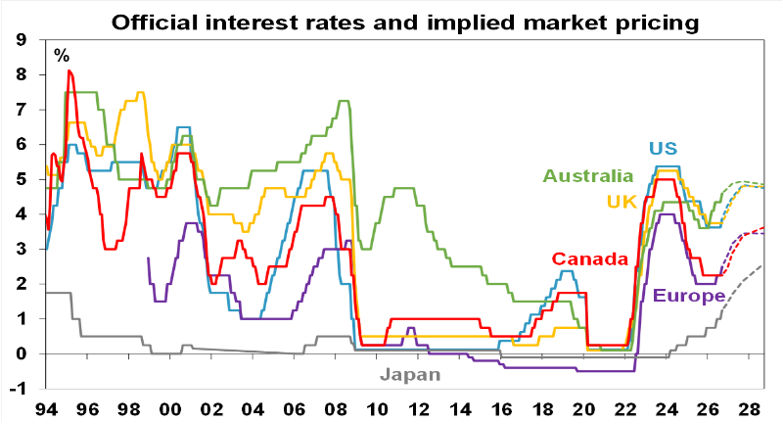
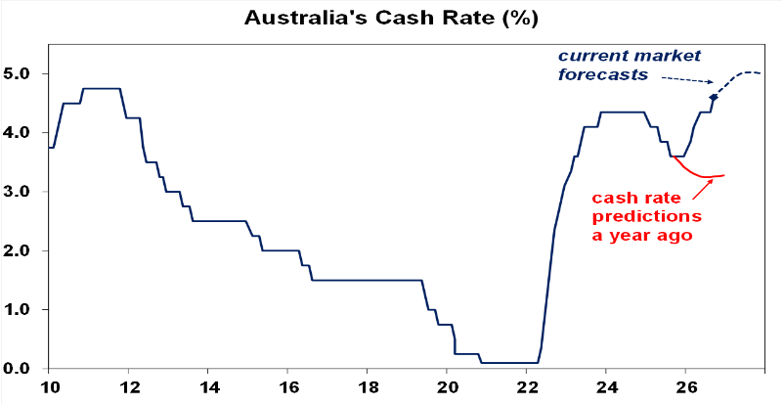
The money market is signalling another hike by February and 50% probability of yet another hike by June next year. Australian interest rates are expected to remain higher compared to other major countries reflecting inflation in other major countries being closer to.
The RBA is likely at the top, but…
Another rate hike is high risk for several reasons:
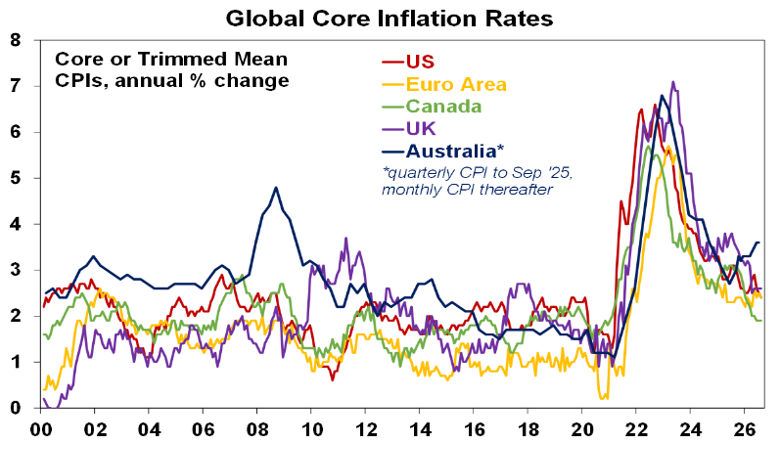
- First, underlying or trimmed mean inflation is still too high. At 3.6%yoy its way above the 2-3% target, there is no downtrend yet and its high compared to other major developed countries.
- Second, various cost pressures point to higher inflation. The Fair Work Commission’s granting of a 4.75% increase in award wages and 6% increase in the minimum wage from July points to an acceleration in wages growth this year which is unsupported by productivity growth running at -0.2%yoy, second round impacts from the oil supply shock are still in the pipeline with oil and petrol prices on the rise again with no clear end in sight to the hit to oil supply from the Persian Gulf, the AI data centre boom is adding to construction and material costs and business surveys still point to elevated cost and output price pressures compared to the pre-pandemic years.
- Third, the credibility of the 2-3% inflation target and the RBA’s commitment to it remain at risk. Inflation has been above target for five of the last six years including the present year, and the longer this remains the case the more people will expect this to be the new reality. If left unchecked this will show up in faster wage demands and businesses inclined to put through price rises more regularly.
- Fourth, it’s still not clear the economy has slowed enough to rebalance demand with supply and ease capacity constraints.
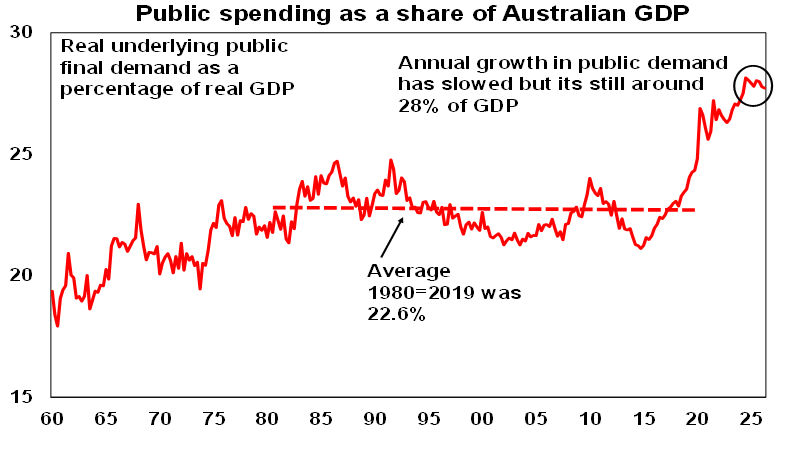
- Finally, the level of public demand remains strong. Federal spending is projected to remain just below 27% of GDP for the next few years, which is well above pre-pandemic levels and in turn implies that total public spending overall will remain around 28% of GDP, which is well above pre-pandemic levels. Sure, the rate of growth in public final demand has slowed a bit but it’s the level of demand that counts when considering excess demand and capacity constraints in the economy as drivers of inflation.
So, the risk of another rate hike remains high and at the very least the RBA is likely to retain a tightening bias for some time to come. However, by the time the next RBA meeting comes around in November there is likely to be more evidence of a cooling economy, sharply falling home prices, a softer jobs market and rising recession risks so we don’t think a second hike let alone a third will be necessary. In particular:
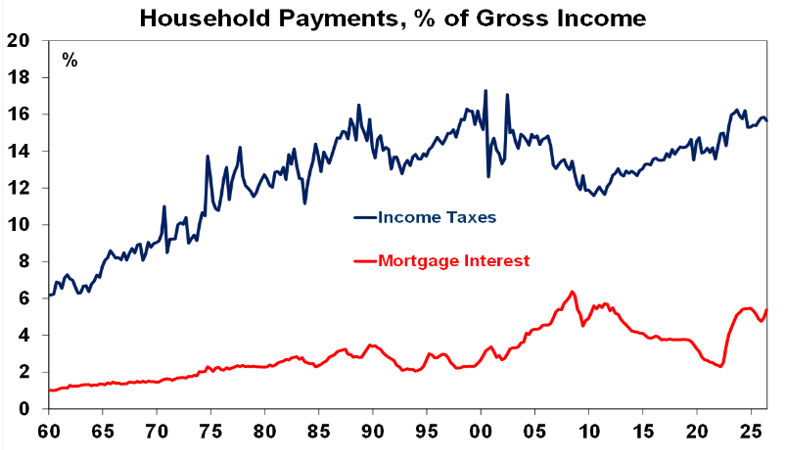
- The share of household income devoted to mortgage interest payments is already pushing up to the highs reached in 2024, which was not far from the pre-GFC high. And this chart does not fully reflect the May rate hike let alone this week’s rate hike.
- The rise in petrol prices to current levels implies roughly another $90 a month impost on a households relative to January.
- Falling home prices imply an increasing drag on consumer spending via a negative wealth effect. Prices are expected to fall roughly 10% top to bottom. The RBA estimated a few years ago that a 10% fall in home prices will reduce consumer spending by around 0.8% after two quarters and 1.6% over the long run.
- The latest rate hike runs the risk that we may be close to a tipping point for some mortgage holders, resulting in increased distressed selling of homes. This in turn will add to already weak home buyer demand possibly risking an even deeper fall in home prices and hence a bigger negative wealth effect.
- Unemployment is trending up which will add to mortgage stress cutting into consumer spending and also running the risk of increased distressed home sales further depressing home prices.
- Although its early days, household spending was flat in August and fell 0.3% after allowing for higher fuel bills and is showing signs of softening in line with poor consumer confidence.
These considerations suggest a further slowing in demand, and an increasing risk of recession, both of which will mean ultimately slower inflation. So, while a second hike is a high risk it’s not our base case and we expect to see an extended hold out to around mid-next year at 4.6%. The RBA is likely to be in a position to start cutting rates next year, but not until the second half.
As an aside its worth noting just how much expectations for the cash rate have changed over the last year. Just as many (including me) got too optimistic on rates last year, many may now be getting too pessimistic.
But surely there is a better fairer way to cool inflation?
Higher interest rates work to slow inflation by taking spending power away from indebted households and businesses which then reduces excess demand in the economy and eventually lowers inflation. However, this disproportionately impacts households with a mortgage and in that sense is unfair.
The alternative would be for the government to cut its spending and/or raise taxes (or maybe even temporarily raise the superannuation contribution rate) to help lower private spending to spread the load more fairly. However, governments being run by politicians cannot be relied on to cut spending and raise taxes in times of inflation because its politically unpopular, so after chronic inflation problems in the 1970s and 1980s responsibility for its control was handed to the RBA in Australia. And this is a better outcome than the alternative of risking a return to much higher inflation which disproportionately hits lower income earners.
That said, the Federal and state governments could have taken pressure off the RBA by cutting the level of public spending allowing the RBA to run lower than otherwise interest rates and spreading the pain more fairly.
Dr Shane Oliver
Head of Investment Strategy and Chief Economist, AMP


You may also like
-

Baby budgeting: How to financially prepare for a baby Learn how to budget for a baby, prepare for parental leave, estimate childcare costs and build a financial buffer before becoming a parent. -

Weekly Market Update - 16-10-2026 - AMP Weekly Market Update: AI credit fears hit shares, Investors flocking to safe haven (because of CoreWeave?), Oil still high but global growth still resilient, and Weak jobs data gives RBA room to pause. -

6 New Year resolutions that could improve your finances Six simple financial tips that could help you save more, spend smarter and feel more in control of your finances in the new year.
Important information
Any advice and information is provided by AWM Services Pty Ltd ABN 15 139 353 496, AFSL No. 366121 (AWM Services) and is general in nature. It hasn’t taken your financial or personal circumstances into account. Taxation issues are complex. You should seek professional advice before deciding to act on any information in this article.
It’s important to consider your particular circumstances and read the relevant Product Disclosure Statement, Target Market Determination or Terms and Conditions, available from AMP at amp.com.au, or by calling 131 267, before deciding what’s right for you. The super coaching session is a super health check and is provided by AWM Services and is general advice only. It does not consider your personal circumstances.
You can read our Financial Services Guide online for information about our services, including the fees and other benefits that AMP companies and their representatives may receive in relation to products and services provided to you. You can also ask us for a hardcopy. All information on this website is subject to change without notice. AWM Services is part of the AMP group.