





Econosights
An International Women’s Day Special
The 8th of March marks International Women’s Day. The gains made to female participation in the labour force and the associated wage boost post-COVID continued into 2025 in Australia, although at a slower pace.
9 min read

Introduction
The 8th of March marks International Women’s Day. The gains made to female participation in the labour force and the associated wage boost post-COVID continued into 2025 in Australia, although at a slower pace. We look at how some of the key economic metrics as they relate to women moved in the past year in this edition of Econosights.
Women in the Australian labour market
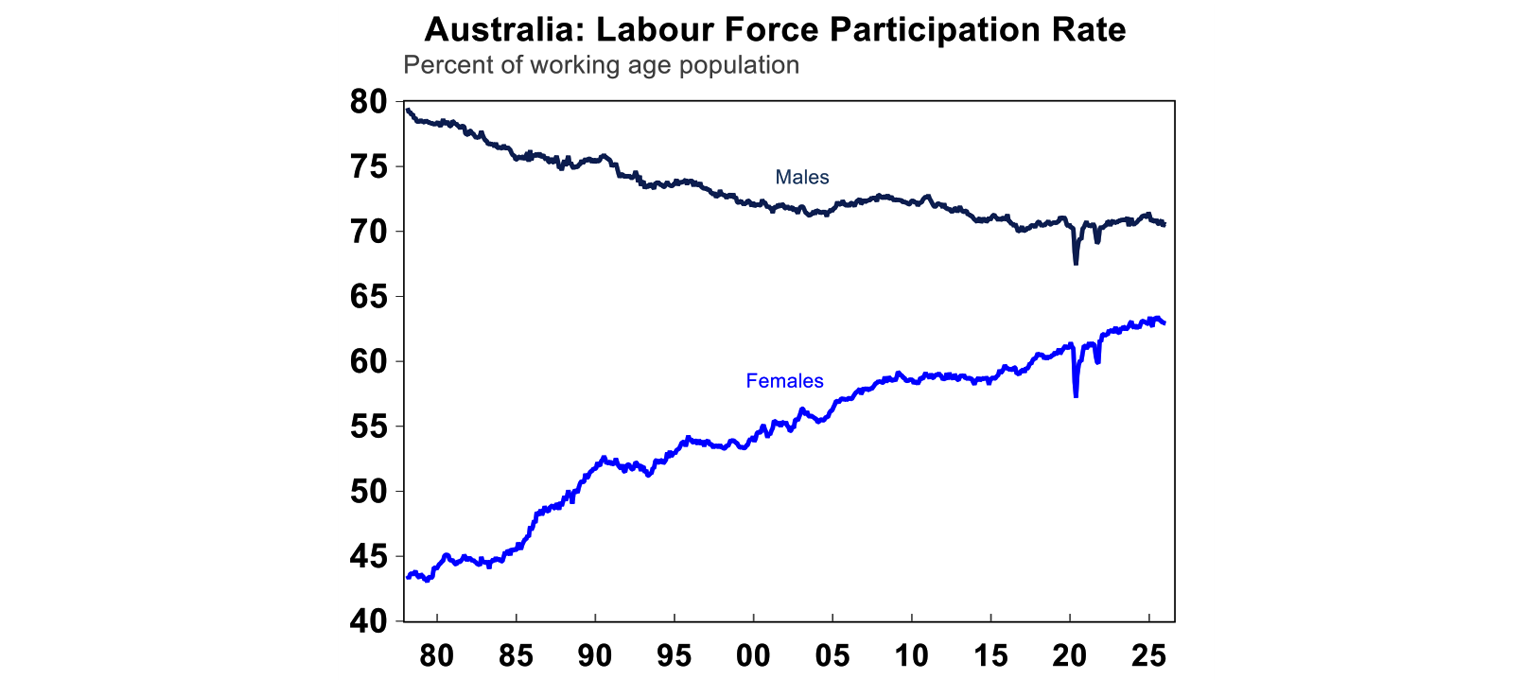
The female participation rate (the number of women either employed or unemployed and therefore looking for work as a share of the working age population) remained around a record high for most of 2025, at above 63%. It has moderated a little since then to 62.9%, from the broader marginal slowing in the labour market. The male participation rate has risen less in the post-COVID cycle and was flat over the past year at just under 71%. Female participation is well above the ~43% that was recorded in 1978. The pandemic has led to a big step-up in female participation, relative to males. This has occurred from higher work flexibility post-pandemic and the increase in jobs in the care economy, which have a higher female share.
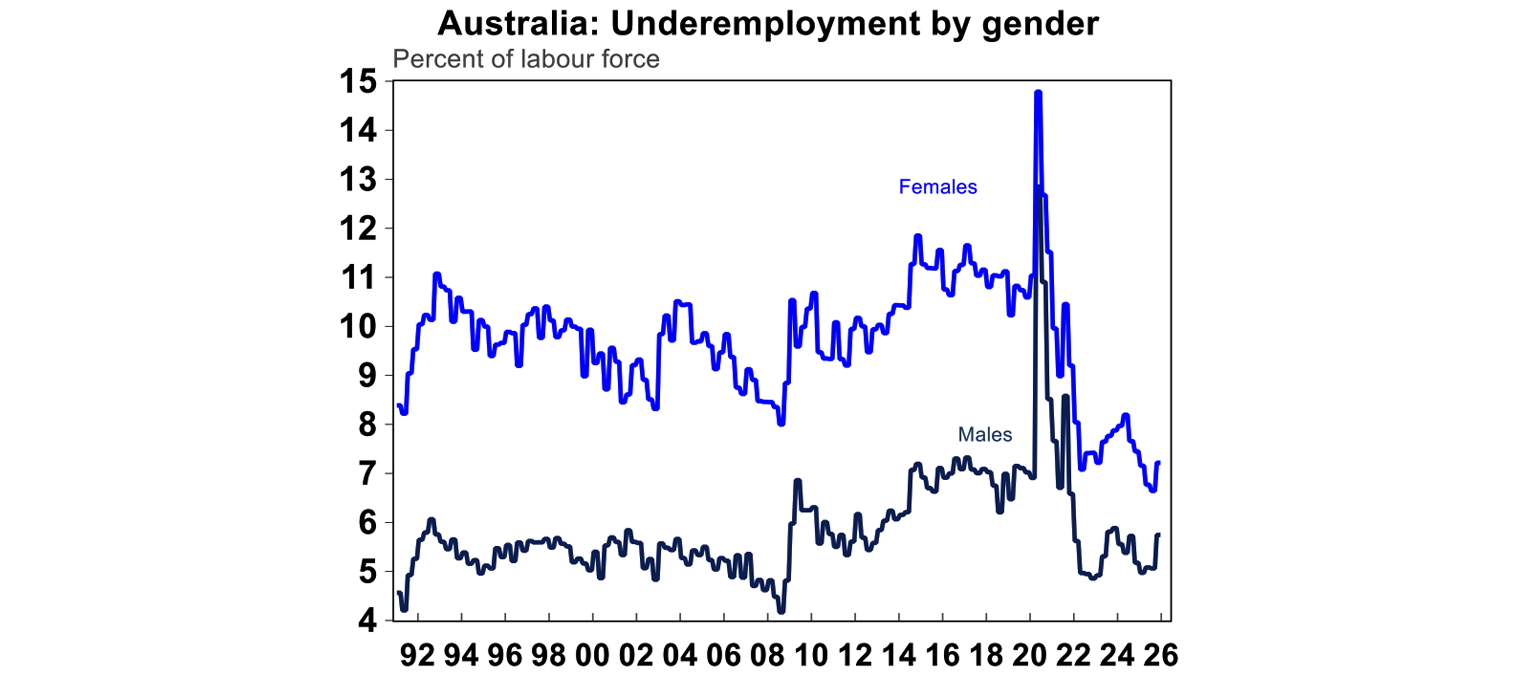
Underemployment tracks those who want to work more hours. In Australia, female underemployment has always been higher than for males because a much higher share of women in the labour force (43%) work part-time relative to men (20%). Female underemployment initally fell over 2025 but has started increasing since then and is now at 7.2%, although this is still low relative to history – see the next chart.
The gender pay gap
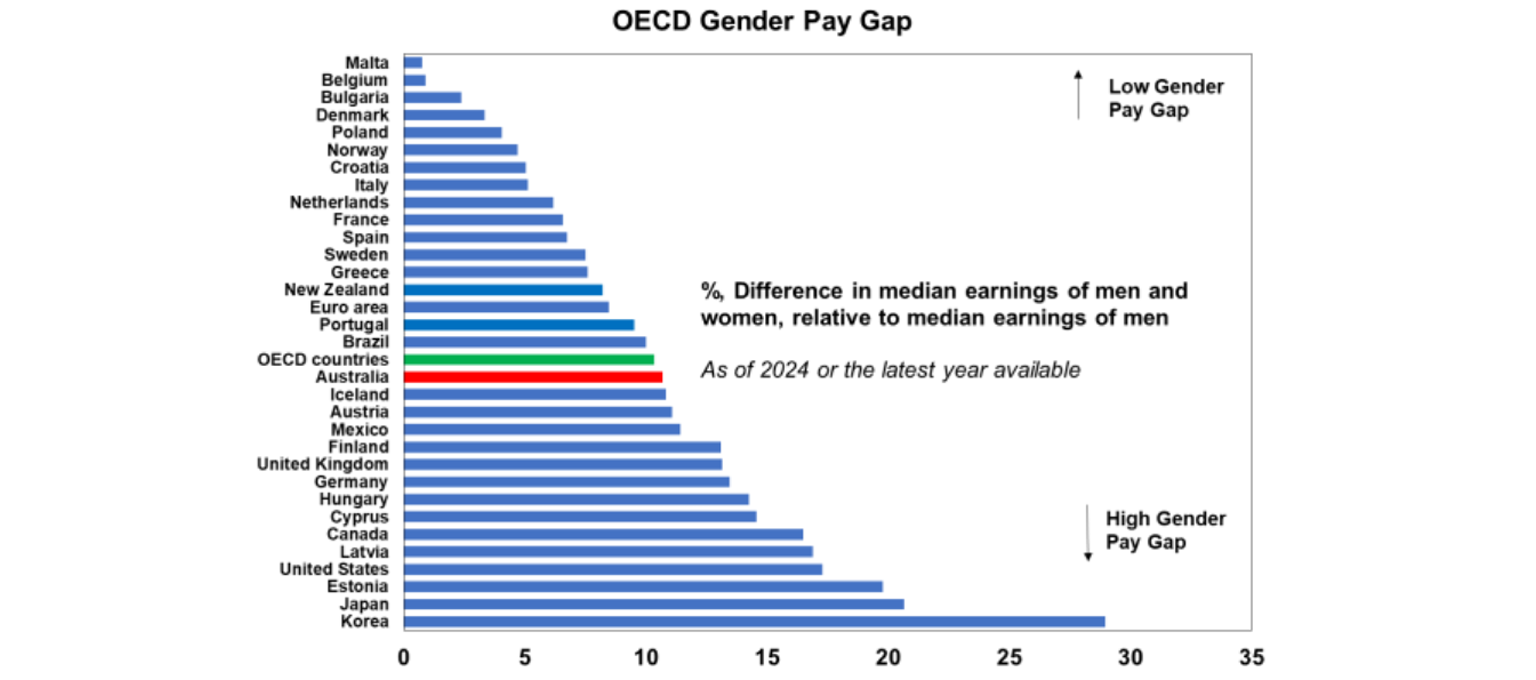
The gender pay gap refers to the difference in earnings from work for males and females for a full-time equivalent person. According to the OECD, there is a 10.7% difference in male and female pay across OECD countries (see the chart below) with Australia doing a little worse than the average at 10.3%. Peers like the UK, Germany and the US have a larger gender pay gap than Australia while New Zealand, Spain, France, Italy, Norway and Denmark have a lower gender pay gap. The outcome for Australia is still improvement compared to last year (when the wage gap was 11.8%). The OECD measure is standardised across countries but we can also use the Workplace Gender Equality Agency data which is mainly large private sector companies and found a 21.1% pay gap difference between men and women in 2024-25. This is unchanged from last year but it has been trending down in the last 10 years (it was 28.6% in 2013-14).
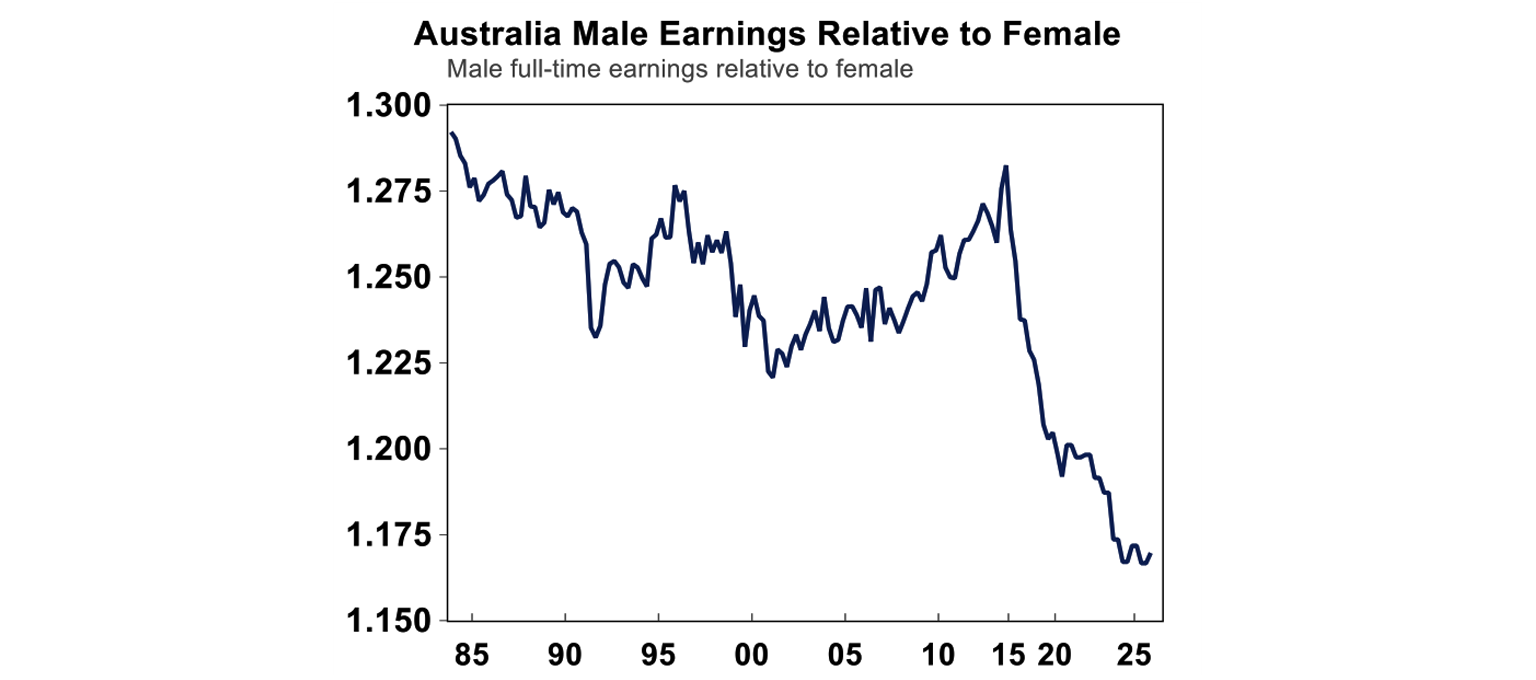
Another way of looking at it is to track average earnings between genders. The ABS average weekly earnings data shows that the ratio of male to female earnings has improved significantly post-COVID. Male earnings historically averaged at around 1.3 times that of females and have fallen to below 1.2 times most recently (see the chart below), but it’s been a steep fall relative to the usual historical movements.
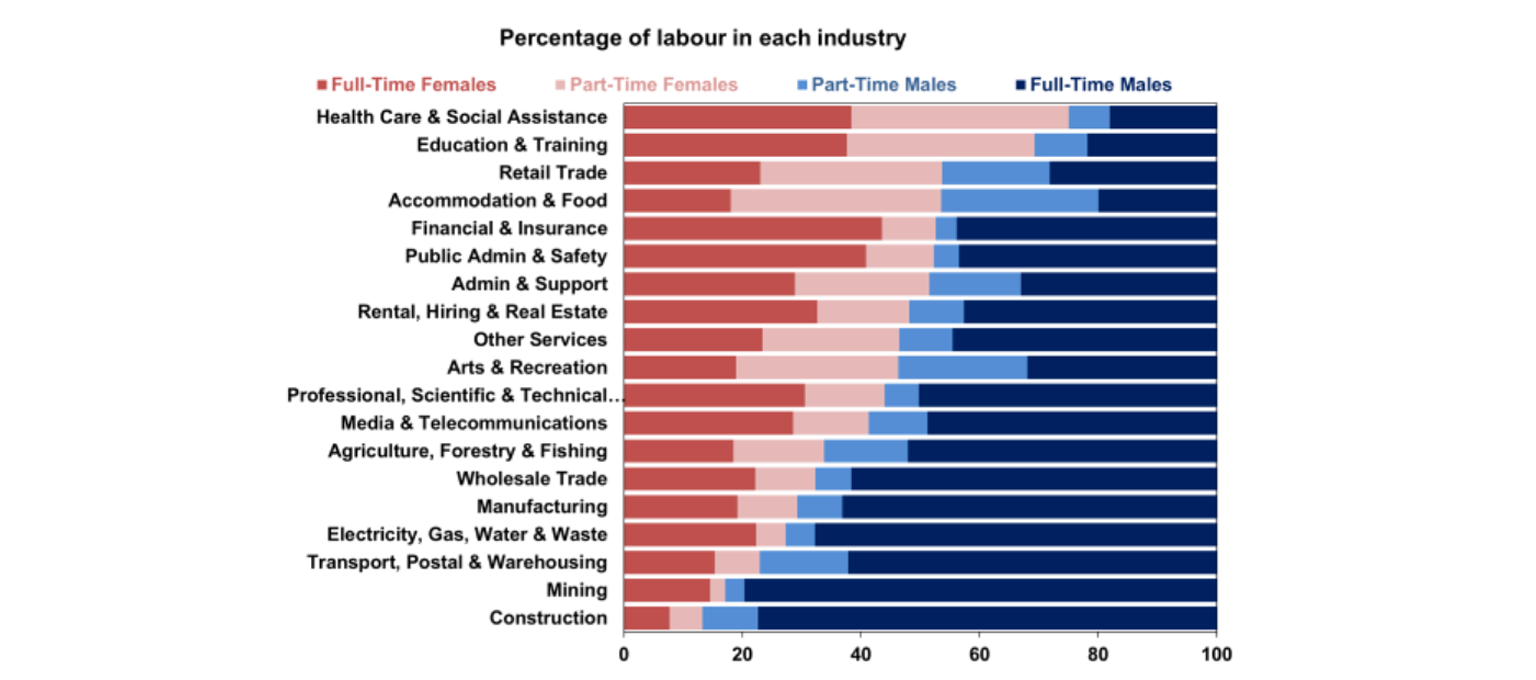
There appear to be two main reasons for the difference in earnings between genders. Firstly, the line of work undertaken by genders may still be subject to unconscious bias due to society norms and opportunities given to boys and girls (this is more common in poorer countries that tend to be more traditional), but this has fallen a lot over time. The “motherhood penalty” is the larger factor that drives differences in earnings between genders. The decision to have children takes time out of the workforce and can then result in a change of role or a move to part-time work. There is a significantly higher share of females in service-based industries of health care and social assistance and education which are typically less lucrative, have higher flexibility around hours of work and require less travel requirements. Male dominance in manual industries like construction, mining, transport and postal, electricity, gas and water services and the manufacturing industries is typically paid higher rates because they are associated with less flexible hours and risky and manual work. There is probably also some societal bias that has typically placed less value on “softer” services skills. And we know that unconscious bias still also exists in the workplace which can prevent females from getting promoted.
Over the year to November 2025, the sectors that had the largest increase in employment were healthcare and social assistance, professional, scientific and technical services and education and training. The sectors that had the largest falls in jobs were agriculture, transport & postal, wholesale trade and mining. So in the past year, women have benefitted (relatively) from the growth in service-based jobs.
Lower earnings in working life carries through to retirement and the impact gets compounded as balances grow. This is clear in the superannuation statistics, with the median female aged 60-64 having $163,218 in superannuation as at 2022-23 which is 26% less than her male peer at $219,773.
What to do from here?
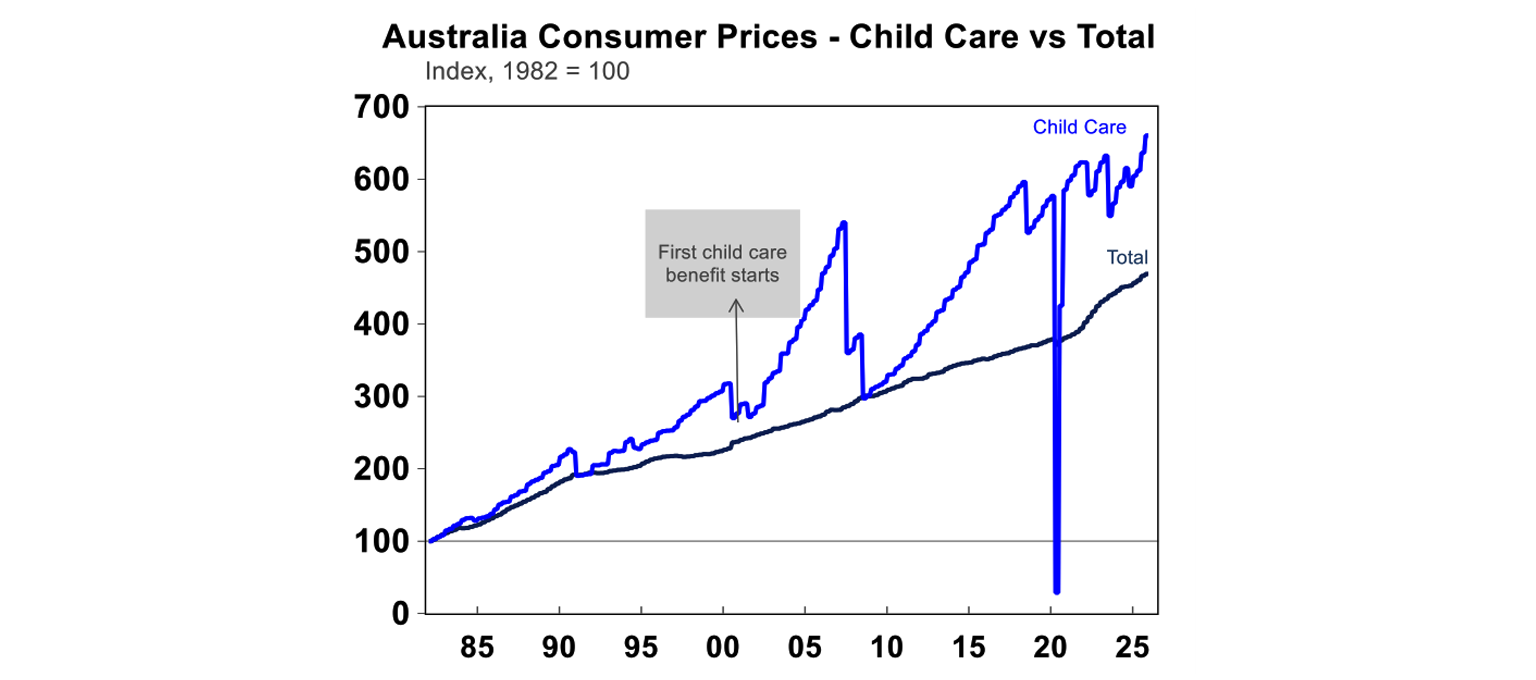
The Labor government’s policies around expanding childcare subisdies were meant to reduce childcare fees for families and help lift female labour force participation. But a lot of these policies have just added to more inflation, with child care inflation running well above CPI consistently (see the chart below). This tends to happen because as rebates increase, it pushes more demand for services but supply is more constrained and can’t catch up, so child care providers increase fees. So, ensuring that there is enough quality supply of care, in areas where it is needed is key (especially given recent issues in around abuse in the childcare industry).
The measures of women’s “progress” that we have looked at in this report are quite crude measures of economic progress between the genders which implicity assumes that the best outcome for the economy would be equality against metrics like labour force particiaption and earnings. But this doesn’t take into account that this may not be the best outcome for individuals. Some women prefer to have a care-giving role away from paid work. From a societal point of view, this can also be favourable as young children are looked after by parents. But this potential positive societal impact is hard to measure! So we divert back to the aforementioned crude economic indicators. Given that we know there is still progress that needs to happen in the workplace as women often share stories of unconscious bias or difficulties in going back to work after taking time off to care for children, this is why we have focussed on theses crude economic measures.
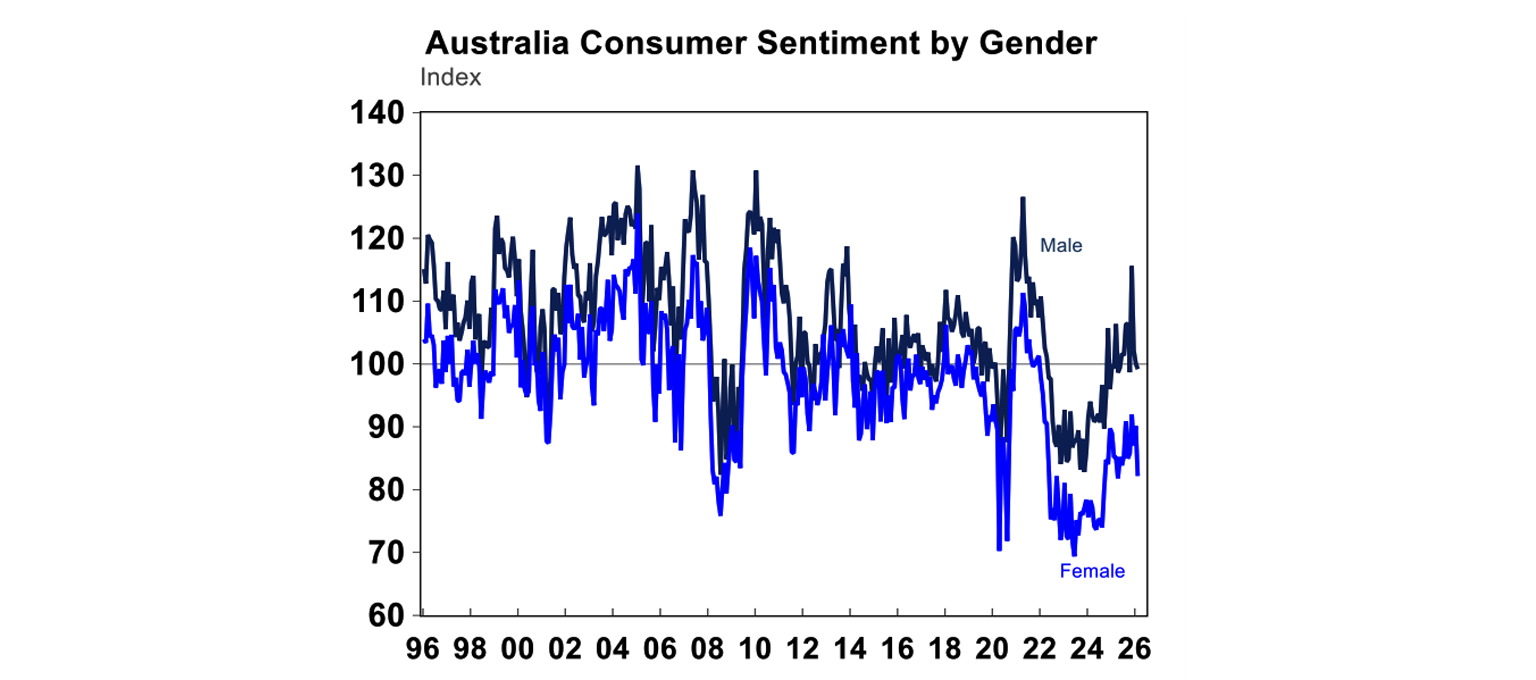
Ultimately, we want happy well-rounded individuals in society. It’s interesting that, over time, measured female consumer sentiment has continually underperfomed male sentiment (see the chart below). But this gap has widened. There is no clear explanation for this. It could be because women have felt the “cost of living” impacts more if they are more conscious of daily living expenses.
It’s also important to keep in mind that if we bring women “up” we want to avoid bringing men “down”. It may seem inevitable to some that there cannot be enough room for both men and women to rise together, which is why we have seen recent backlash against “DEI” policies and the rise of the manosphere. But just as much as we can encourage women into male-heavy industries we should also encourage boys and men into female-heavy industries without stigma, as well as encourage more men to take full parental leave and have greater involvement in daily home unpaid activities.
Diana Mousina
Deputy Chief Economist, AMP


You may also like
-

Weekly Market Update - 16-10-2026 - AMP Weekly Market Update: AI credit fears hit shares, Investors flocking to safe haven (because of CoreWeave?), Oil still high but global growth still resilient, and Weak jobs data gives RBA room to pause. -

6 New Year resolutions that could improve your finances Six simple financial tips that could help you save more, spend smarter and feel more in control of your finances in the new year. -

Weekly Market Update - 09-10-2026 - AMP Weekly Market Update: US shares near record highs but risks are bubbling, tech rally remains narrow, credit markets turn wary on AI & Firmus IPO shelved, French bond yields surge, and another immigration debate.
Important information
Any advice and information is provided by AWM Services Pty Ltd ABN 15 139 353 496, AFSL No. 366121 (AWM Services) and is general in nature. It hasn’t taken your financial or personal circumstances into account. Taxation issues are complex. You should seek professional advice before deciding to act on any information in this article.
It’s important to consider your particular circumstances and read the relevant Product Disclosure Statement, Target Market Determination or Terms and Conditions, available from AMP at amp.com.au, or by calling 131 267, before deciding what’s right for you. The super coaching session is a super health check and is provided by AWM Services and is general advice only. It does not consider your personal circumstances.
You can read our Financial Services Guide online for information about our services, including the fees and other benefits that AMP companies and their representatives may receive in relation to products and services provided to you. You can also ask us for a hardcopy. All information on this website is subject to change without notice. AWM Services is part of the AMP group.