





Weekly market update
Investment markets and key developments
Share markets were helped in the last week by some pull back in oil prices as the US held back from escalting further with Iran, a rebound in tech stocks and specifically chipmakers from oversold levels amidst good US earnings results and the US Fed leaving rates on hold.
10 min read

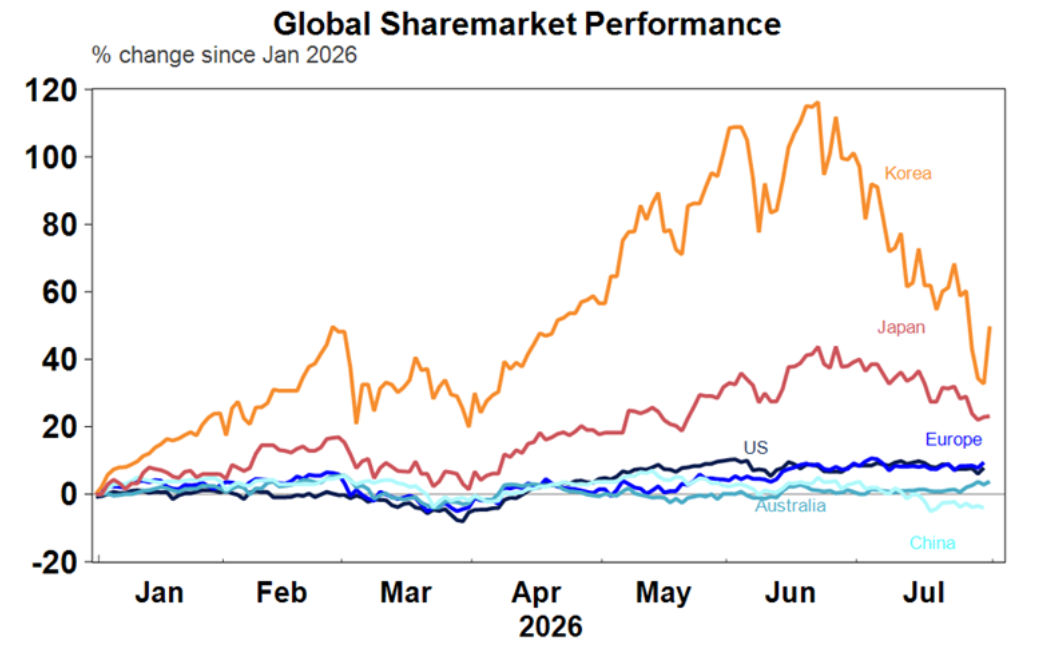
Share markets were helped in the last week by some pull back in oil prices as the US held back from escalting further with Iran, a rebound in tech stocks and specifically chipmakers from oversold levels amidst good US earnings results and the US Fed leaving rates on hold. This saw US shares gain 1% for the week and Eurozone shares rise 0.6%. However, Japanese shares fell 0.4% and Chinese shares fell 1.3%. The heavily AI exposed Korean share market rose 18% on Friday along with chipmakers helped by optimism that the unwinding of leveraged AI trades (including by a hedge fund called Situational Awareness) may be over or nearing an end. This helped reverse part of a 39% plunge from its June high, but its still down 28%. It’s the nature of bull markets to see relatively steady gains but then occasional sharp sell offs as investors who are predominantly long unwind their often leveraged positions. Of course the rebound in chip makers and Korean shares could just be a bear market rally so its best approached with some caution. Despite the global volatility Australian shares rose 2.3% for the week helped by lower than expected inflation adding to expectations that the RBA will leave rates on hold at its August meeting. Gains were led by IT, health, telco, retail and property shares. It also rose 2.3% in July, its fourth monthly gain in a row, whereas US shares fell 0.1% for the month.
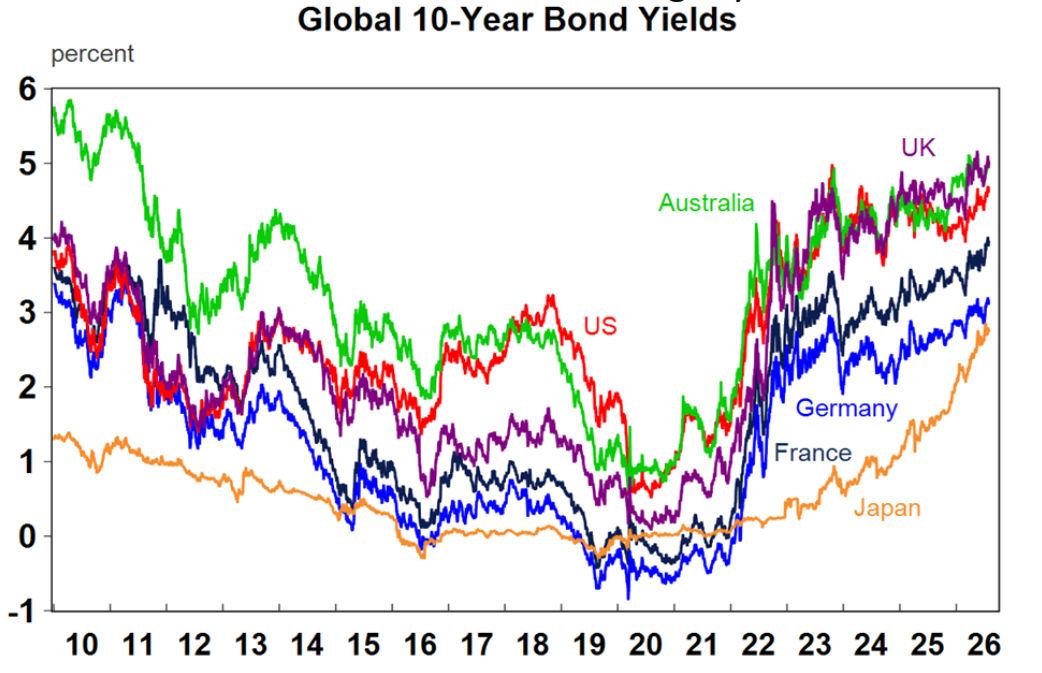
Bond yields mostly rose over the last week with ongoing concerns about inflation and as can be seen in the next chart remain in a rising trend. Metal prices rose but gold and iron ore fell. Bitcoin also fell and remains shaky and yet to confirm that its latest crypto winter is over. The $A rose as the $US fell.
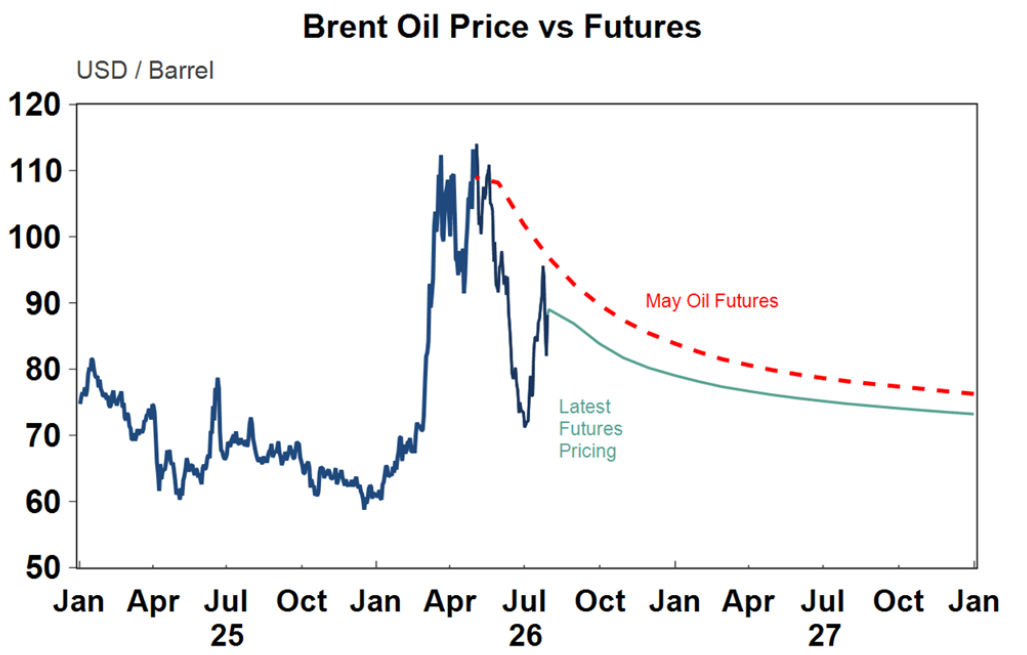
Oil prices intially fell sharply early in the past week following Trump’s latest TACO (with the US holding off on further escalation and Trump talking again about a “good chance” of a peace deal) and easing in hostilities but then reversed some of the falls as hostilities resumed and Trump started talking again about “hitting them very hard” with reports that the US is considering attacking Iranian energy infrastructure. But oil still fell over the week.
The combination of high and rising oil prices, ongoing pressure on central banks to raise rates, a rising trend in bond yields and worries about an AI bubble amidst stretched valuations leaves shares at high risk of another correction as we come into the seasonally weak months of August and September. Of course, just as Australian shares didn’t get much benefit on the way up in the AI boom they may not fall as much if and when it does really start to unwind. That said, we remain a bit sceptical that we are at the peak of the AI story just yet as related capex has a way to go and growth in demand for AI is real.
The latest de-escalation and re-escalation in the Iran War seen in the last week just highlights the mess Trump has got himself into with Iran. While he clearly wants to TACO – with key munitions running low, uncertainty about whether more strikes on Iran are achieving anything along with sensitivity about rising gasoline prices and bond yields - Iran is not so willing to play ball. And so the War continues with more attacks on energy infrastucture and Saudi Arabia joining strikes on Iran, the Strait of Hormuz remaining largely closed and uncertainty about the reliability of Saudi shipping through the Red Sea.
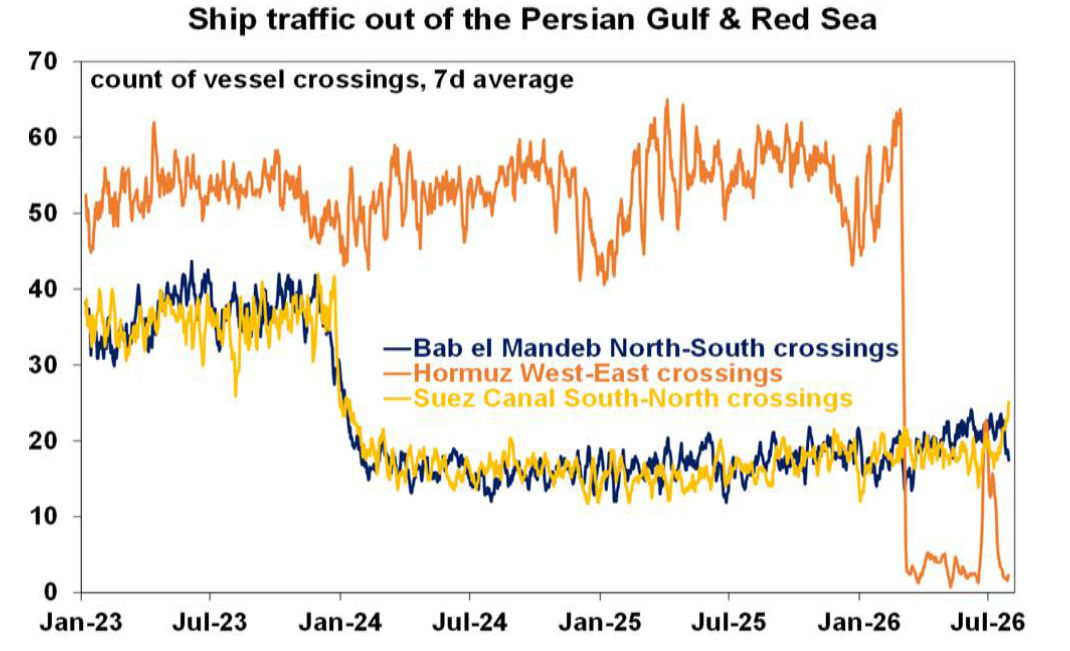
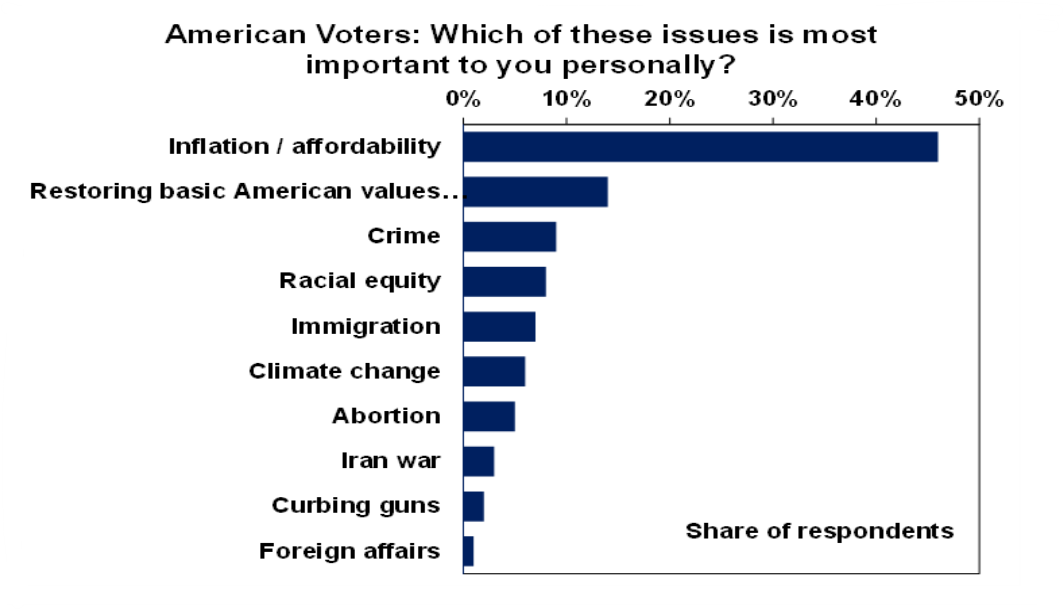
Another peace deal remains our base case with oil perhaps in a $US70-100 range with Iran preventing it going lower and the US moving to try and calm things down whenever it gets above $US100 as happened a week ago. On the latter Trump remains under immense pressure politically as Americans care most about inflation and affordability and not so much the Iran War which is just adding to inflation concerns – see the next chart. However, the risk remains that there will be no sustainable peace deal, the flow of oil out of the Middle East remains down 10-15% on normal levels and that we will have to face ever higher oil prices as reserves run down. This poses ongoing upside risks to inflation and downside risks to economic growth.
This brings us to inflation and rates where the messages over the last week were mixed, but with more of a bias to modestly higher rates:
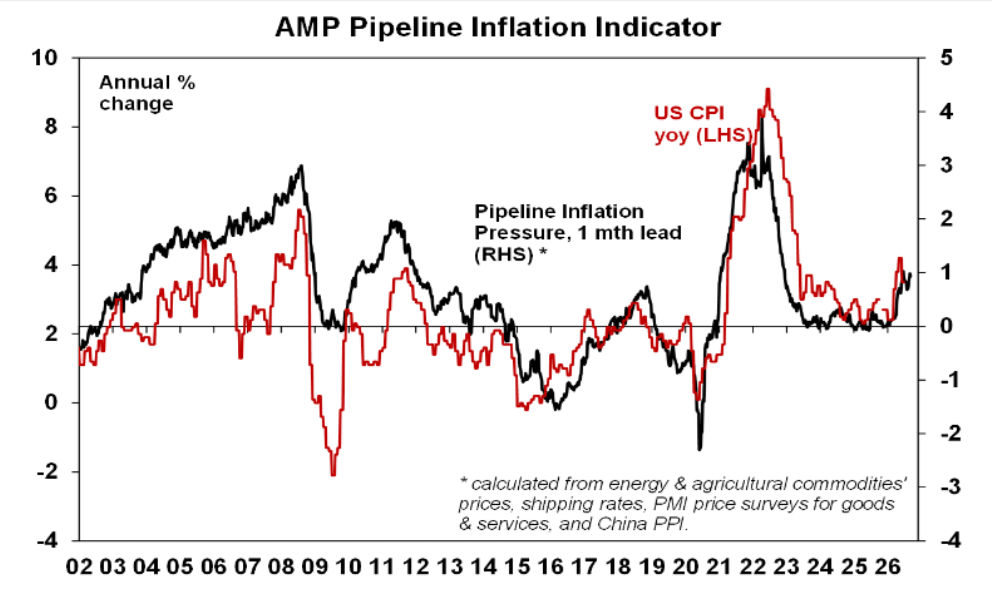
- The Fed left rates on hold, but poor communication is seeing it lose inflation fighting credibility. While relatively benign inflation readings for June gave the Fed cover to leave rates on hold at 3.5-3.75%, which it did, the lack of clear guidance on how the Fed will react, three dissents in favour of a rate hike and the ongoing threat to inflation from higher oil prices is starting to see the bond market fret more about inflation and what the Fed might do with rates. While new Fed Chair Warsh reiterated the Fed’s commitment to the 2% inflation target, this was undermined by a failure to clearly articulate how the Fed would get inflation back to target and what the target actually is along with a misrepresentation as to why bond yields had been trending up. In terms of the latter, he seems to think the bond market is doing some of the Fed’s job for it, which may be partly true but more importantly the rise in yields appears to reflect increased uncertainty about the Fed and an assessment that the Fed will need to raise rates. This is consistent with pipeline inflation pressures from energy and other costs remaining elevated. Reports that Warsh is considering reducing the number of meetings and press conferences risk further adding to a loss of confidence in the Fed.
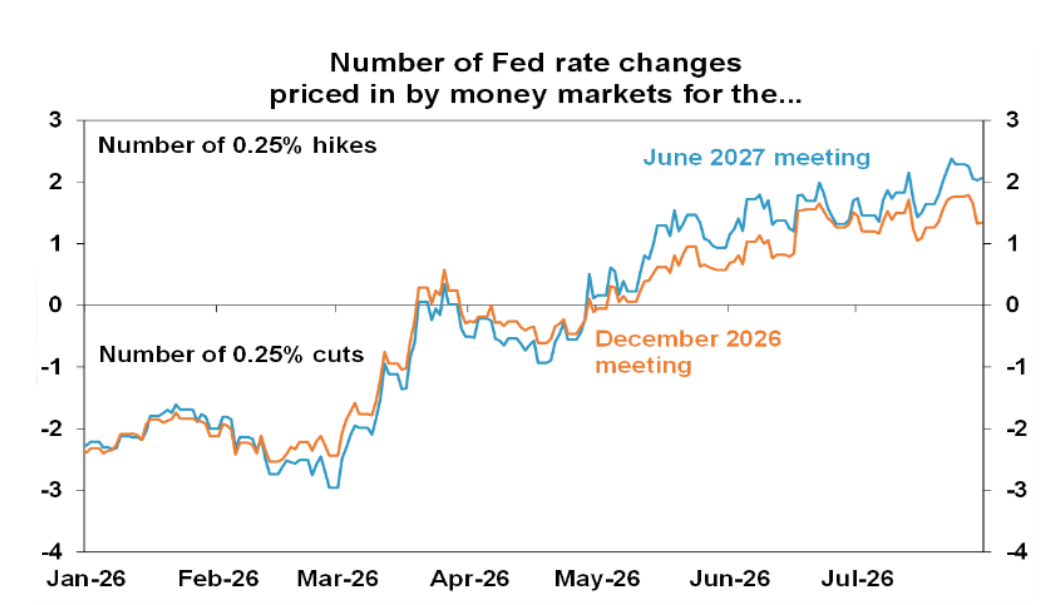
Absent better inflation data in the next seven weeks the Fed will probably have to hike in September with the money market now seeing a 64% chance.
In the UK, the Bank of England left rates on hold at 3.75% and sounded a bit dovish noting labour market weakness and limited second round effects from oil so far. However, the vote was 6 to 3 in favour of holding verses hiking.
The Bank of Japan also held at 1%, but revised up its economic growth forecasts, flagged the risk of underlying inflation exceeding its target and indicated that it will continue to raise rates. Another hike is likely by October.
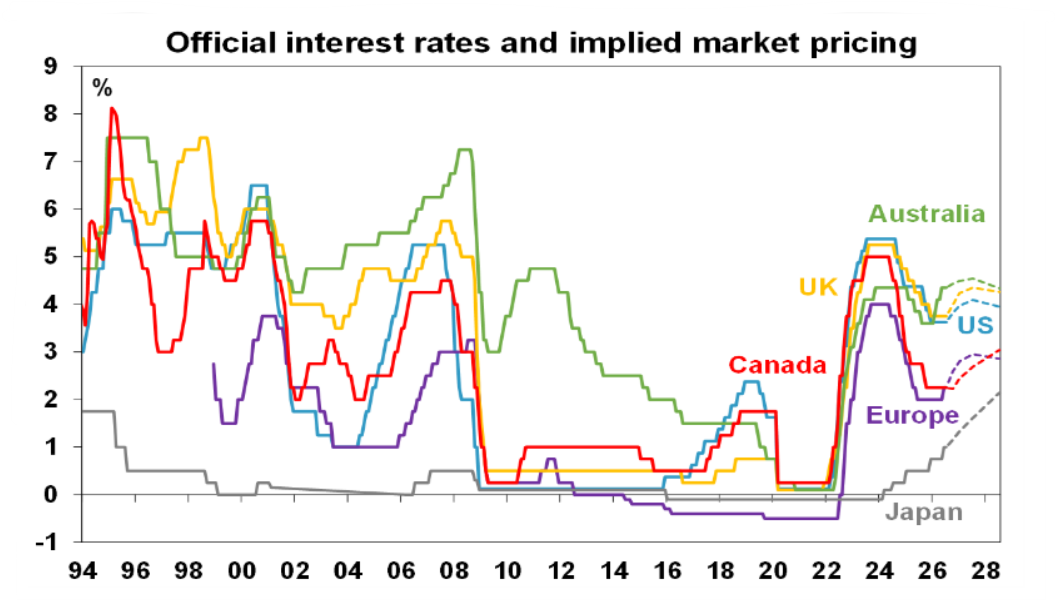
Money market expectations still lean towards higher interest rates from major central banks although not dramatically so.
In Australia, lower than expected inflation for June provided relief with the RBA likely to hold in August - but it might just be a false dawn. June inflation fell to 3.8%yoy helped by a 10.9% fall in fuel prices and underlying or trimmed mean inflation remaining at 3.6%yoy. June quarter trimmed mean rose to 3.6%yoy too from 3.5%yoy in the March quarter but was materially lower than the RBA’s expectation for a 3.8% rise providing hope that inflation may have peaked.
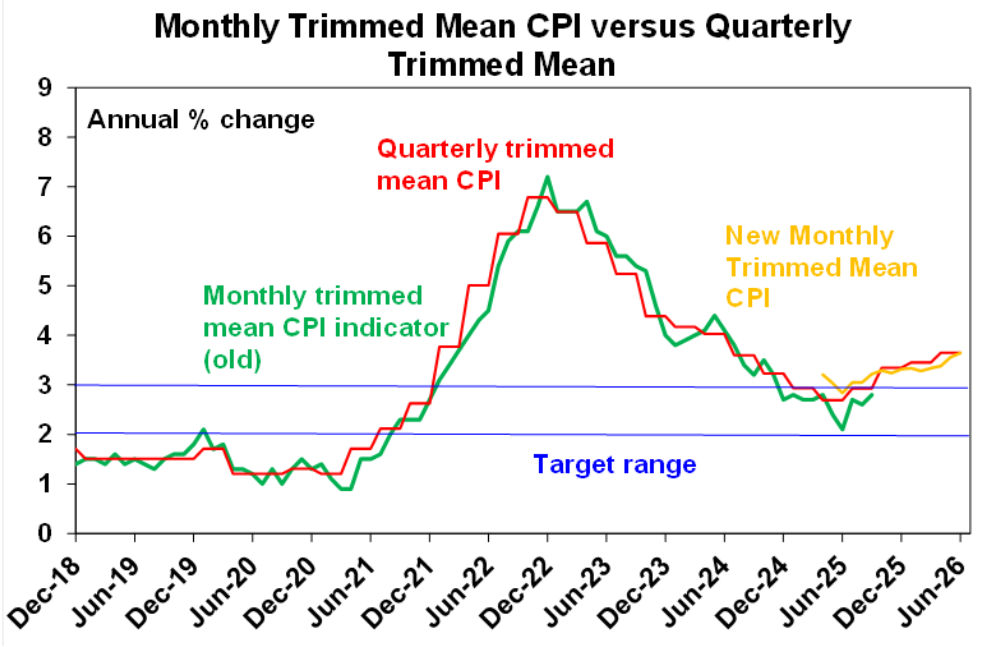
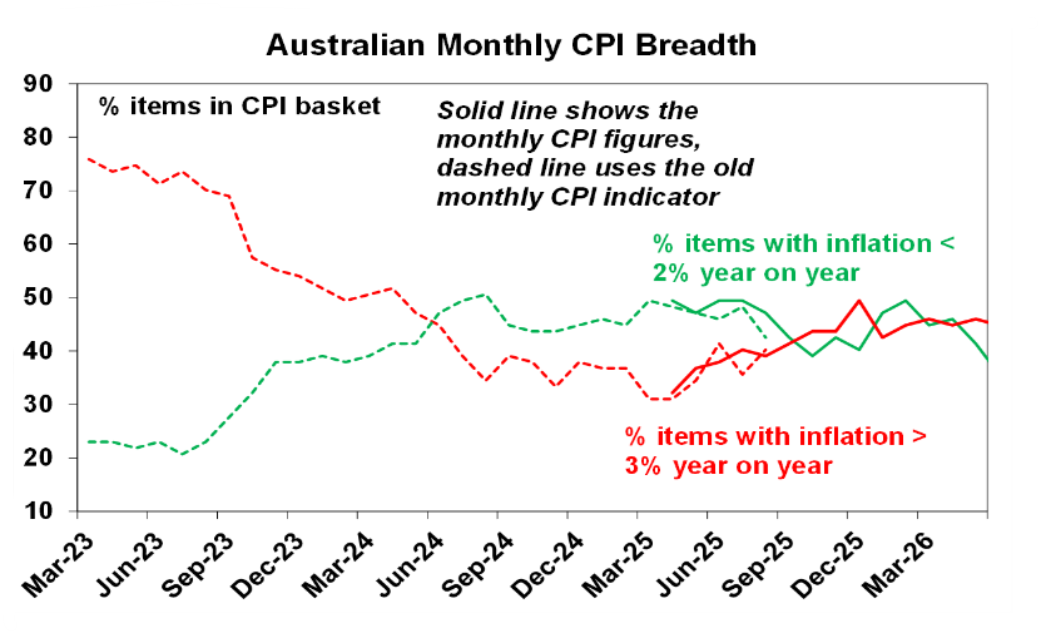
The combination of lower-than-expected inflation along with weaker than expected jobs and housing markets provide scope for the RBA to remain in wait and see mode and so we now expect the RBA will leave rates on hold at its August meeting. We are not as confident as the money market though which sees a less than 1% chance of a hike – we would put it at 30%! However, the RBA is likely to retain a hawkish bias and we continue to expect one further hike by year end because: trimmed mean inflation at 3.6%yoy is still too high with no clear evidence of a downtrend in monthly data; second round impacts of the oil price rise are still in the pipeline with oil and petrol prices up again; housing related costs are still trending up; there are still more items with inflation greater than 3% than less than 2%; and the RBA needs to be more cautious than it was in the last rate cycle because after five years out of six with inflation above target there is now a greater risk of the inflation target losing credibility.
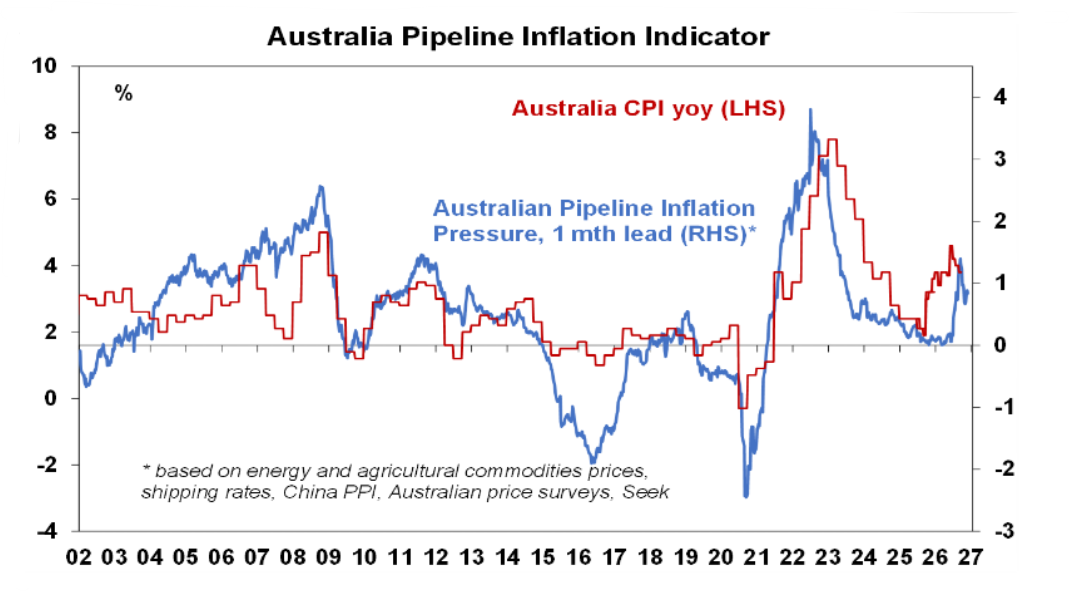
Out of interest while demand side factors likely drove the bulk of the rise in underlying inflation through 2025-26, supply side cost pressures are now elevated as indicated in our Pipeline Inflation Pressure Indicator for Australia threatening to keep inflation elevated.
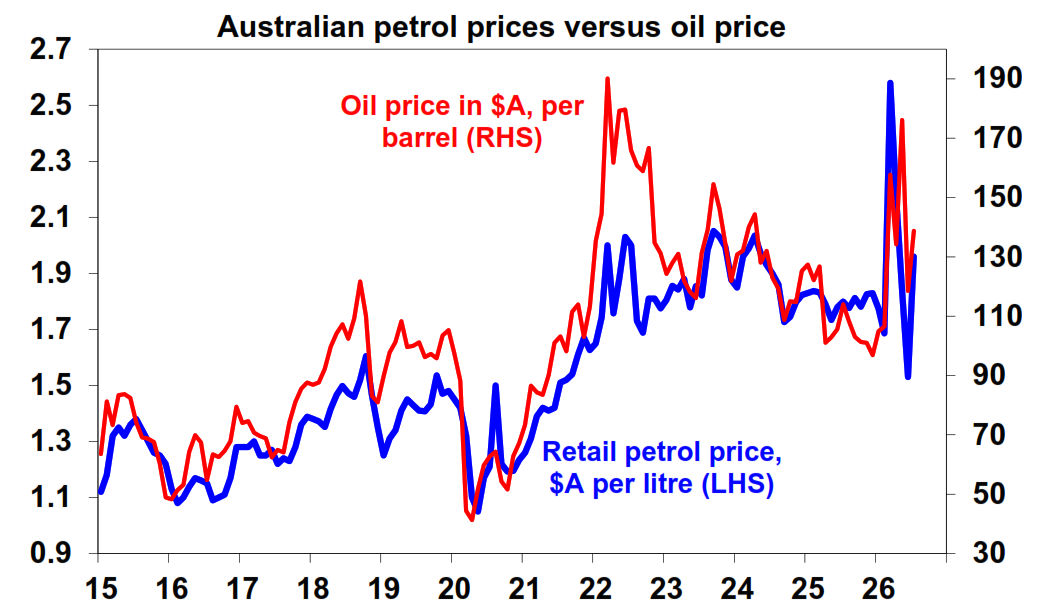
On the cost front – petrol prices in Australia look headed to around $2.10 a litre if the Government follows through with its plan to end fuel tax relief on 2nd August. They have already rebounded to $1.95 a litre from the 30 June low of around $1.53 a litre reflecting the 16 cents a litre from the halving of the 32 cents a litre fuel tax cut from 1 July and the flow through of the rebound in global oil prices. If fuel tax relief ends as scheduled, then petrol prices will rise around another 17 cents a litre (which is the remaining 16 cents a litre along with a 1 cent CPI adjustment). This will push up headline inflation again as well as the cost of the average households’ weekly fuel bill by around $20, although its still well below the levels reached in March.
Vale Bill Evans, former Chief Economist of Westpac. I first met Bill in 1991 soon after he was appointed to the Chief Economist role at Westpac and got to know him on the ABE committee. I quickly learned to highly value his well-reasoned and invariably entertaining insights, particularly in terms of where the RBA was headed. Back in 2011 I was thinking of changing our view on interest rates to be that the next move would be down rather than up which was the consensus at the time – but Bill beat me too it and was completely right! Being with Bill on a panel of economists always led to excellent debate and great fun. I miss him.
Major global economic events and implications
US June quarter GDP growth slowed to just 1.5% annualised but this was due to detractions from trade - as data centre capex sucks in tech imports, a bit like in Australia - and inventories with strong growth in investment and consumption.
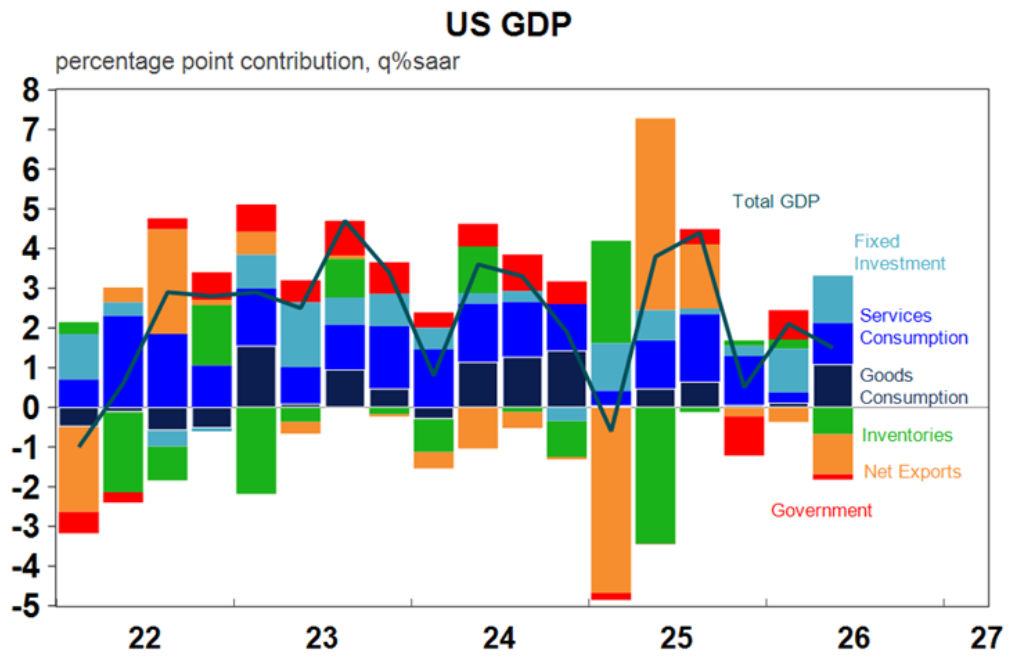
Monthly data showed continued solid growth in personal spending, strong growth in capital goods orders and shipments, a slight pickup in home prices but softish consumer confidence and a deterioration in consumer perceptions of the jobs market. Jobless claims remained low.
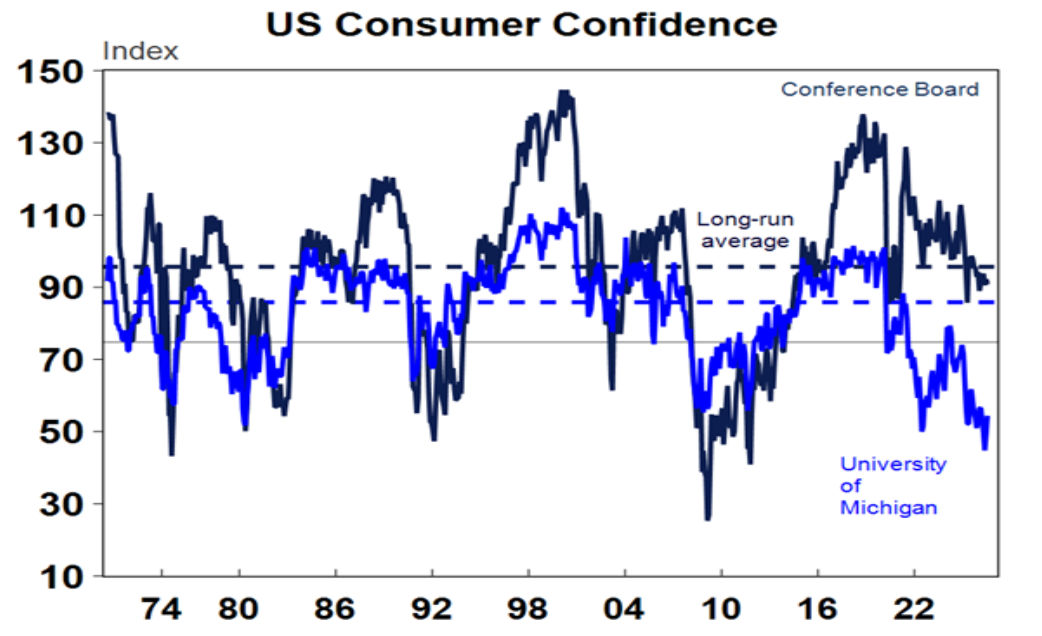
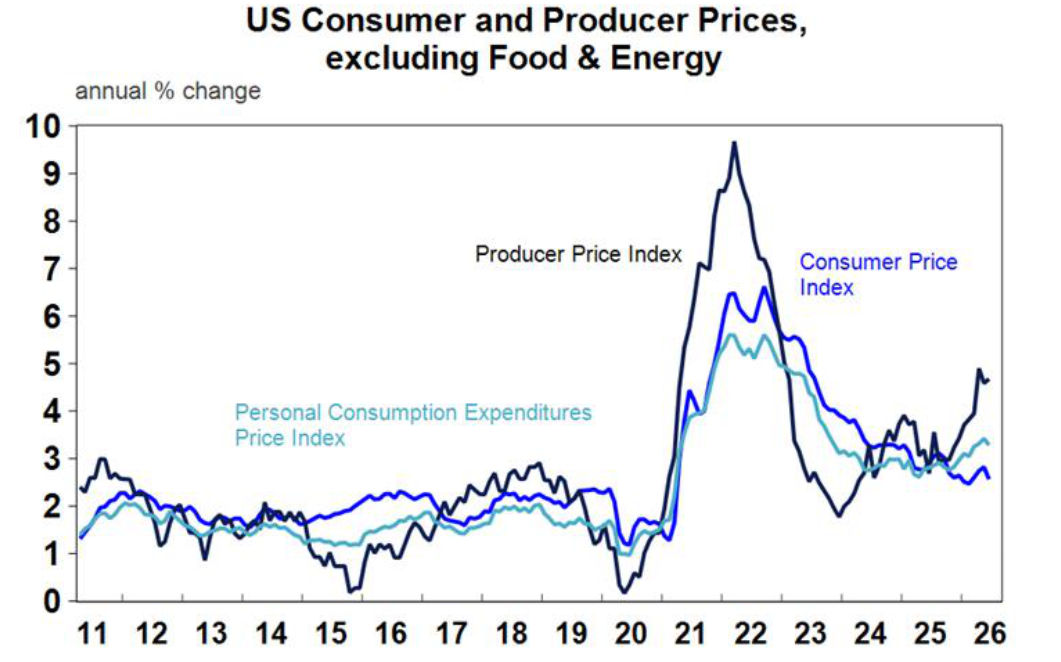
Meanwhile, US core private final consumption inflation data for June edged down to 3.3%yoy from 3.4% consistent with more benign CPI data already released – but it remains too high. Employment cost growth came in at 3.4%yoy in the June quarter which with solid productivity growth means that labour costs at least are not an issue for inflation in the US.
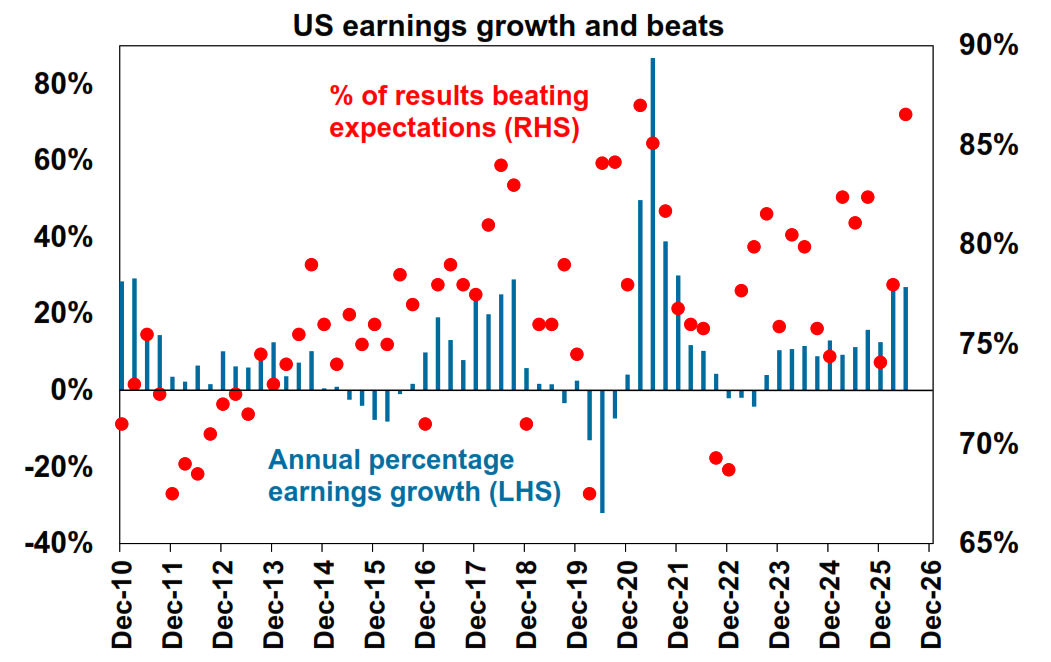
The US earnings reporting season has now seen 61% of S&P 500 companies reports with around 87% exceeding expectations. The consensus expectation for earnings growth has now risen to 28%yoy (after adjusting for one off asset revaluations at Alphabet which had blown it out to 38%yoy). Earnings growth is being led by energy and tech companies. So far investors appear increasingly wary though of the AI capex spending boom.
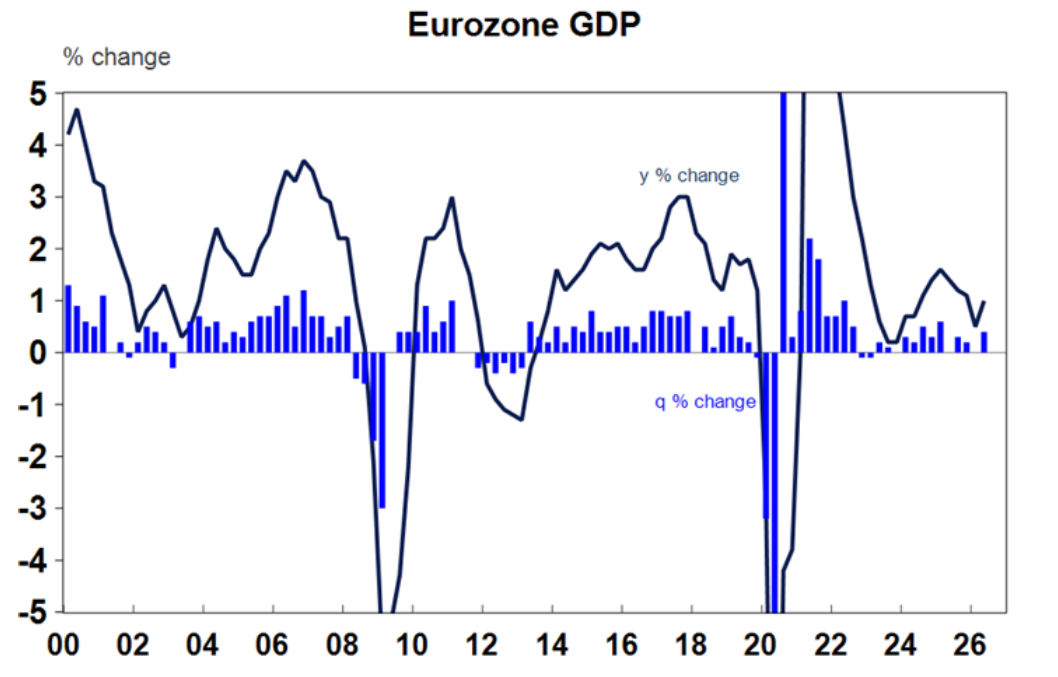
Eurozone June quarter GDP rose a stronger than expected 0.4%qoq with annual growth improving to a 1%yoy. Spain saw growth of 0.7%qoq with Germany, France and Italy all at 0.2%qoq. Unemployment was flat at 6.3% in June, with May revised up from 6.2%. Inflation rose to 2.9%yoy in July with core inflation rising to 2.5%yoy, which is consistent with further ECB tightening.
Japanese economic data was mixed with strong growth in industrial production and low unemployment but a fall in retail sales. Inflation in July in Tokyo rose to 2%yoy.
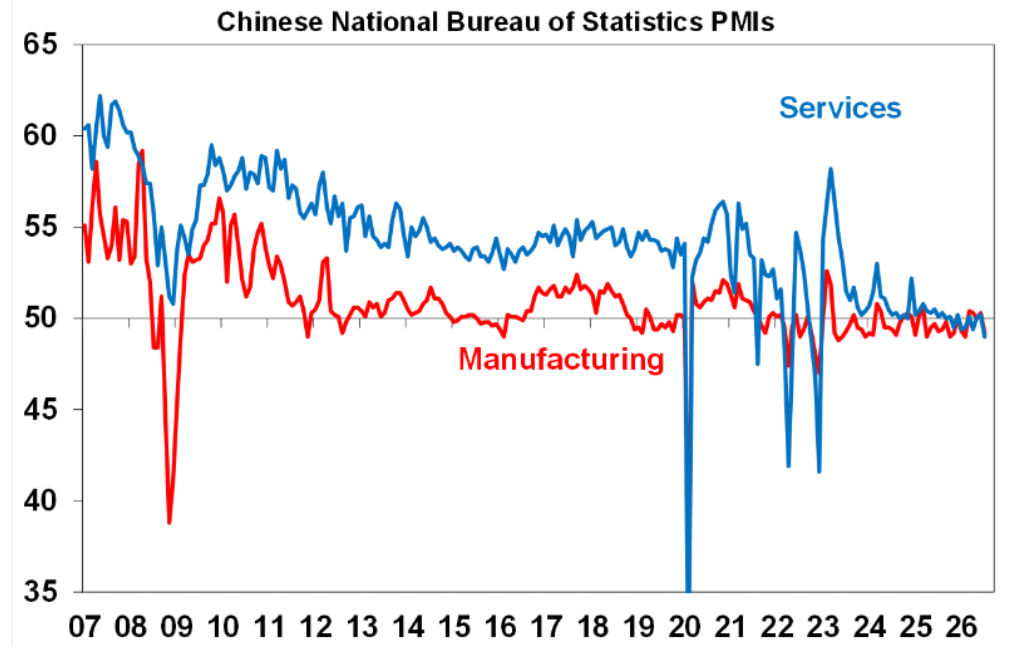
Chinese official business conditions PMIs fell in July but are just bouncing around in the same range they have been for the last few years – although services sector conditions might be breaking lower. The July politburo meeting suggests some incremental step up in fiscal support for the economy might be on the way.
Australian economic events and implications
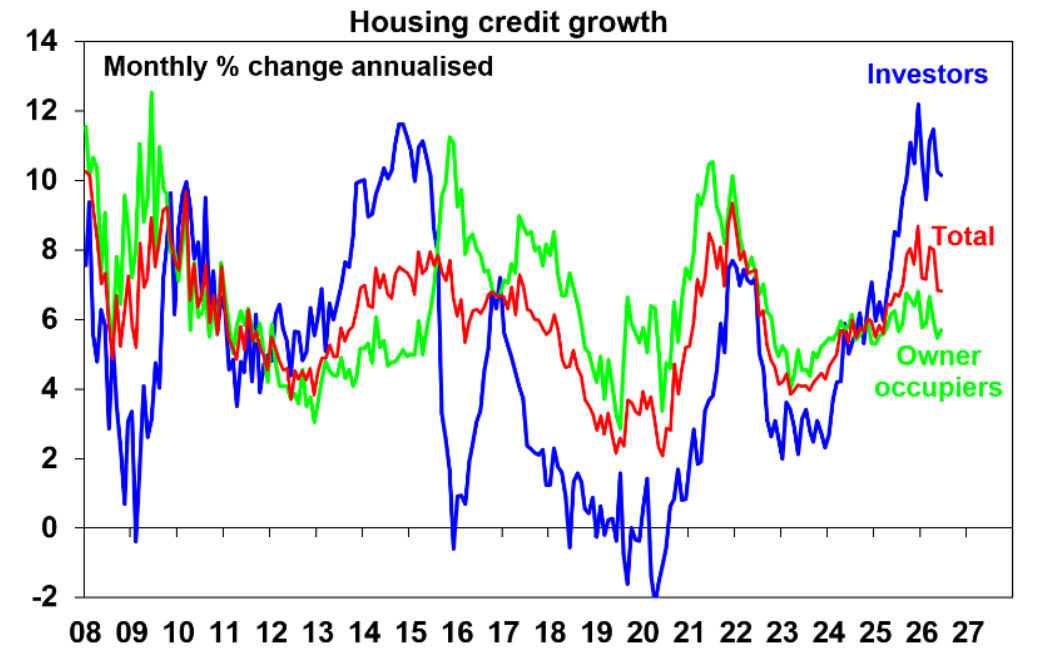
Housing credit growth for June was little changed. It has slowed from its highs, but a further slowing is likely as past rate hikes hit and the Budget tax changes push many investors to the sideline, but its early days yet. Reports from NAB of a 15% fall in home loan applications points to a further slowing ahead as it will take a while to show up in actual housing credit data. Business credit growth remains solid picking up to 10.8%yoy with total credit growth rising to 8.5%yoy. No evidence of a collapse in the economy here - well not yet anyway!
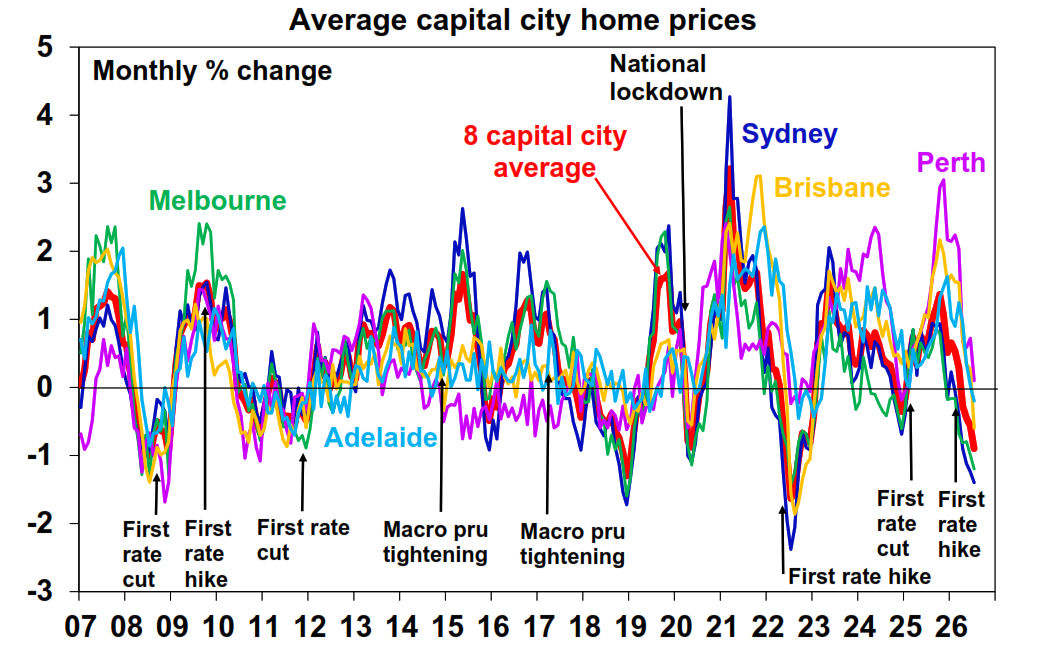
Home price falls accelerated in July. Cotality’s monthly home price data for July won’t be released till Monday, but its daily indexes through to the end of July show a further acceleration in the pace of decline to 0.9%mom for the five big capital cities. This was led by Sydney (-1.4%mom) and Melbourne (-1.2%), Brisbane (-0.6%) and Adelaide (-0.2%) are now going negative with Perth (+0.1%) looking like it is too. The combination of higher mortgage rates, tax hikes on investors, poor confidence and poor affordability are the main drivers. The likely move by the RBA to leave rates on hold at its August meeting will come as a relief but it’s not likely to be enough to arrest the fall in prices just yet as the RBA is likely to retain a tightening bias and we think that it will hike again in November. Overall, we expect a top to bottom fall of 7% in national average home prices, of which they have currently fallen about 2%. Rate cuts next year should start to support property prices, but not till the June quarter next year.
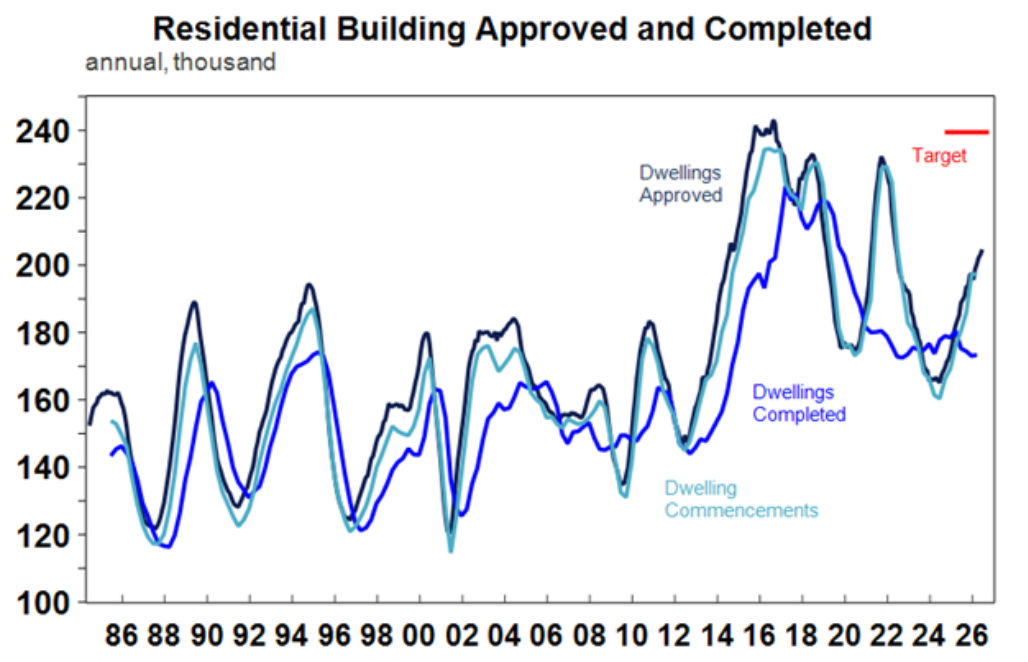
One source of support preventing a deeper slump in property prices is the housing shortfall and this is unlikely to change anytime soon despite a rising trend in home building approvals. Approvals bounced 7%mom in June thanks to volatile unit approvals rising 18%mom. The good news is that the trend is up and is now running at 220,000 annualised which is getting closer to the Housing Accord target to build 240,000 homes a year which is necessary to eat into the shortfall. The trouble is that rate hikes, rising costs and project abandonments will likely see it rollover soon and completions continue to run at much lower levels such that the housing shortage will linger longer.
What to watch over the next week?
In the US, the focus will be on jobs data for July (Friday) which is likely to show a 90,000 gain in payrolls, unemployment staying at 4.2% and benign wages growth around 3.5%yoy. The manufacturing conditions ISM (Monday) and the services ISM (Wednesday) for July are expected to show solid conditions around 54 with price pressures remaining elevated. Job openings data will also be released (Tuesday). Another 170 S&P 500 companies will report June quarter earnings results.
Chinese trade data for July (Friday) is likely to show continued very strong growth in exports and imports.
In Australia, Cotality data for July (Monday) will confirm an acceleration in home price falls to around minus 0.7-0.8%mom (allowing for a smaller fall in regional prices) with Sydney and Melbourne both down by more than 1%, Brisbane and Adelaide starting to fall and Perth looking like it may be doing the same. In other data, expect the Melbourne Institute’s Inflation Guage for July (Monday) to show a bit of a bounce on higher fuel prices, household spending for June (Tuesday) to rise 0.1%mom and the trade deficit for June (Thursday) to fall to around $2.6bn.
The Australian June half profit reporting season will start to get underway with about 12 major companies reporting including AMP, Resmed and Nick Scali. Consensus expectations are for 2025-26 earnings growth of 12%. However, strength is likely to be narrowly based on a rebound in mining sector profits and solid growth for financials with profits in the rest of the market only likely to see growth of 2.5%. Forward estimates have been falling recently reflecting the impact of rate hikes and cost pressures partly due to higher oil prices so guidance will be watched closely in terms of whether profit expectations will be reduced further.
Outlook for investment markets
Global and Australian share markets are likely to remain volatile with the risk of another correction given the resumption of the Iran War and surging oil prices, stretched valuations, sticky inflation, political uncertainty associated with Trump & the midterm elections and worries about the impact of AI and whether there is an AI bubble. However, returns should still be okay for the next 12 months as a whole thanks to continuing economic growth with recession avoided and solid profit growth.
Bonds are likely to see returns around running yield or a bit less.
Unlisted commercial property returns are likely to be solid helped by strong demand for industrial property associated with data centres.
Australian home prices are expected to fall around 7% top to bottom, of which they have already done around 2%, out to the June quarter next year as a result of poor affordability, RBA rate hikes, reduced investor demand flowing from the winding back of negative gearing and the capital gains tax discount and poor confidence.
Cash and bank deposits are expected to provide returns around 4-5%.
The $A is likely to rise reflecting the wider interest rate differential to the US, although a move to Fed hikes may limit this. Fair value for the $A is around $US0.72.
Dr. Shane Oliver,
Head of Invesment Strategy and Chief Economist, AMP


You may also like
-

Weekly Market Update - 16-10-2026 - AMP Weekly Market Update: AI credit fears hit shares, Investors flocking to safe haven (because of CoreWeave?), Oil still high but global growth still resilient, and Weak jobs data gives RBA room to pause. -

6 New Year resolutions that could improve your finances Six simple financial tips that could help you save more, spend smarter and feel more in control of your finances in the new year. -

Weekly Market Update - 09-10-2026 - AMP Weekly Market Update: US shares near record highs but risks are bubbling, tech rally remains narrow, credit markets turn wary on AI & Firmus IPO shelved, French bond yields surge, and another immigration debate.
Important information
Any advice and information is provided by AWM Services Pty Ltd ABN 15 139 353 496, AFSL No. 366121 (AWM Services) and is general in nature. It hasn’t taken your financial or personal circumstances into account. Taxation issues are complex. You should seek professional advice before deciding to act on any information in this article.
It’s important to consider your particular circumstances and read the relevant Product Disclosure Statement, Target Market Determination or Terms and Conditions, available from AMP at amp.com.au, or by calling 131 267, before deciding what’s right for you. The super coaching session is a super health check and is provided by AWM Services and is general advice only. It does not consider your personal circumstances.
You can read our Financial Services Guide online for information about our services, including the fees and other benefits that AMP companies and their representatives may receive in relation to products and services provided to you. You can also ask us for a hardcopy. All information on this website is subject to change without notice. AWM Services is part of the AMP group.