





Weekly market update
Investment markets and key developments
Global sharemarkets had a soft start to the week on concerns of higher oil prices, rising bond yields and a repricing to a more aggressive US Federal Reserve.
10 min read

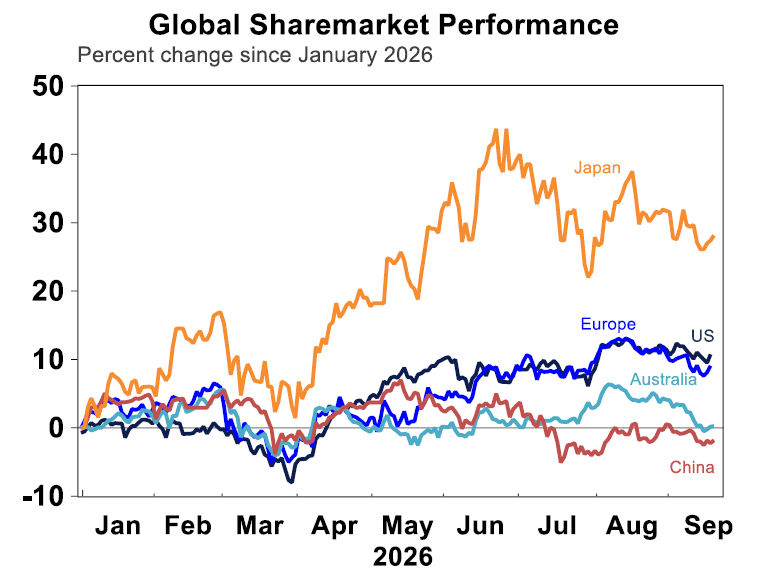
Global sharemarkets had a soft start to the week on concerns of higher oil prices, rising bond yields and a repricing to a more aggressive US Federal Reserve. Most of these factors are still intact. But sharemarkets managed to rally into the end of the week on a dip in oil prices, which also helped to bring down bond yields. Comments from Nvidia CEO that chip sales could be double next year helped semiconductor stocks. The start of Fed rate hikes pushed the US dollar up and the $A fell. A stronger USD pushed gold and Bitcoin prices down.
Over the week US markets are down slightly and are 0.5% lower over the month. Australian shares are down by 0.1% this weekand are 4% lower over the month and have had no growth since the beginning of the year which reflects a more aggressive RBA (relative to the Fed) and a slowing economy. Japanese shares were up this week and have been outperforming this year – up 27%.
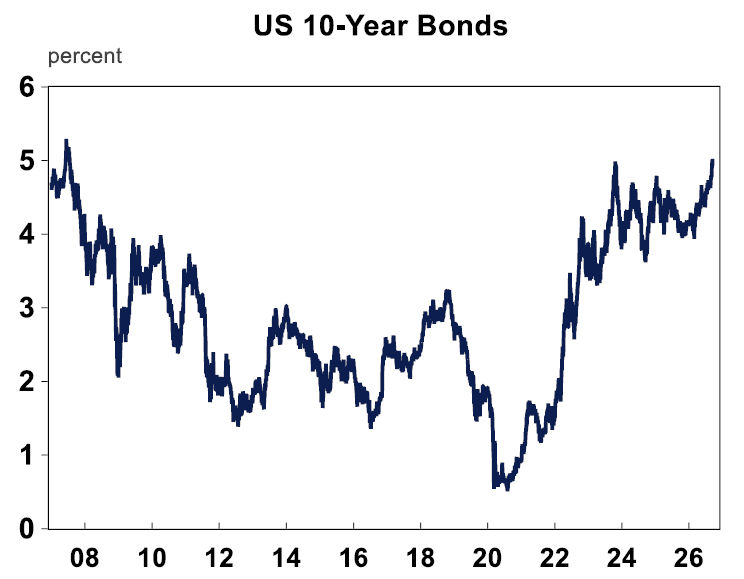
US 10-year bond yields settled around 5% this week, for the first time since 2007, from 4.7% just a few weeks ago. We have written about why US bond yields are rising here and here. Another leg up in bond yields is unlikely unless there is another upside surprise in inflation (which would mean higher interest rates) or a worsening US fiscal outlook. US Treasury Secretary Scott Bessent’s long-end bond buying program clearly hasn’t worked well to reduce upward pressure on yields for now.
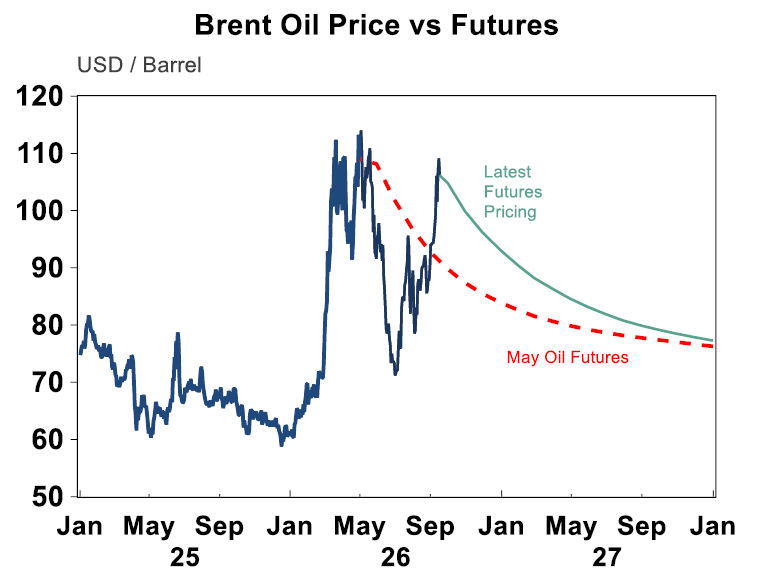
Oil prices have been hovering near $110/barrel over recent weeks but moderated a little late into the week on news that Saudi Arabia was increasing tanker loadings in the Gulf and increasing sales of crude from just outside the Strait of Hormuz, given the closure of the East-West oil pipeline. But news that Saudi Arabia is looking to restore half of the pipeline capacity earlier than expected helped to put some downward pressure on prices. Oil “futures” which are market expectations about future oil prices are up a lot compared to May (see the chart below). So higher oil prices are still a big problem for inflation.
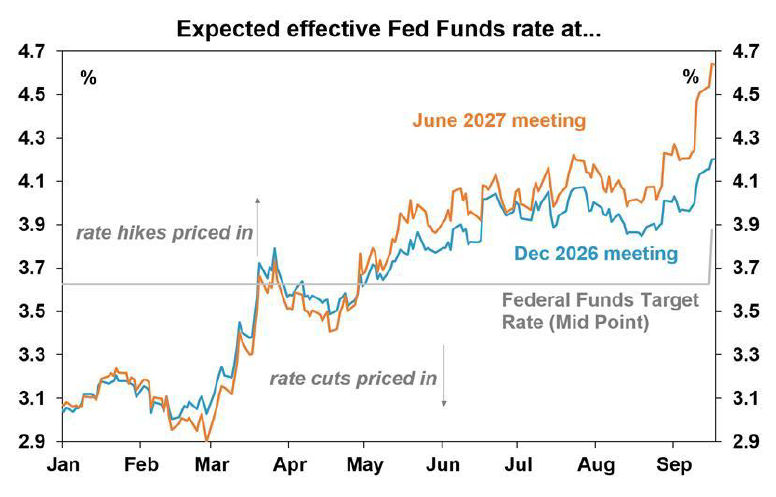
The US Federal Reserve raised rates this week for the first time since 2023, joining a string of other central banks including the ECB, Norway, Japan, Korea, Indonesia, and the Philippines, the RBNZ and of course the RBA. The decision was unanimous and takes the Fed Funds rate to 3.75-4%. The hike reflects a resilient US economy, inflation that is well above the Fed’s 2% target and the upside risks to inflation especially around energy and tariffs. Markets are pricing in more rate hikes over 2026 and into 2027, after expecting rate cuts just earlier this year.
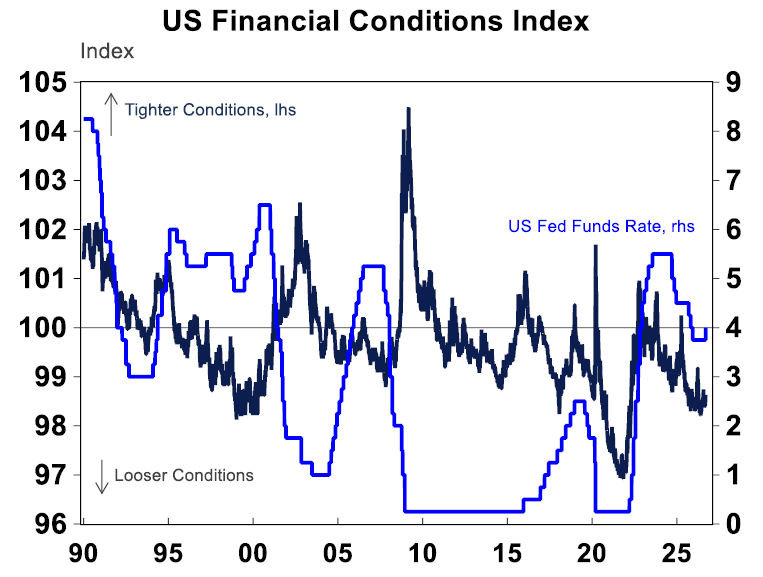
The new Fed Chair Kevin Warsh also said that the Fed was “removing a dose of accommodation” by raising rates which got financial markets into a worry that financial conditions are too loose which will mean a series of rate hikes (to the disappointment of President Trump who thinks US interest rates should be lower). US financial conditions are actually considered “loose” (see chart below) according to the Goldman Sachs index which considers equity market, bond yields, credit spreads, interest rates and the dollar. Generally, higher interest rates have led to tighter conditions – as you would expect.
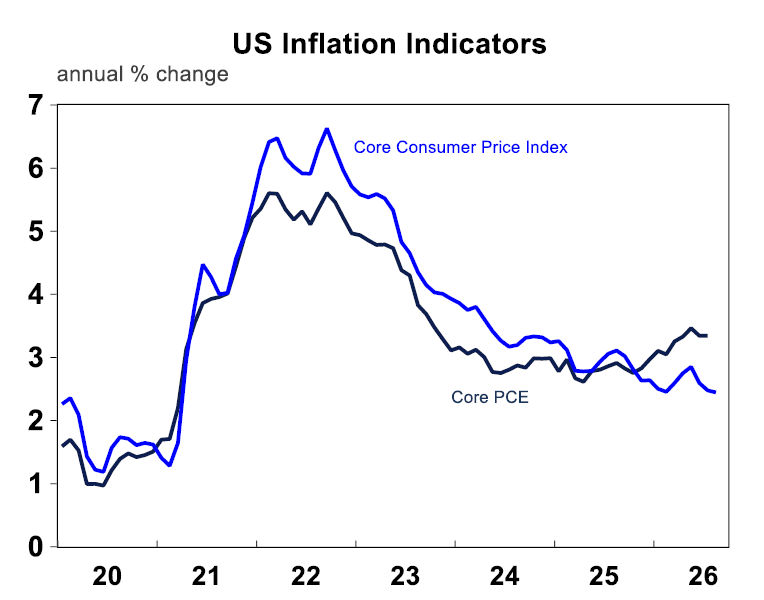
While the new Fed Chair Kevin Warsh tried to avoid giving too much forward guidance, the “Summary of Economic Projections” which shows the FOMC Committee’s forecasts showed an upgrade to GDP growth, higher PCE inflation and a lower unemployment rate compared to June. The committee expects a sharp fall in core PCE inflation next year, to 2.5% (from 3.3% at the moment) which looks a little too optimistic.
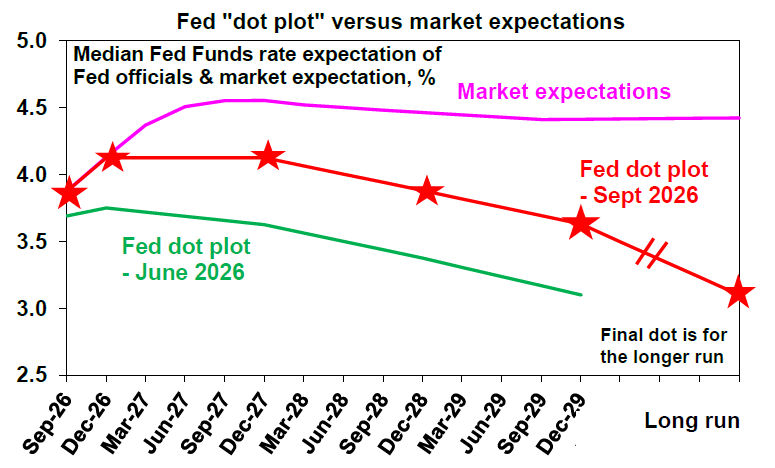
The “dot plot” which indicates interest rate expectations of the participants showed that 12 out of 18 members (Fed Chair Warsh did not submit his expectations) expect another hike this year, 4 expect 2 more hikes and 2 expect no change to rates before steady rates in 2027 (with a skew to another hike) and then rate cuts in 2028 and 2029. Like with most changes to interest rates (either cuts or hikes), it’s unusual to just have one rate change – so we expect another hike before the end of the year.
Our Chief Economist Shane Oliver wrote about the implications of the Fed hike here.
Major global economic events and implications
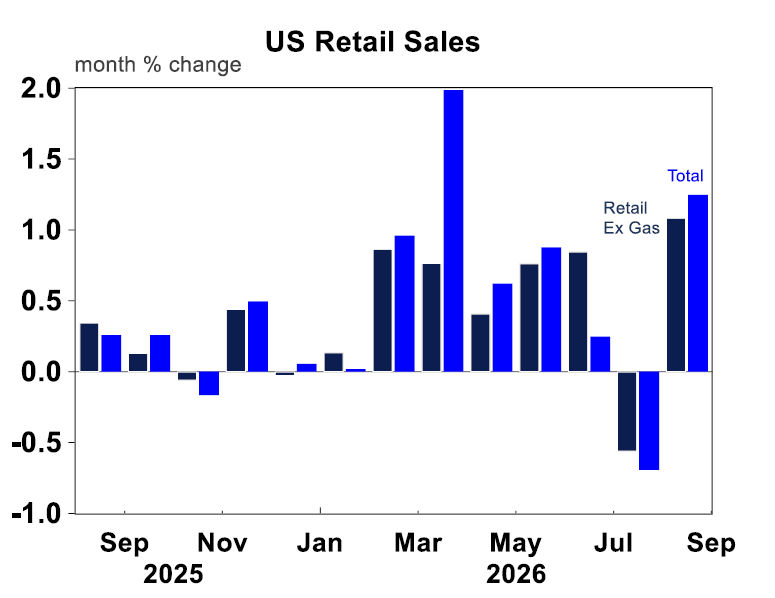
US data was mostly solid. August retail sales growth rose by a solid 1.2% and this wasn’t just from higher gas prices, ex gas retail sales were by 1.4% - a sign that consumers are still spending.
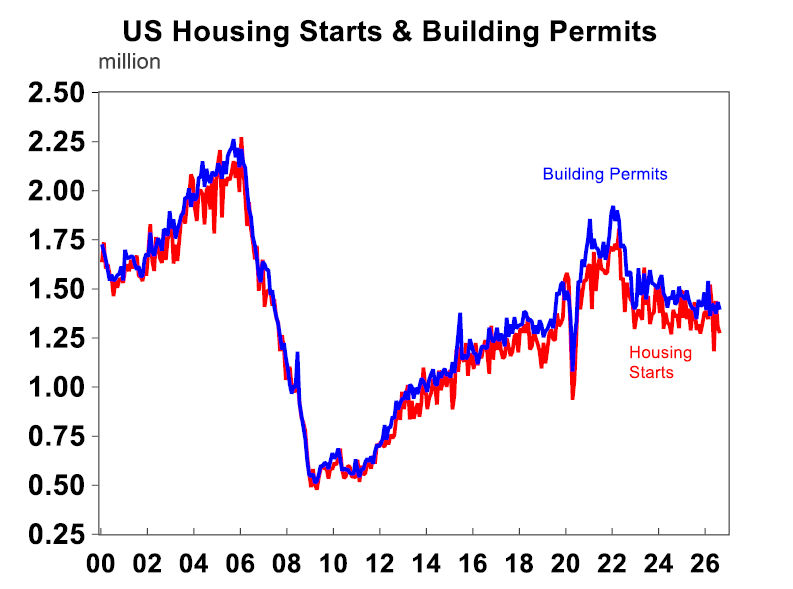
But housing starts dipped in August and are continuing to trend now – not a good sign for housing supply which will put upward pressure on home prices and rents.
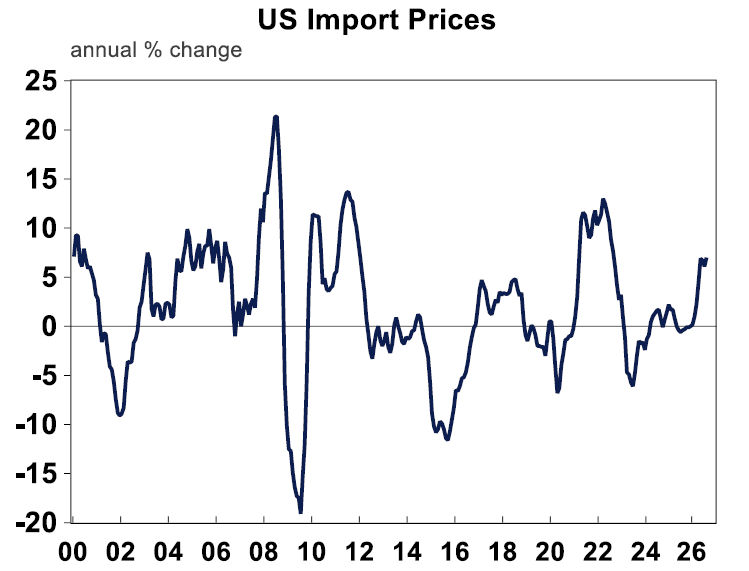
US import prices are up 7% over the year to August – the highest pace of growth since the inflation surge in 2022 post-pandemic with large rises in tech-related products, another sign of the initial inflationary impact of the AI boom.
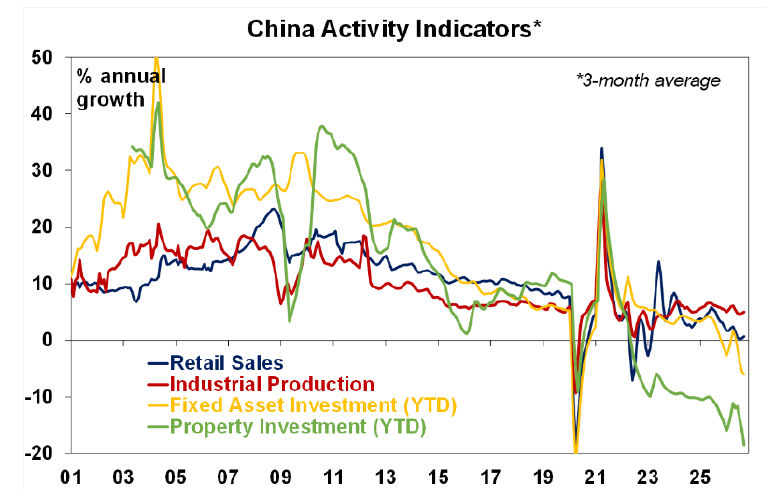
Monthly Chinese data this week was mixed - the domestic side was soft (retail sales up only just in the last 12 months, property investment is still down ~20% over the year and fixed asset investment has also fallen) but the export side is solid with industrial production up 5.2% over the last year.
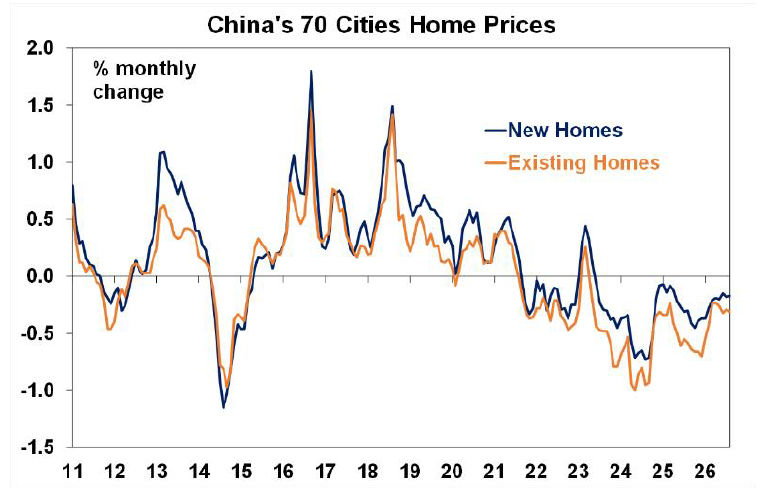
Home prices in China are still declining, but the pace of the decline is improving, which would be good for household sentiment and wealth.
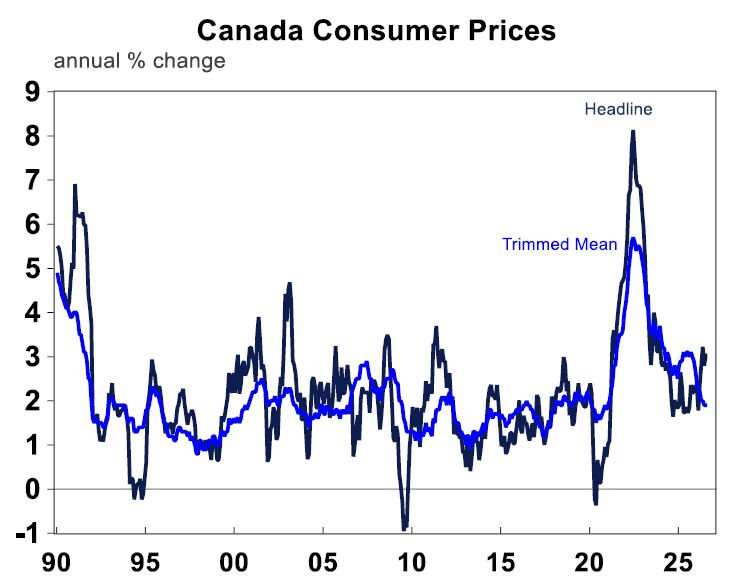
Canada inflation was up 3% over the year to August, unchanged from last month and 1.9% on the trimmed mean. Interest rates in Canada are on hold and thi
The Bank of England kept interest rates unchanged (with a 6-3 vote for a hold versus a hike). But, the stage is set for rate hikes in coming months, with elevated inflation projections.
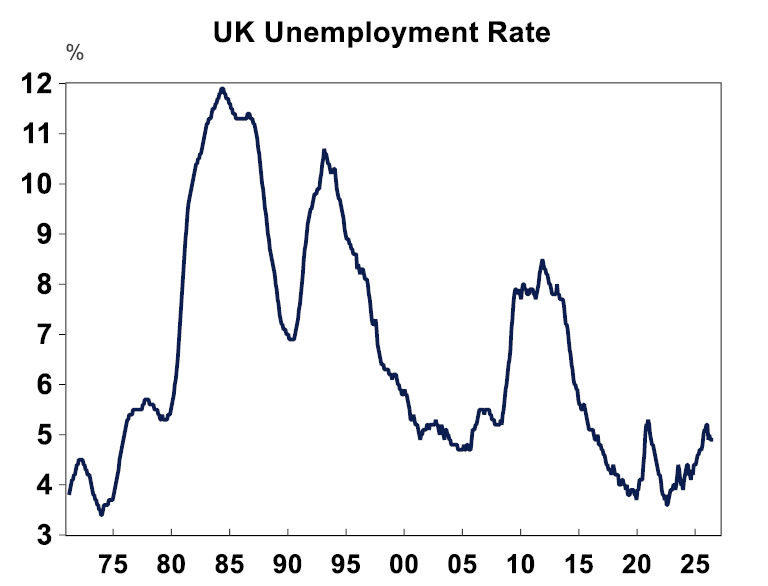
The UK unemployment rate was flat at 4.9% in July and appears to be stabilising after rising over the past year.
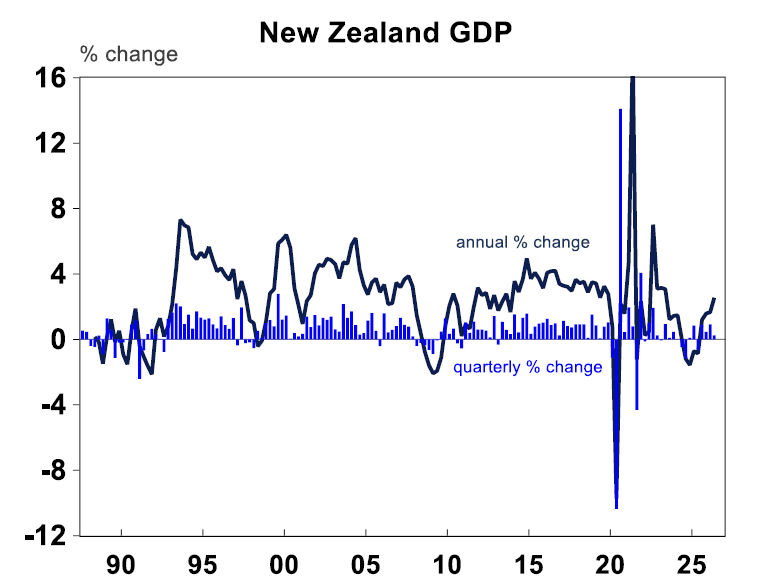
New Zealand GDP rose by 0.2% in the June quarter, a little above expectations and annual growth increased to 2.6% over the year. Growth driven by net exports, inventories and housing construction. Consumers remain weak.
Japanese consumer prices rose by 1.9% over the year to August or 1.9% if you exclude food and energy which is lower than the Bank of Japan would like.
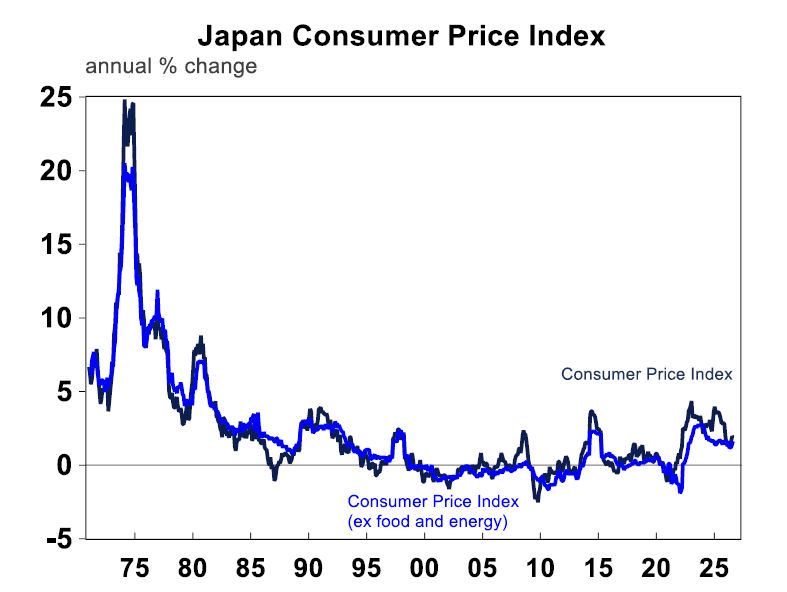
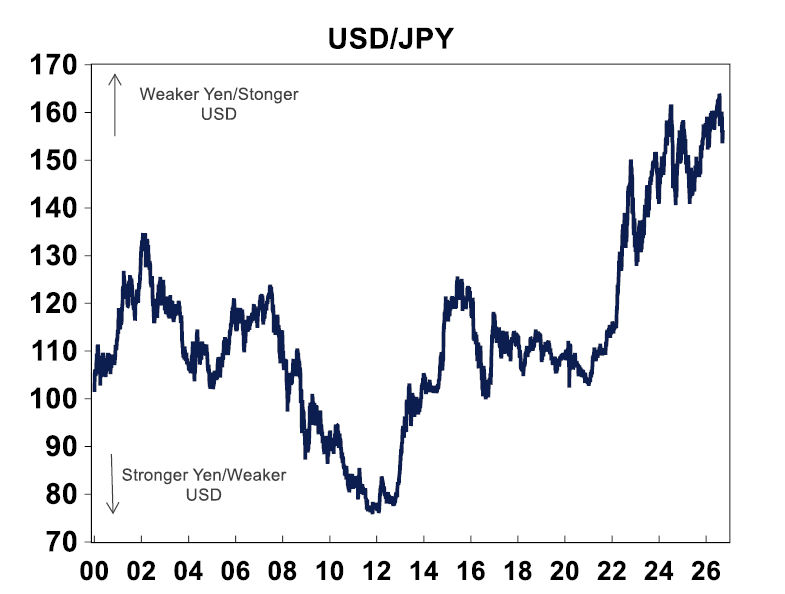
But the Bank of Japan still lifted interest rates this week from 1% to 1.25%, with 7 members voting for a hike and 2 dissenters. This is the third rate hike from the Bank of Japan in the last 12 months. Further tightening is expected and is also needed to provide support to the yen, which has been under pressure and is lifting inflation (through higher import prices).
Australian economic events ad implications
Home Affairs Minister Tony Burke gave an update on Labor’s immigration policy. This was not a change to migration targets, but rather an explanation on how Labor will achieve these targets. Current annual net migration is running around 290K (down from 310K a year ago and 550K in the post-pandemic high), expected to slow to 245K by mid-2027 before settling at 225K over the long term, which is around the pre-Covid average. Labor plans to reduce long-term immigration by introducing restrictions on working holiday visas via a “ballot” system, a longer wait time for approval, reprioritising skilled visas towards healthcare, construction, education, law enforcement, defence, resources, agriculture, aquaculture and fishing, a reduction in the number of international students and graduates who bring in dependents (apart from Pacific, ASEAN nations and PHD candidates) and stopping “visa hopping” (students moving from one type of visa to another).
Labor’s announcement follows One Nation’s immigration policy earlier this week. Under a One Nation government, the temporary visa population will fall by 766K over the 3 years before increasing by 130,000 per year over the long-term. This will result in a decline in population growth for 3 years because the cuts to net migration would be larger than the natural increase in the population. Population growth would eventually stabilise at 0.8% per annum whilst Labor’s policy would see population growth average at 1.1% per year.
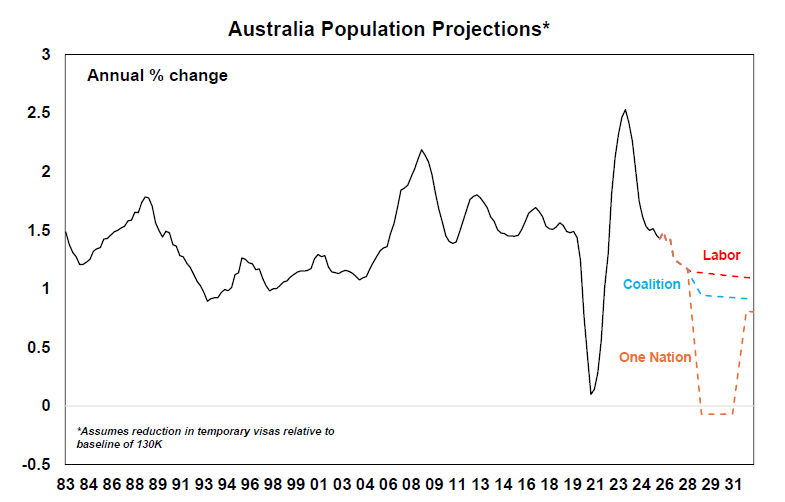
One Nation will achieve this through a decline in student and graduate visas and families of people on temporary skilled visas. It will be difficult to enact this policy as it would mean big changes to visa approvals and additional compliance monitoring.
There are several economic impacts from changes to immigration:
- GDP growth
Aggregate growth in any economy is made up of the “3 P’s” – Productivity, Participation and Population. Higher population means more demand for everything – housing, goods, healthcare, education and transport systems. So population basically provides a base for aggregate economic growth. This is why it’s important to look at GDP growth per person as well as the aggregate numbers which can often reflect a larger population rather than better living standards. This is also often why emerging markets have high GDP growth – from population (but also productivity).
A slowdown in population growth is therefore going to weigh on the overall pace of GDP growth. But this doesn’t necessarily mean lower living standards. What matters most for sustained improvements in living standards is growth in output per person – otherwise known as productivity growth.
The challenge with Australia’s sluggish GDP growth per person in the years post-pandemic has been less about high population and more around the fact that productivity growth has gone nowhere. Without productivity gains, you cant improve incomes and living standards over time, regardless of how fast the population is growing.
- Housing and inflation
Housing is where migration has its most direct impact, because new migrants typically require additional dwellings, whereas newborns generally move into existing homes. Australia's housing challenge is fundamentally a supply-demand problem: the demand for housing has been running well ahead of available supply.
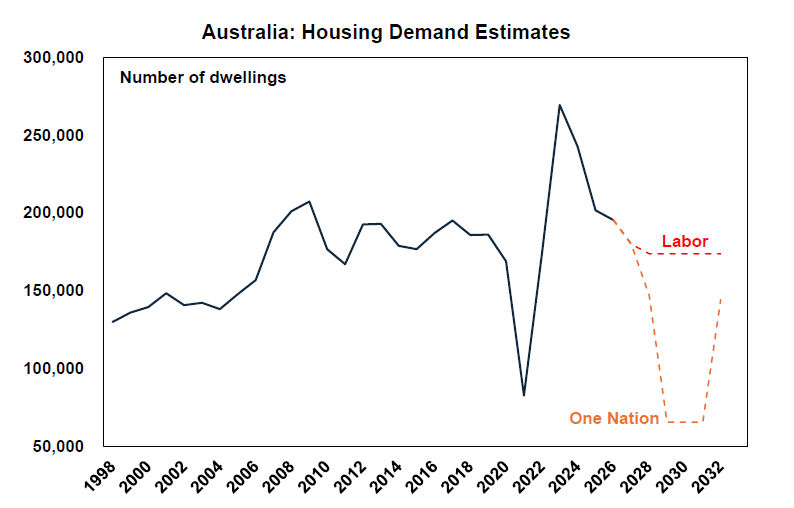
Based on our estimates, the One Nation proposal would reduce housing demand by around 109,000 dwellings per annum relative to Labor's projections over the first three years, when net migration is assumed to turn negative. Over the longer term, annual housing demand would be around 30,000 dwellings lower than under Labor's population forecasts. If residential construction remains strong, this would significantly reduce the current housing undersupply and ease pressure on both home prices and rents.
However, there is an important caveat. Migration does not only add to housing demand; it also adds to housing supply through the construction workforce. As a result, policies that reduce migration may improve housing affordability by lowering demand, but they could also constrain the labour force needed to build new homes. The ultimate impact on housing outcomes therefore depends on which effect is stronger: the reduction in demand for housing, or the reduction in the capacity to deliver new supply.
- The labour market and skills shortages
If migration helps to plug skills shortages (especially in the short term) then a fall in skilled migrants may exacerbate existing skills shortages. One Nation says that its skilled worker visa will not change, but the worker can’t support any dependents on their visa and that a new visa subclass for high-value postgrad students will be established (in areas like science, technology, engineering and maths). So there will be a change in the type of skilled workers that come to Australia.
The broader issue is that a lot of labour shortage areas in areas like aged care, personal care services and eating out are under temporary visas so taking out a large chunk of these workers may see higher wages which will put upward pressure on inflation.
On the Labor policy, the proposed change to holiday visas may cause some issue for farmers relying on seasonal workers.
At this stage, it is difficult to know exactly how these policies would operate in practice or how individuals and businesses would respond. However, any migration reform needs to keep Australia's skills shortages front of mind.
The other major economic effect will be on the tertiary education sector, a top 5 Australian export category, which would also be negatively impacted from a big decline in international student numbers which would mean a cut back to staff, training and have a flow-on impact to domestic students. So, we need to strike the right balance around optimal student numbers.
Beyond the economic effects, migration policy is increasingly being shaped by broader social concerns. Issues such as housing affordability, congestion, pressure on infrastructure and community safety have become prominent in public debate. The proposed changes to immigration are, at least in part, attempts to address these concerns. The challenge for policymakers is to balance these social objectives with the economic benefits that migration can provide through higher workforce participation, stronger skills growth and a larger productive capacity.
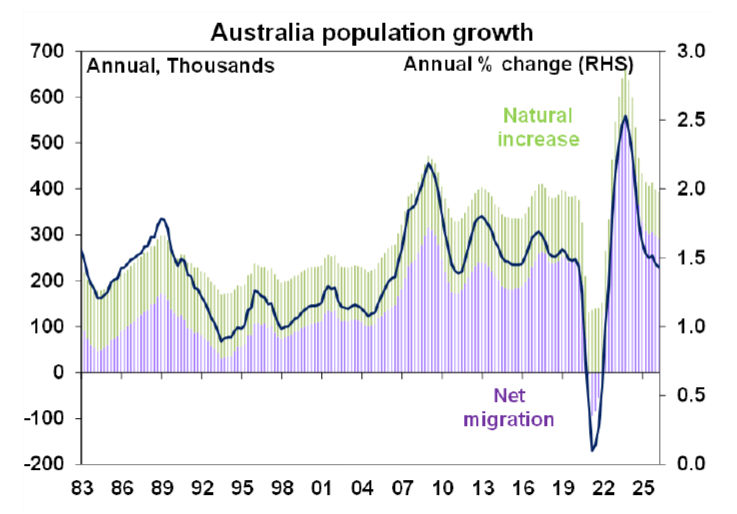
The March quarter population figures this week showed a 0.5% increase in the population over the quarter, or 1.4% over the year which is around 392K people. Births less deaths are up 100K over the last 12 months and net migration is running at 292K. This was the slowest increase in the population (outside the pandemic) since June 2006.
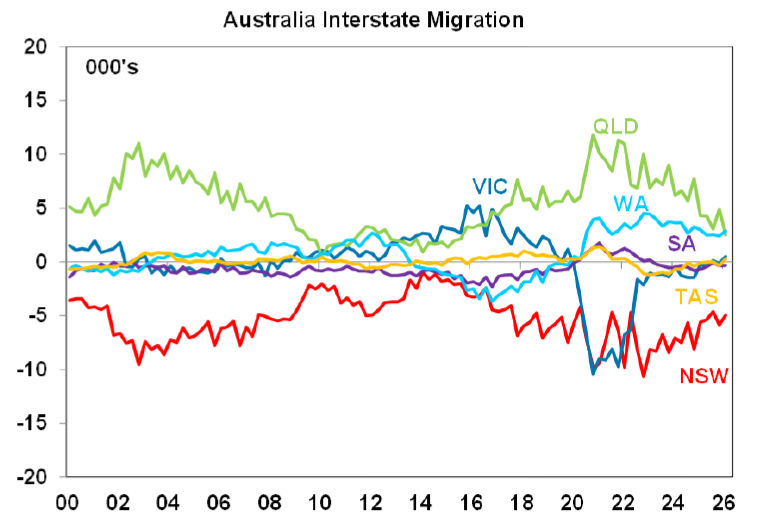
Interstate migration flows show a slowing in movement to Qld (although its still positive), continuing stable flows into WA, an improvement in flows into Vic and continued outflow out of NSW (although it’s reducing).
The RBA’s Assistant Governor (Economic) Sarah Hunter had a fireside chat at the Regional Australia Institute’s Regions Rising National Summit. Hunter’s remarks reinforced the RBA’s hawkish message that inflation risks are still skewed to the upside, household spending is holding up better than expected, productivity growth remains weak, business investment is strengthening, the RBA is not seeing broad-based financial stress amongst households or business despite higher rates and regional labour markets remain tight, indicating upside wages.
RBA Governor Michelle Bullock appeared before the House of Representatives and gave an update on the RBA’s view of the outlook. I thought she sounded a little more overt in her discussion around inflation, nothing that “Developments since [the August Board meeting] suggest that although growth in the Australian economy is slowing, some of these upside risks to inflation appear to be materialising”. Sounds like a central bank that will raise rates at the next meeting (in late September).
What to watch over the next week?
Trump and Xi are meeting next week in Washington, after meeting in Beijing earlier in 2026. There is no specific public agenda set for the meeting. Some are calling it a “maintenance” meeting but high on the list of talking points will probably be: tariffs, rare earths, critical minerals, AI restrictions and Taiwan. We are not expecting a major roll back in tariffs though.
Next week in the US, plenty of Fed officials are speaking and September PMI’s are expected to show expanding services and manufacturing activity.
European PMI’s are also released next week for September (with activity still looing like its expanding) The Swedish Reserve Bank (Riksbank) meets and are expected to keep rates unchanged and the Swiss Reserve Bank are expected to keep rates unchanged.
In Australia, Treasury released the Intergenerational Report on Monday, a 40-year economic and budget forecast which essentially projects what Australia will look like in the long-term and what the implications are for government finances. And on Thursday there is the August employment data and we expect an increase of 20K in jobs, the unemployment rate at 4.5% and the participation rate at 22.9% - a reasonably strong report.
Outlook for investment markets
Global and Australian share markets are at risk of a correction given the lack of any resolution to the Iran War and rising oil prices, rising bond yields and stretched valuations, sticky inflation and central bank rate hikes, political uncertainty associated with Trump & the midterm elections and worries about the impact of AI and whether there is an AI bubble. However, returns should still be okay for the next 12 months as a whole thanks to continuing economic growth with recession likely to be avoided and strong global profit growth and likely rate cuts next year.
Bonds are likely to see subdued returns.
Unlisted commercial property returns are likely to be solid helped by strong demand for industrial property associated with data centres.
Australian home prices are expected to fall around 10% top to bottom, of which they have already done 3.6%, out to the June quarter next year as a result of poor affordability, RBA rate hikes, reduced investor demand flowing from the winding back of negative gearing and the capital gains tax discount and poor confidence.
Cash and bank deposits are expected to provide returns around 4 5%.
The $A is likely to rise reflecting the wider interest rate differential to the US, although a move to Fed hikes may limit this. Fair value for the $A is around $US0.72.
Diana Mousina,
Deputy Chief Economist, AMP


You may also like
-

Weekly Market Update - 09-10-2026 - AMP Weekly Market Update: US shares near record highs but risks are bubbling, tech rally remains narrow, credit markets turn wary on AI & Firmus IPO shelved, French bond yields surge, and another immigration debate. -

Five things that could stop the data centre boom As agentic commerce agents become an increasingly common way to shop, learn the risks that may come with them, and some ways to use them more safely. -

What are AI shopping agents, and are they safe to use As agentic commerce agents become an increasingly common way to shop, learn the risks that may come with them, and some ways to use them more safely.
Important information
Any advice and information is provided by AWM Services Pty Ltd ABN 15 139 353 496, AFSL No. 366121 (AWM Services) and is general in nature. It hasn’t taken your financial or personal circumstances into account. Taxation issues are complex. You should seek professional advice before deciding to act on any information in this article.
It’s important to consider your particular circumstances and read the relevant Product Disclosure Statement, Target Market Determination or Terms and Conditions, available from AMP at amp.com.au, or by calling 131 267, before deciding what’s right for you. The super coaching session is a super health check and is provided by AWM Services and is general advice only. It does not consider your personal circumstances.
You can read our Financial Services Guide online for information about our services, including the fees and other benefits that AMP companies and their representatives may receive in relation to products and services provided to you. You can also ask us for a hardcopy. All information on this website is subject to change without notice. AWM Services is part of the AMP group.