





Weekly market update
Investment markets and key developments
Weekly Market Update: US shares near record highs but risks are bubbling, tech rally remains narrow, credit markets turn wary on AI & Firmus IPO shelved, French bond yields surge, and another immigration debate.
12 min read

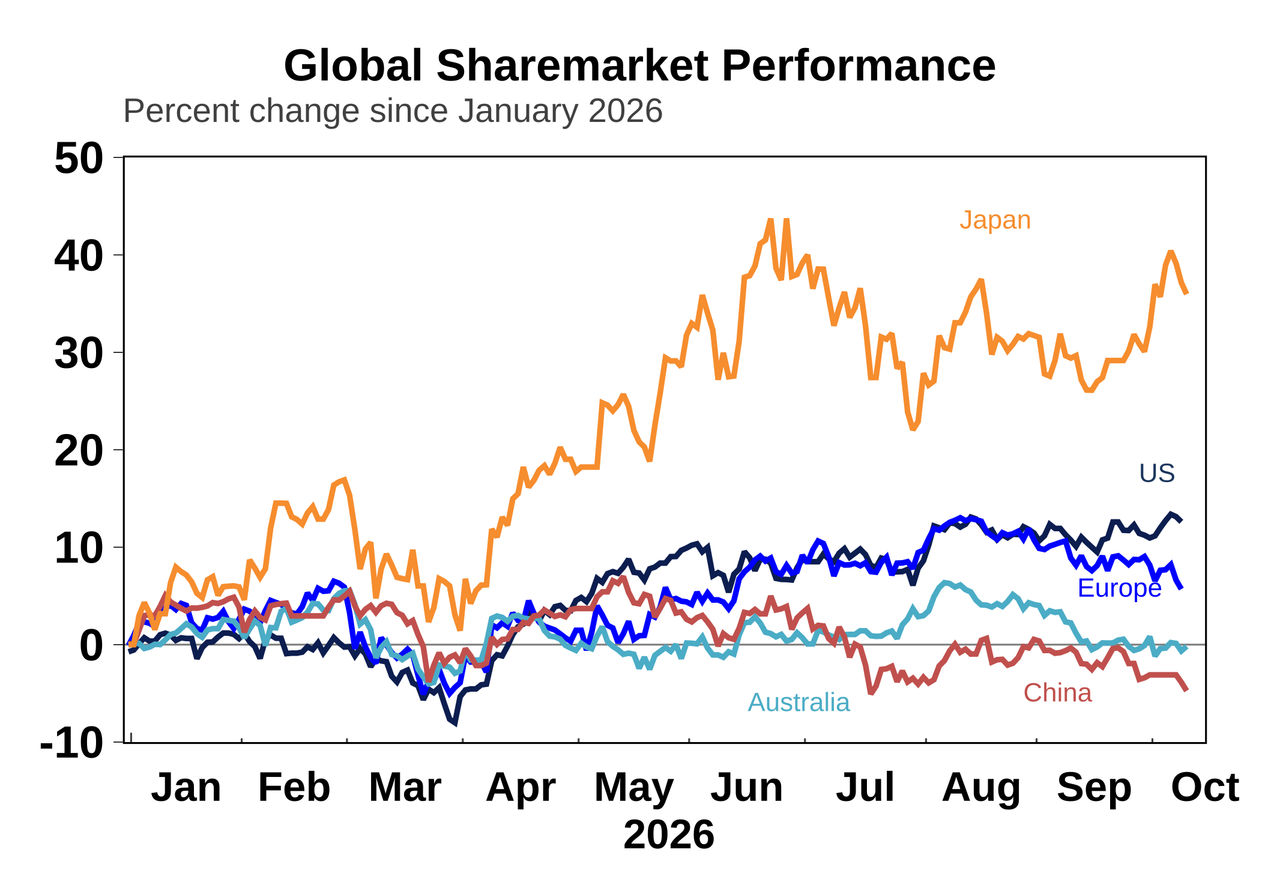
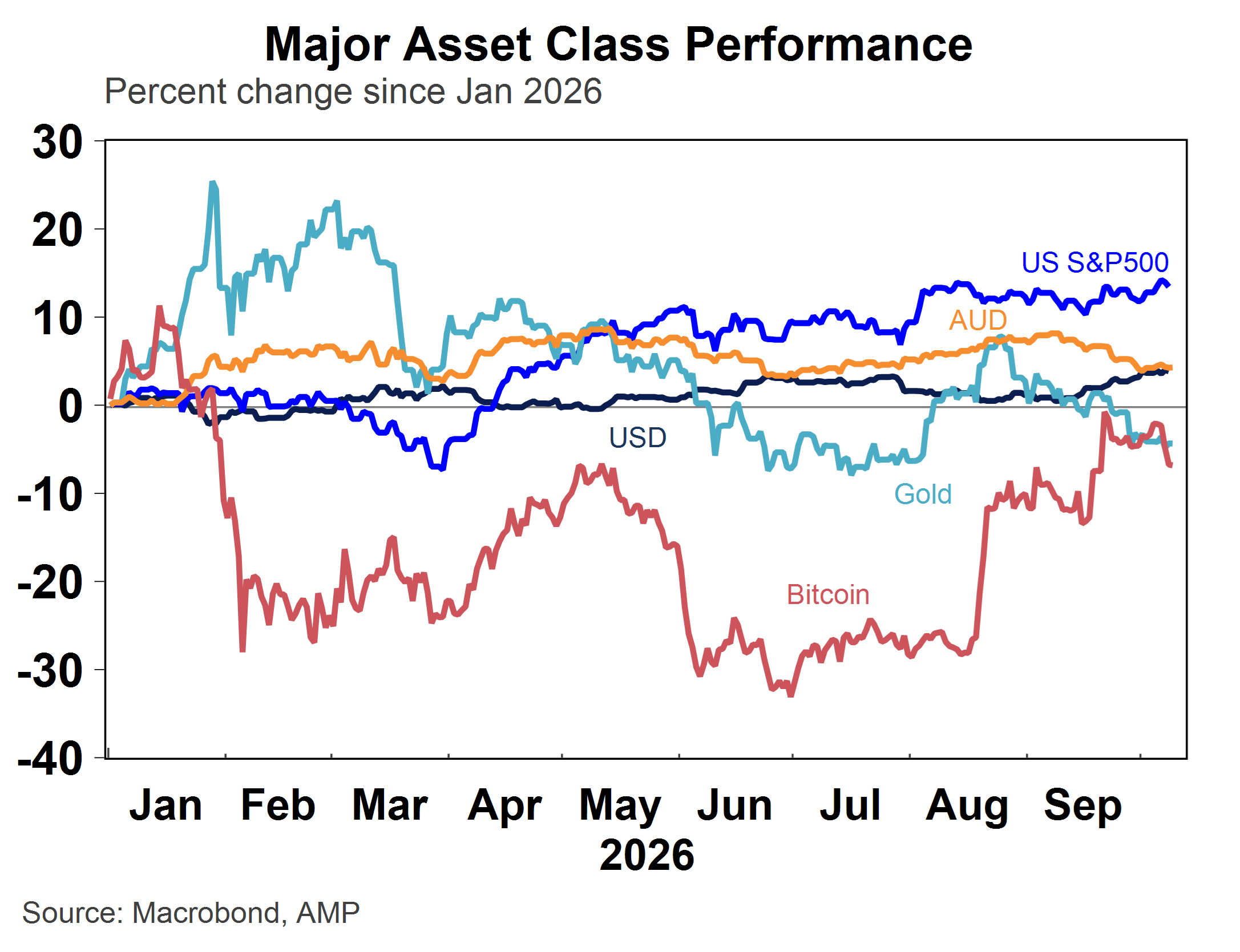
US shares reached a fresh record high earlier this week before easing on renewed concerns about escalating Iranian strikes and reports that OpenAI’s annual revenue was $20bn below the previously reported $70bn. By the end of the week, the S&P 500 was up 0.6% and Japanese shares gained 0.5%, while markets elsewhere fell: European stocks dropped 1.8%, driven by surging bond yields, and Chinese shares declined 1.1%. Meanwhile, the ASX 200 was broadly flat, up 0.2% as we went to print. Gains in healthcare, utilities and real estate were offset by a fall in the IT sector, partly reflecting dampened sentiment following the postponement of data centre operator Firmus’s IPO.
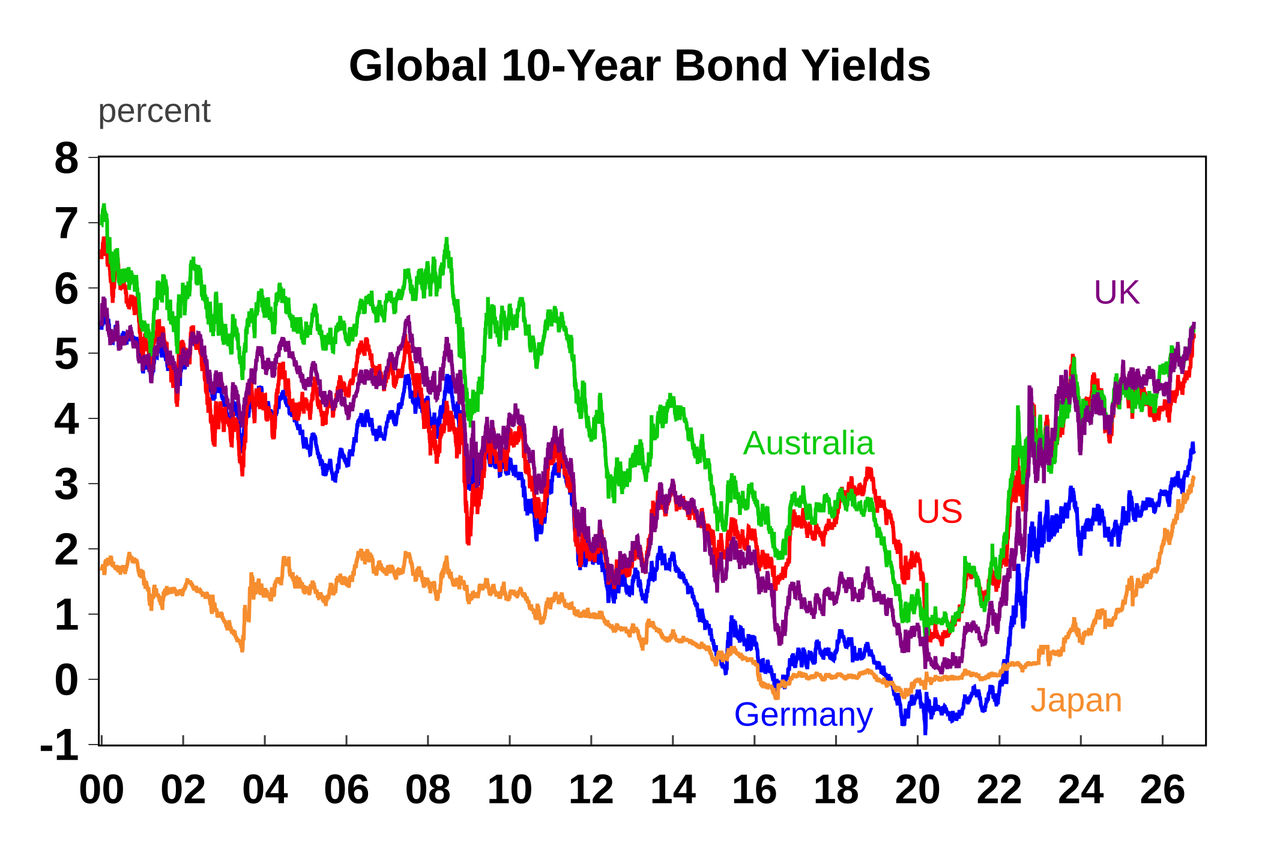
Similarly, US bond yields eased slightly this week, but the bond selloff continued elsewhere, with the US 10-year ending the week at 5.23% (versus 5.27% last Friday). The forces driving yields higher, particularly elevated government debt and deficits, have been building for years. Over the past week, rising oil prices and renewed inflation concerns added further pressure, especially after reports that Iran intensified its strikes and hit a tanker deep inside the Persian Gulf near Oman. Surging French yields were also a major concern, raising fears of contagion to other countries and credit markets, as discussed below.
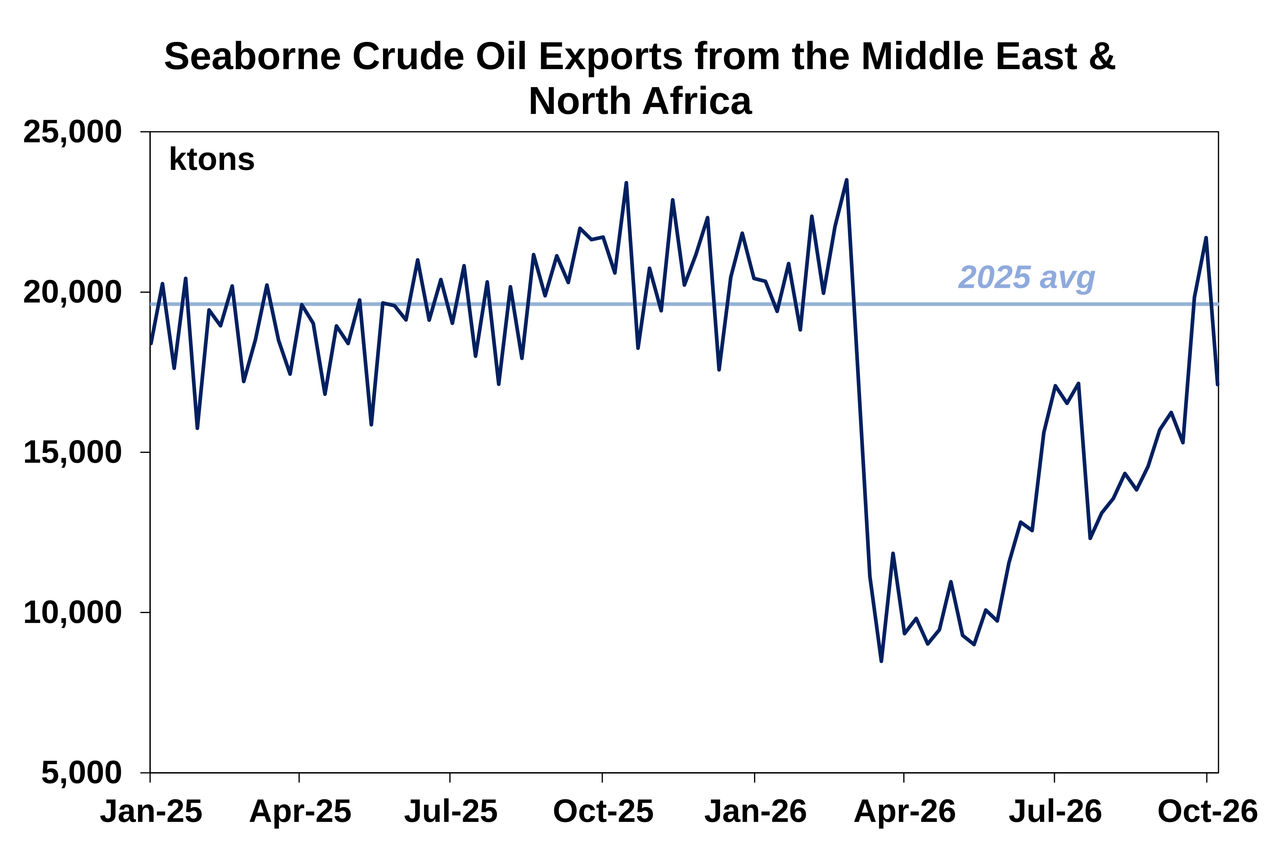
Oil flows from the Middle East rose to their highest level since the start of the war, while Bloomberg data showed that weekly seaborne oil exports from the Middle East and Africa have largely recovered to their 2025 average. Countries now appear to be finding ways to export oil despite the unresolved war and continued reports of Iranian attacks on ships in the Hormuz Strait. This has been achieved through alternative routes, including Saudi Arabia’s resumed use of the East-West Pipeline, US military air escorts for tankers and, most importantly, ship-to-ship transfers. This involves smaller shuttle vessels carrying crude to larger tankers stationed outside the strait, allowing the smaller ships to use routes better protected by the US Navy and sparing tankers from crossing the entire strait. A greater willingness by countries to accept risk while exporting oil may also be supporting supply.
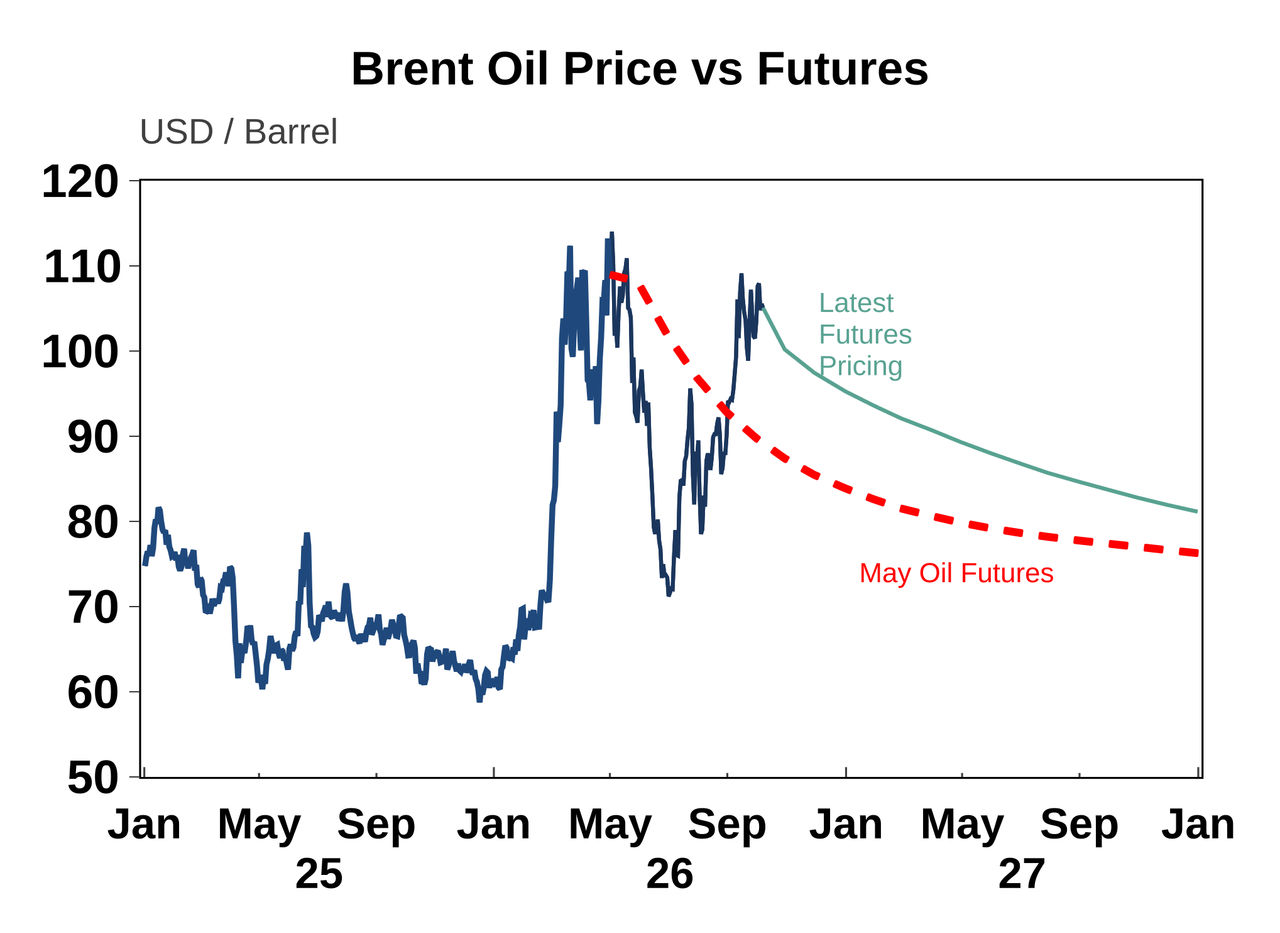
The catch is that higher oil flows have not brought down prices, with Brent stillhovering above $100/bbl, while diesel spreads continue to spike. This is mainly because the cost of getting oil to refineries is now higher: ship-to-ship transfers take longer, require more complex logistics and use more tankers to deliver the same amount of oil. Bloomberg reported that more than 40% of the world’s fleet of large crude carriers is now in the Persian Gulf region, exacerbating a global tanker shortage and pushing up freight rates. Most vessels travelling through the region also face much higher insurance costs, particularly amid reports of crew casualties. The US military escort plan also appears fragile if tensions flare again. Adding to the pressure, demand from large buyers such as China appears to be recovering after months of drawing down reserves. Overall, spot markets remain unconvinced that current oil flows are sustainable.
Risk appetite was subdued in both gold and bitcoin, falling by 0.2% and 3.3% over the week, respectively.
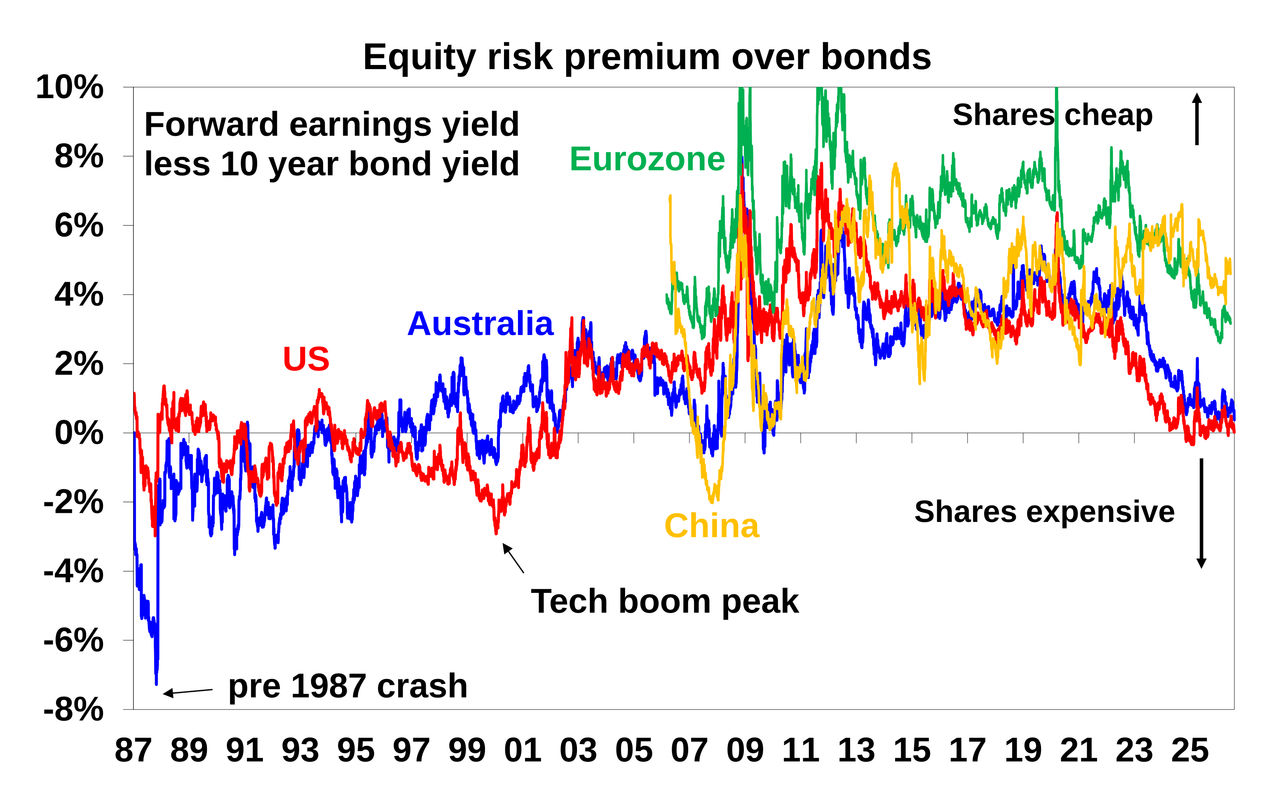
Why haven’t shares fallen further, with the S&P 500 and Nasdaq near record highs despite a near-zero equity risk premium and more than three weeks of bond yields above 5%? The explanation is familiar: AI earnings remain solid, evident by TSMC’s quarterly revenue which was up 51%; markets expect the AI capex cycle to continue; and rising manufacturing and services PMIs are pointing to decent global growth around 3.3% this year.
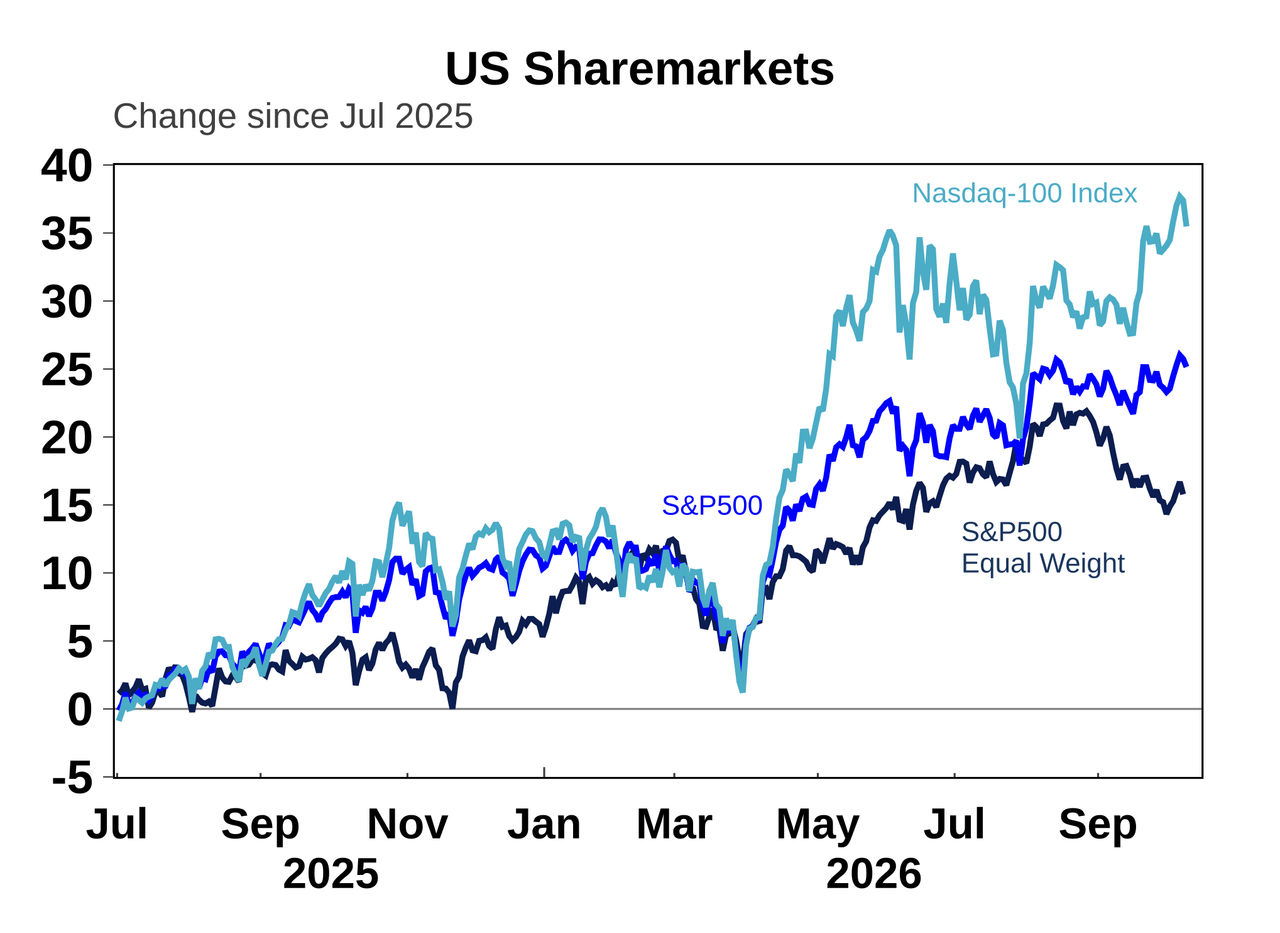
But several risks are beginning to emerge. First, the equity rally is very narrow. Since mid-September, when the 10-year Treasury yield crossed 5%, Information Technology has been the only S&P sector to rise materially, gaining almost 7%, while most others were flat or lower. Without IT, the S&P 500 would have fallen 0.5% rather than risen. Another evidence can be seen in the underperformance of the equal-weighted S&P 500 relative to the market-cap-weighted version, in which IT accounts for 60%.
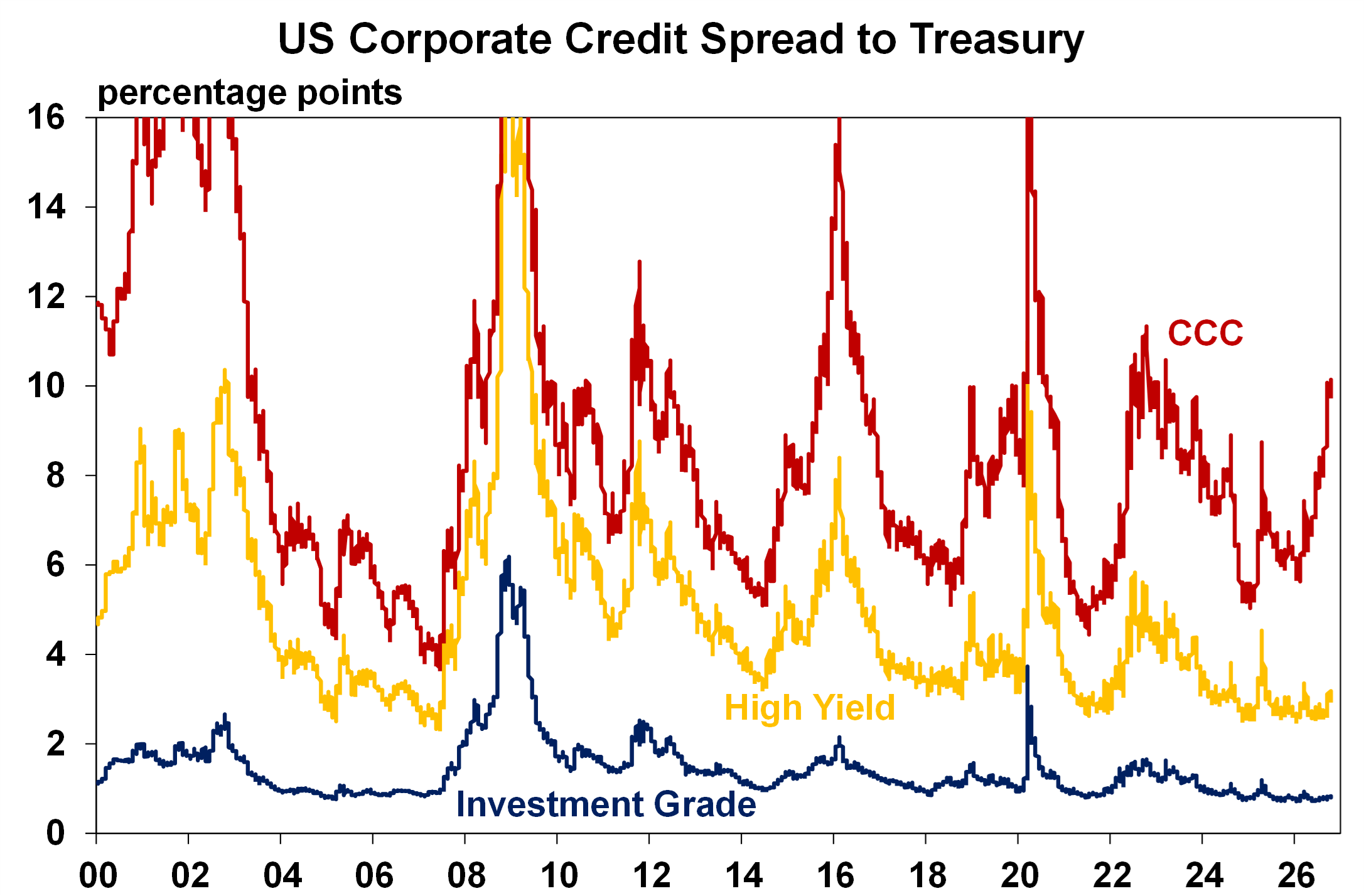
Second, credit markets are starting to price in greater risk, particularly among the lowest-rated issuers. US corporate spreads to Treasuries remain generally resilient, but CCC high-yield spreads have widened to their highest level since late 2022–early 2023, when markets were debating whether the US would enter recession (see the red line below). The US investment-grade credit default swap index (CDX IG), which tracks the cost of insurance against corporate defaults, has also risen sharply since mid-September to its highest level since the Iran war began. Overall, wider spreads suggest investors are questioning whether AI revenues can keep pace with rising borrowing costs. Continued corporate bond issuance to fund AI capex, combined with wider high-yield spreads, will raise refinancing costs as the current wave of debt matures over the next few years.
Locally, the shelved Firmus IPO, originally touted as Australia’s biggest float since Telstra in the 1990s, is another sign of investor scepticism about AI. Firmus is an Australian data centre operator that initially sought a A$44bn valuation earlier this week. Within days, however, investor sentiment soured, with reported valuations at least 25–30% lower. The initial pricing was clearly aggressive for three reasons: 1) Firmus has only two operating data centres, while all contracted capacity depends on facilities yet to be completed; 2) the IPO was intended to raise A$7bn to build three data centres in Tasmania, but the proposed developments now face intense community backlash; and 3) Firmus is highly concentrated, relying on NVIDIA for technology and capital and Meta for most contracted revenue, very similar to the concentration risk facing other AI training data centres. We have discussed the sector’s risks here in more detail. Overall, we remain bullish on the sector, as data centre capex is likely to grow for another two to three years before plateauing, while Firmus is now likely to seek private-market funding. But in a higher-yield environment, investors are clearly demanding greater compensation for risk, including in equities, which places a cap on lofty valuations.
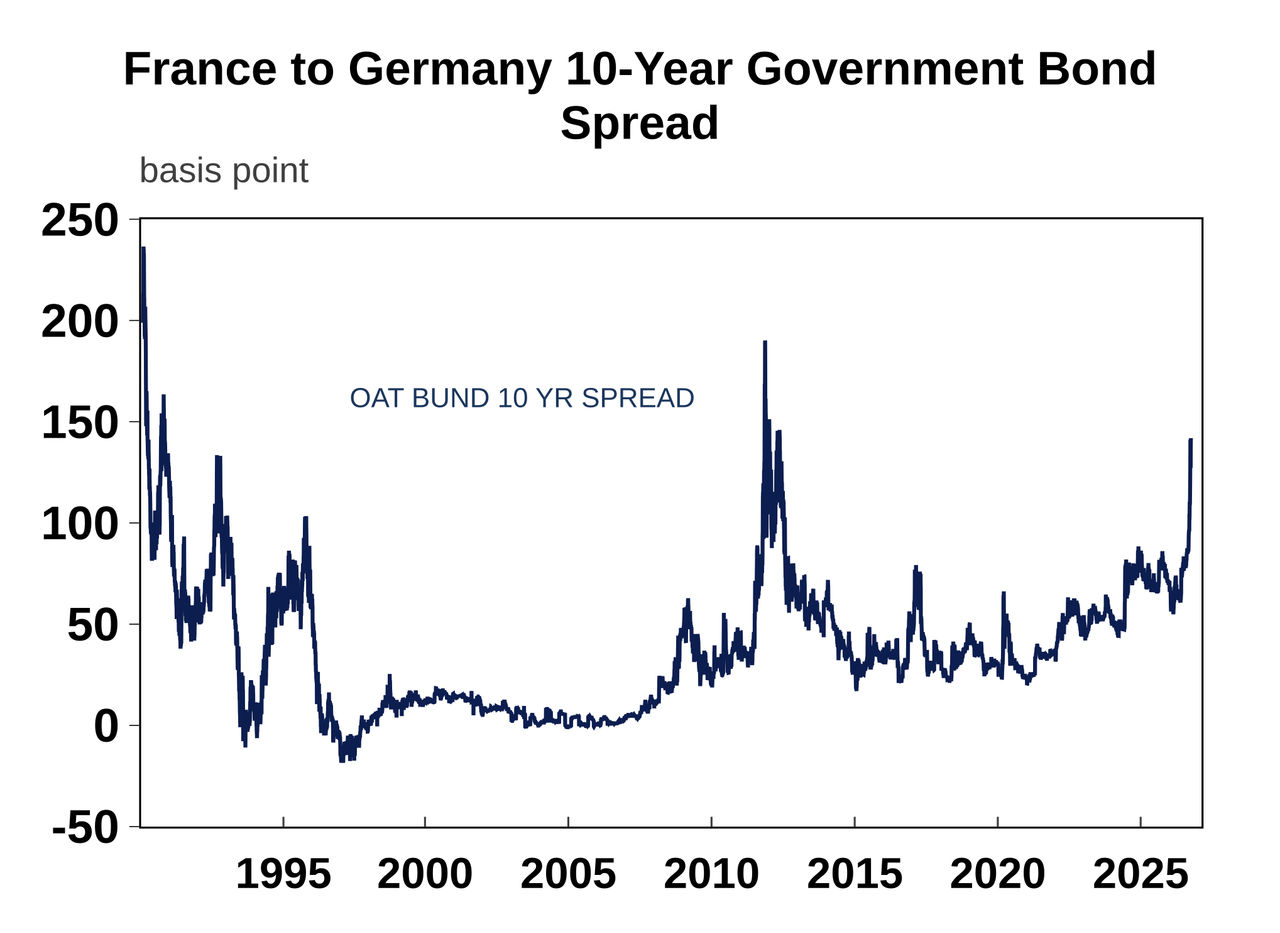
Third, stress is emerging in European sovereign debt markets. Over the past week, the spread between French and German 10-year yields widened to 140bps, the highest level since the 2011 European debt crisis. French borrowing costs have risen so sharply that France now pays more than Greece and Italy. The latest catalyst is the 2027 budget before parliament, in which the government is targeting a deficit of 5% of GDP this year, but it is now expected to reach about 5.4%. A finance ministry-commissioned report also warned that, without policy changes, the deficit could approach 7% of GDP within five years (which basically means more bond issuance and pushes yields higher). Concerns have been compounded by stronger-than-expected September inflation and the prospect of a populist government after next year’s election, with one far-left presidential candidate even calling for government debt held by the Bank of France and European Central Bank to be cancelled! We do not yet see this as a major threat to broader markets, but higher yields could spread to countries such as Belgium, Spain and Italy, which face the same challenges: high government debt and deficits, ageing populations, and voters resistant to fiscal austerity and reform. These pressures are likely to push bond yields higher over the next decade. For now, the hope is that the “bond vigilantes” force the government to rein in spending.
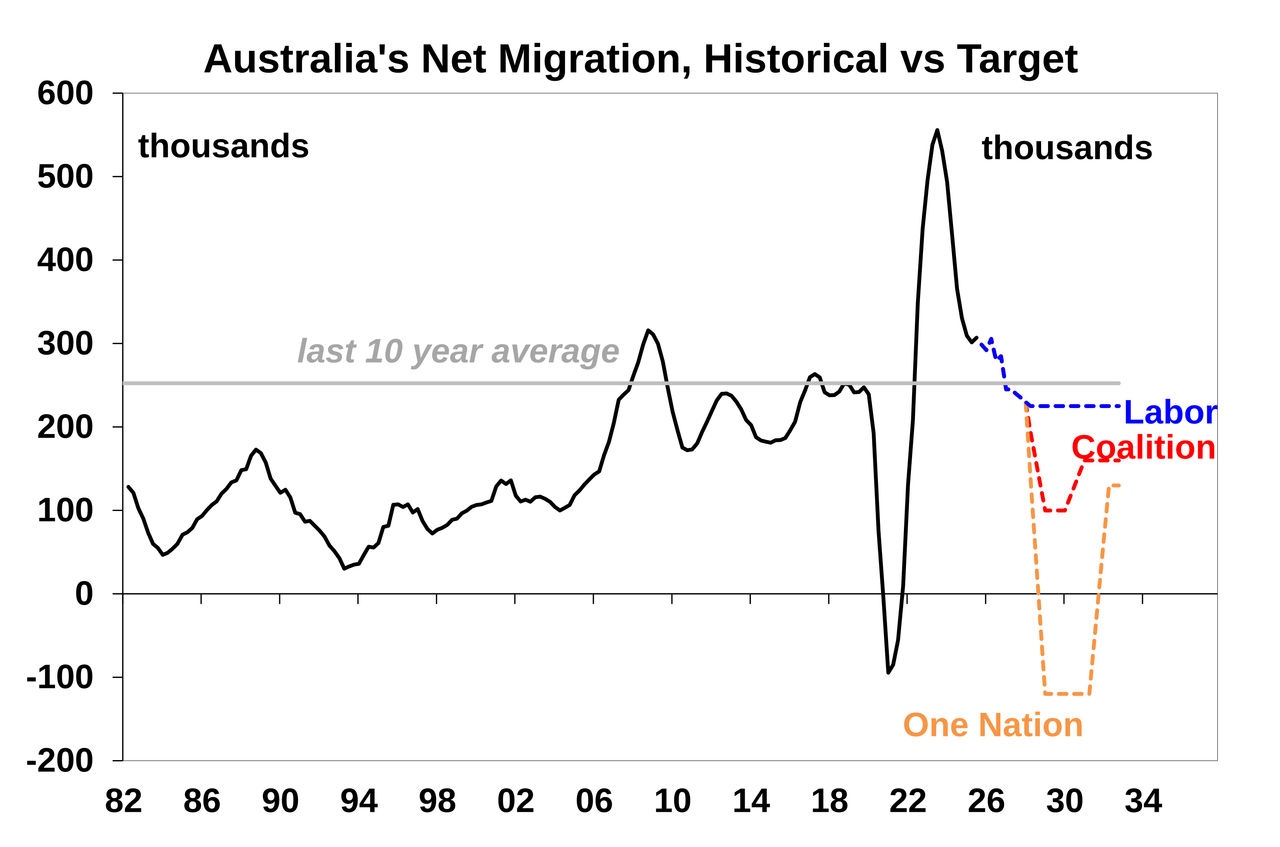
Another week – another immigration proposal from Australian politicians! Following earlier proposals from One Nation and Labor, the Coalition is promising to cut overseas migration to 100K for two years before settling at a long-term level of 160K. This is above One Nation’s proposed 130K, but below Labor’s 225K target and the historical average of 250K. The Coalition plans to achieve this by cutting international student commencements to 240K (from the current 270K cap), lowering the humanitarian intake to 10K (from 20K), restricting secondary applicants on student visas (similar to Labor), and abolishing Temporary Graduate Visas (except for PhD graduates, those studying health or education, and regional students). These reductions would be partly offset by removing caps for second- and third-year working holiday makers and adding 20K skilled visas.
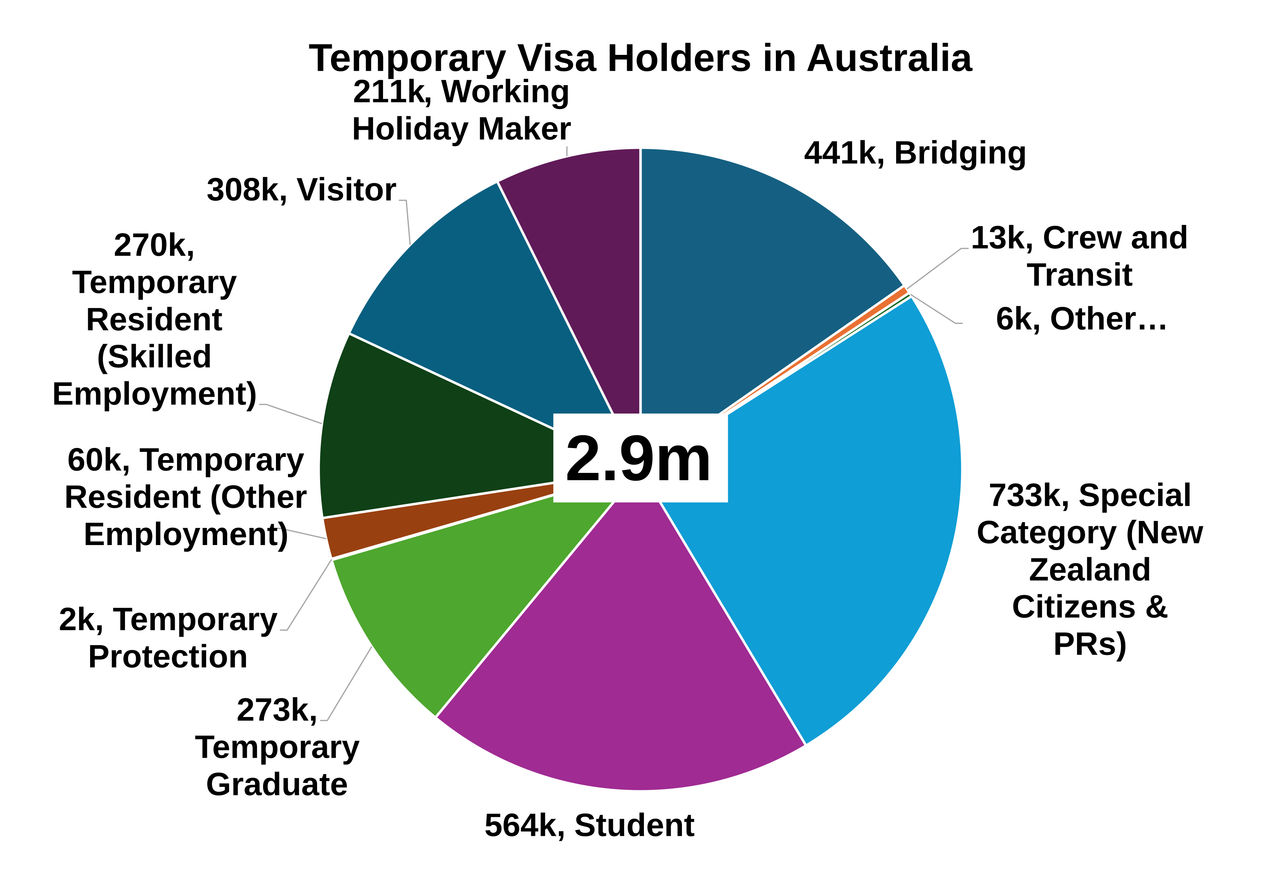
Overall, the Coalition aims to reduce the stock of temporary visa holders by around 650K over four years, excluding visitors and New Zealanders, which will be very difficult. In particular, the reduction appears to be concentrated among student, Temporary Graduate and Bridging visa holders, who totalled 1.28 million in August. Achieving the target would require cutting this group by about half in just four years, while still allowing universities to take in new students. Note that many Temporary Graduate visa holders eventually enter skilled employment, while post-study work rights help Australia attract high-quality international students. Graduates with Australian qualifications and local experience are particularly valuable because they understand the labour market and can move more readily into skilled roles. Policy should therefore focus on attracting and retaining strong students and graduates, rather than simply reducing numbers. Ultimately, a competitive tax system will also be crucial to keeping this talent in Australia.
However, the Coalition’s focus on increasing the share of skilled migrants is welcome. Its proposals include expanding the Specialist Skills stream and Talent and Innovation visa, revising the skilled priority list, and prioritising skilled construction applications as well as permanent applicants based on criteria such as age, income, full-time employment, English proficiency and a skilled partner.
With all major parties seeking to reduce temporary and bridging visa numbers, we expect modest improvements in housing affordability and slower property price growth (but still positive) over the long term. However, inflation could rise in hospitality and other services that rely heavily on temporary visa workers. If we want to contain inflation in a sustainable way, the best solution would be to lift productivity by reducing burdensome regulation, red tape and taxes, while improving labour market dynamism.
Major global economic events and implications
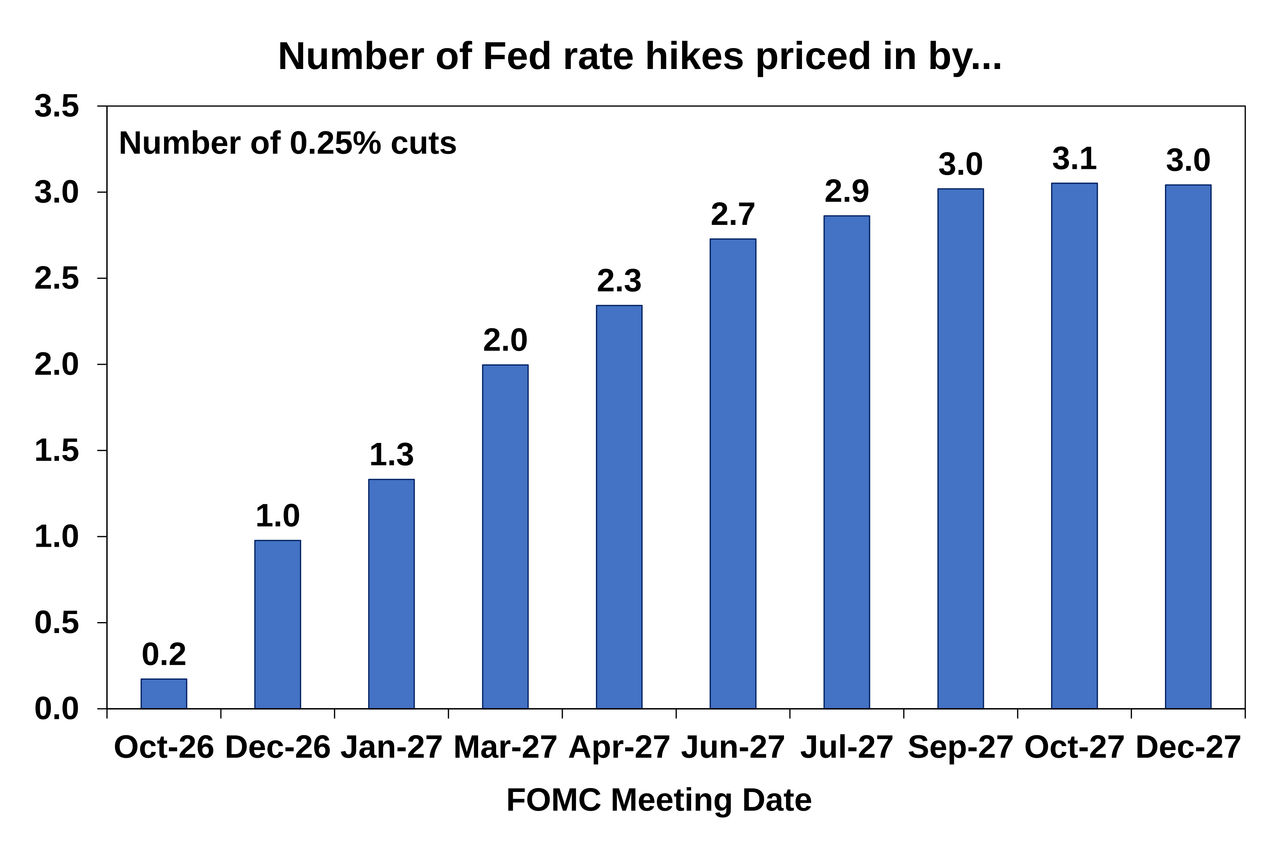
Minutes from the September FOMC meeting, when the Board unanimously raised rates for the first time since July 2023, were hawkish, but less so than expected. In particular, while inflation was elevated and risks are tilted to the upside, “many” thought that higher rates would be providing “insurance” against upside surprises in demand or supply shocks, rather than “necessary” based on outlooks. More importantly, the data have softened since the meeting: payroll growth has slowed, unemployment has edged up to 4.2%, and core PCE inflation was revised down by 0.3 percentage points, compared with the staff’s expected 0.2-point revision. We therefore agree that one more rate rise would be “appropriate by year end” but expect it in December rather than at the upcoming October meeting.
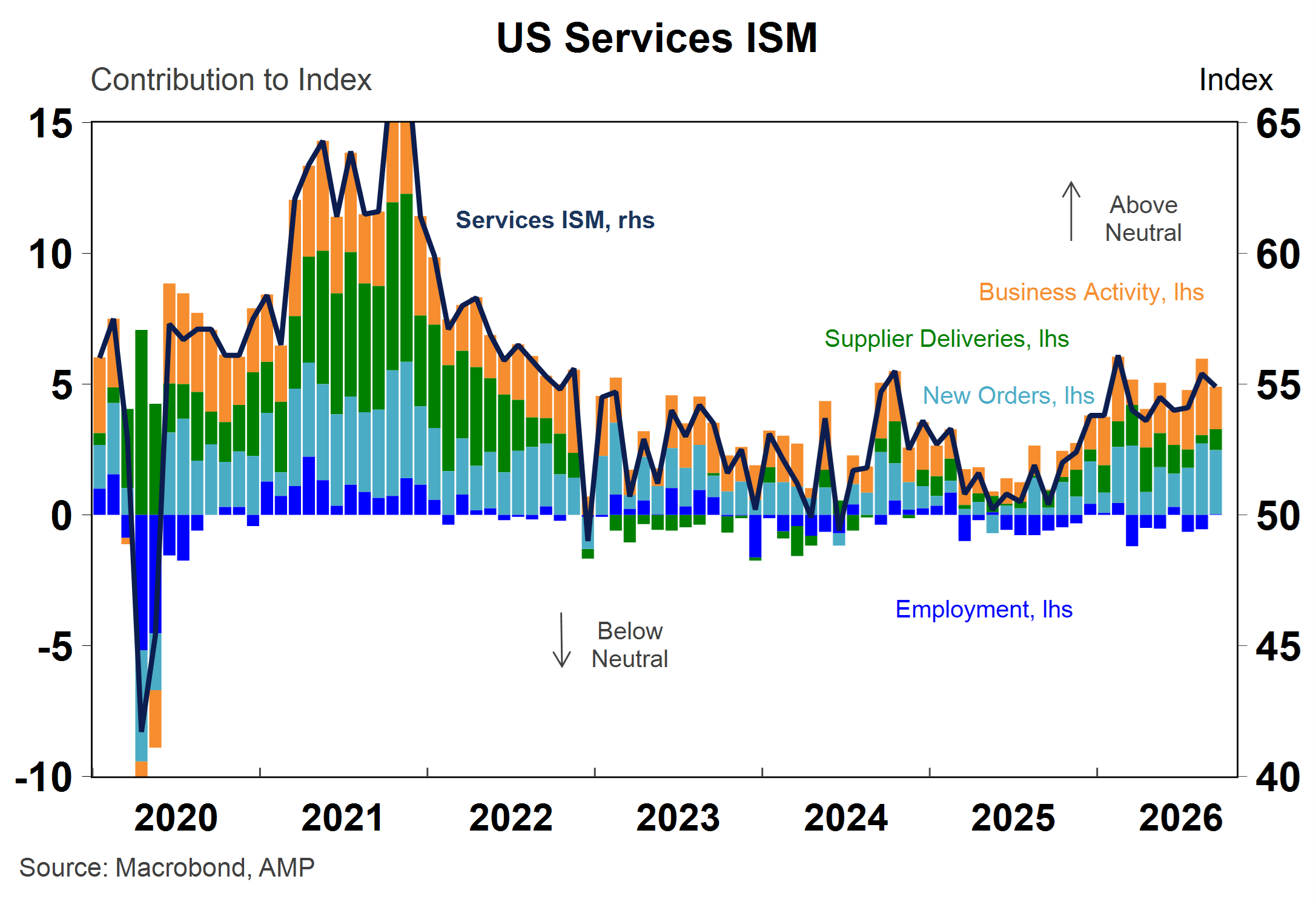
The August ISM surveys showed that the US economy remains resilient overall, although the labour market is more subdued and price pressures continue to build. The services index remained comfortably in expansion territory at 54.9, despite easing slightly from 55.4 in the previous month, supported by strong new orders and business activity. Meanwhile, the employment component has recently made a small negative contribution.
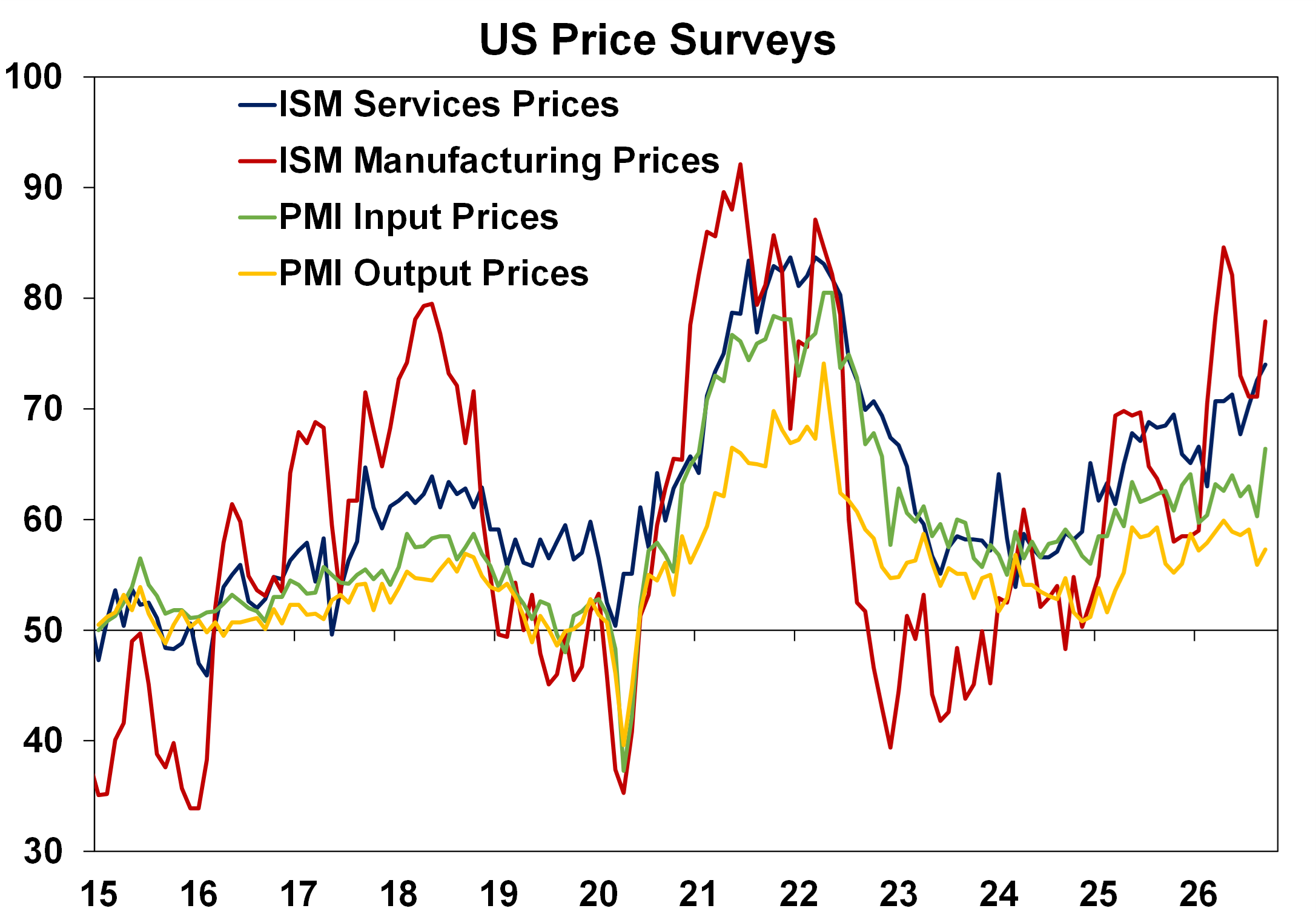
Price surveys across sectors rose over the month and are generally hovering around their highest levels since 2022. Overall, we expect the Fed to hike twice more over the next year, taking the federal funds target range to 4.25-4.5% this cycle.
Australian economic events and implications
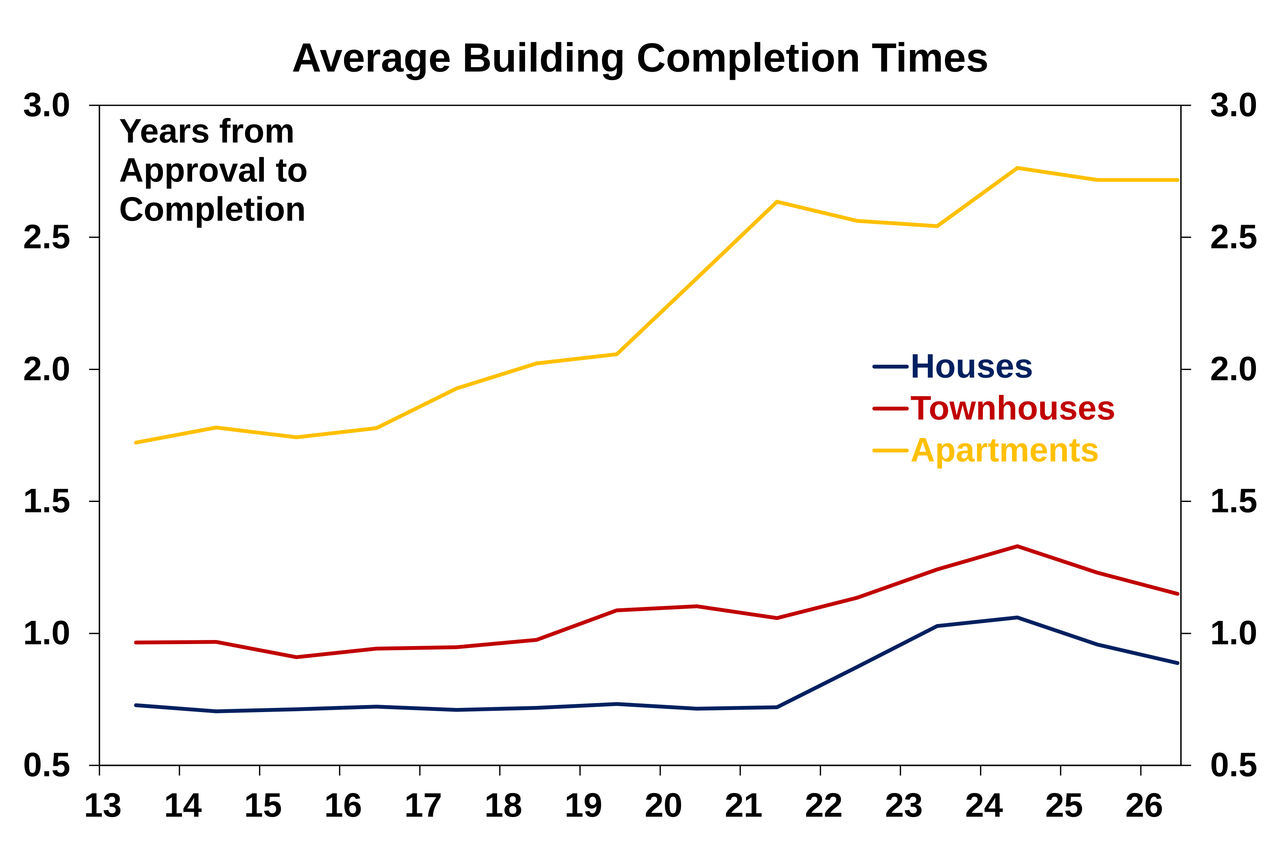
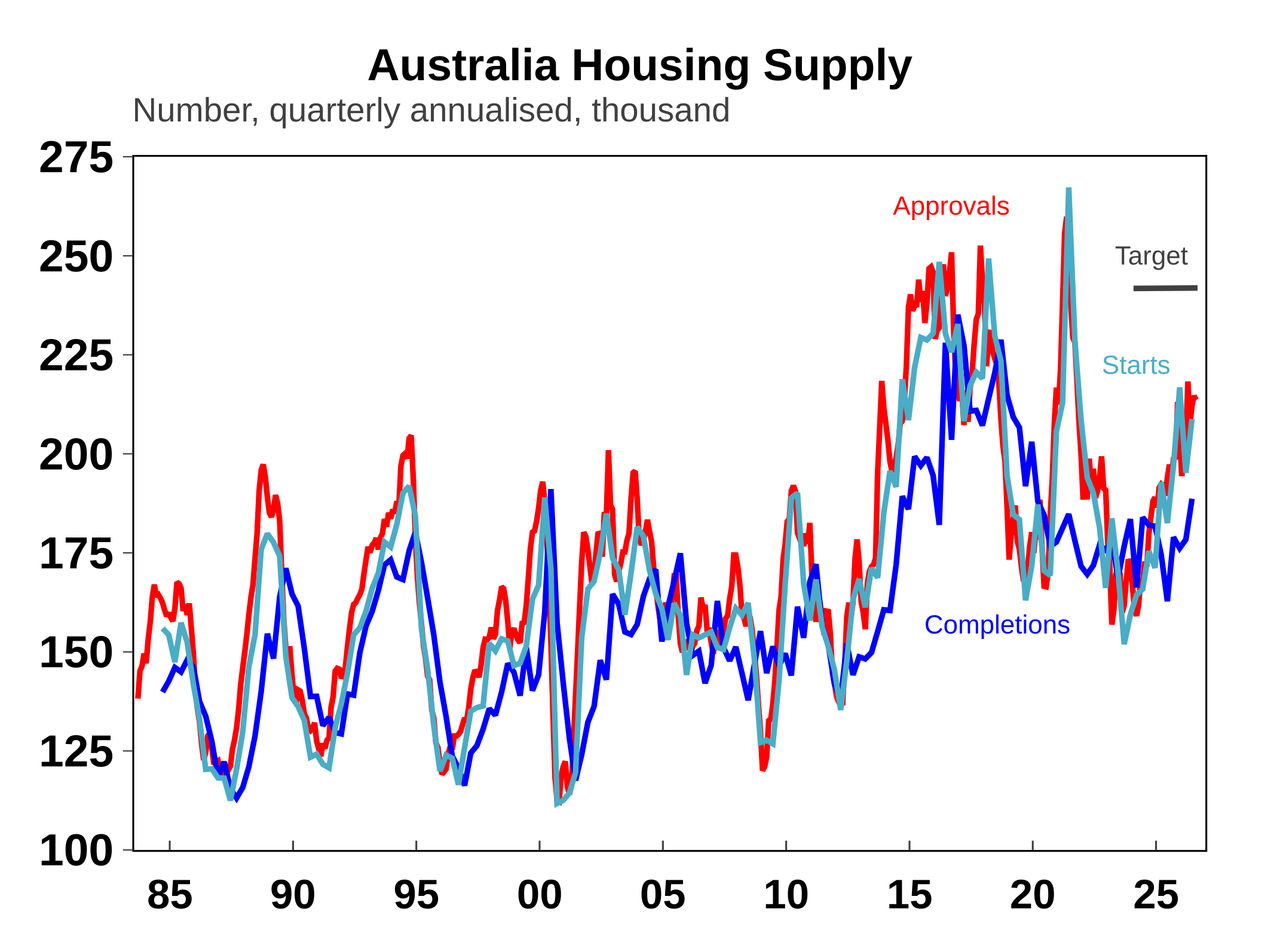
The time it takes to build homes in Australia improved slightly over the past financial year, largely due to shorter approval-to-commencement lags. However, construction times remain elevated, particularly for apartments. Compared with 2019, the total approval to completion time is 21% longer for detached houses and 32% longer for apartments – prime evidence of declining construction productivity even when we need to build more homes.
As a result, dwelling commencements and completions improved in the June quarter, reaching annualised rates of 209,000 new starts (+14%yoy) and 189,000 completed homes (+7.7%yoy). Both are encouraging, but were already signalled by the earlier pace of building approvals. Completions also remain slightly below the level required to make a dent in our level of housing undersupply, while leading approvals indicators are already beginning to peak. Construction is likely to face stronger headwinds in coming quarters as costs rise and selling prices decline.
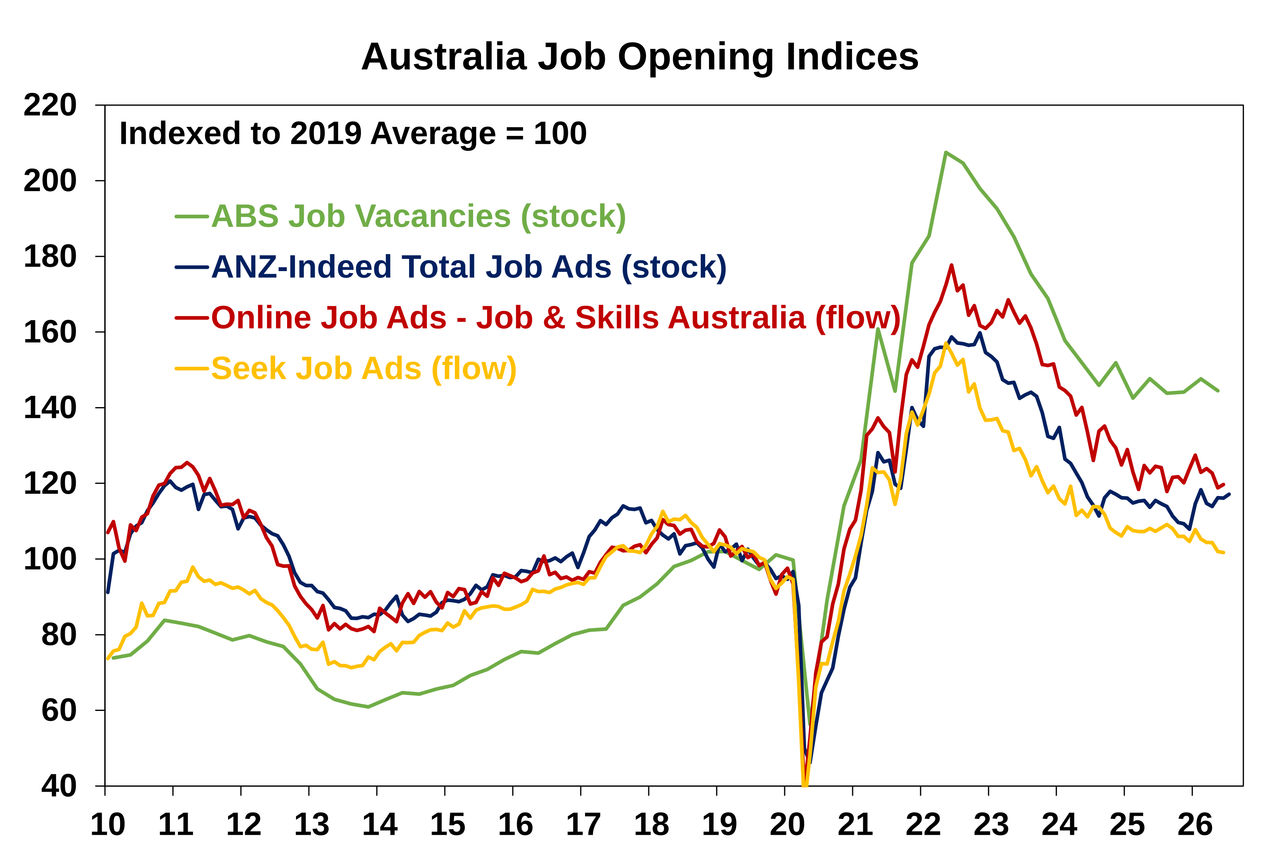
ANZ-Indeed’s stock of job advertisements has been steadily rising and is now 9% higher than the beginning of the year (blue line below). They rose a strong 2.2%mom just in September. Other job ads measures are weaker, however, including the official ABS job vacancies measure (which declined up to June), and other flow measures such as Seek or JSA. We still think that the labour market is going to soften further into year-end, rather than strengthening.
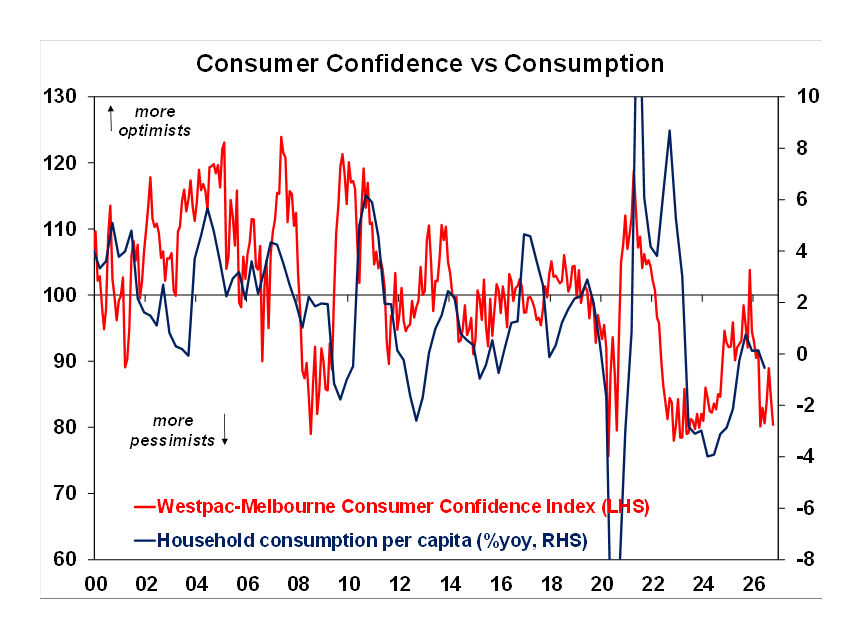
Most households in Australia also expect unemployment to rise, according to the Melbourne Institute – Westpac survey. Household sentiment posted the lowest reading since the Iran war first broke out and is now at a historically weak level, similar to the trough during Covid and the 90s recession. Survey measures of household finances and economic expectations all declined over the month, while the “time to buy a major household item” index fell to 83, well below its long-run average of 123. This adds weight to the lower-than-expected household spending data in August and signals more weakness on spending volumes coming into year end. We expect consumption per capita to contract in the next two quarters, which ultimately means easing inflation pressures from the demand side.
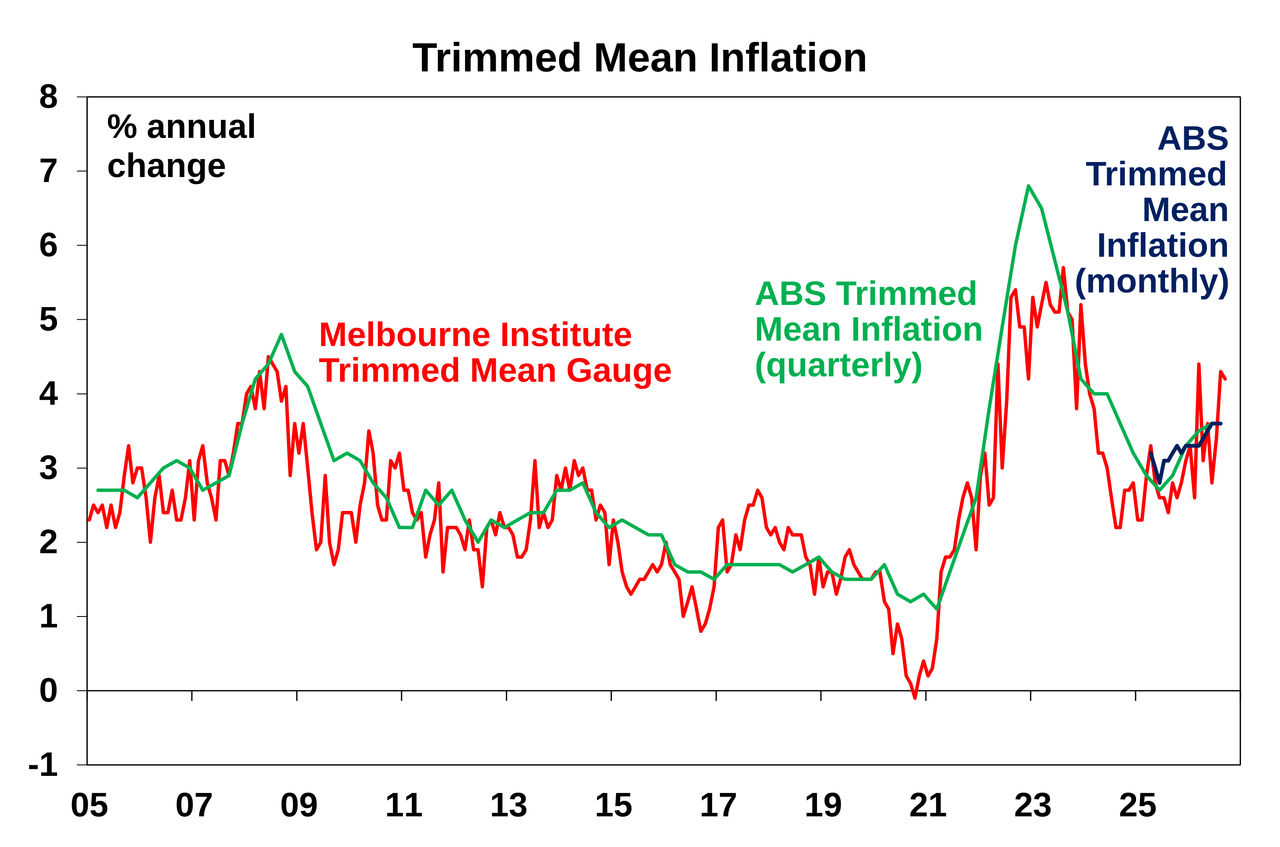
The Melbourne Institute trimmed mean inflation gauge eased to 4.2%yoy from 4.3% last month, but remained well above the target. This measure appears to be overshooting the official trimmed mean inflation rate, but the lack of a clear downward trend is still concerning.
What to watch over the week ahead?
US inflation data for September are due Tuesday and are expected to show hotter readings of 0.6%mom/3.6%yoy, given rising gasoline prices. Producer Price Index inflation (Thursday) is also expected to accelerate slightly to 0.5%mom, from 0.4% previously. Core CPI is expected to be much milder at 0.2%mom, although annual growth will likely edge up to 2.5% from 2.4%, consistent with the Fed holding in October. Retail sales on Thursday will likely show nominal consumer spending continuing to rise (+0.3%mom), while high-frequency housing indicators including existing home sales and mortgage applications, as well as the University of Michigan consumer sentiment should remain consistent with a resilient economy.
In Australia, minutes from the September RBA meeting, when the cash rate was raised to 4.6%, will be released on Tuesday and should provide more detail on the debate between hiking and holding. NAB business confidence, also due Tuesday, is expected to continue showing weak trading conditions and sentiment, following this week’s slump in consumer confidence. We also expect labour market data on Thursday to show further weakness, with jobs growth of 20K and a 67.0% participation rate keeping unemployment at 4.6%.
Outlook for investment markets
Global and Australian share markets are at risk of a further correction given the lack of any resolution to the Iran War and high oil prices, rising bond yields and stretched valuations, sticky inflation and central bank rate hikes, political uncertainty associated with the midterm elections and worries about the impact of AI and whether there is an AI bubble. However, returns should still be okay for the next 12 months as a whole thanks to continuing economic growth with recession likely to be avoided, albeit it’s a rising risk in Australia, and strong global profit growth and likely rate cuts next year.
Bonds are likely to see subdued returns.
Unlisted commercial property returns are likely to be solid helped by strong demand for industrial property associated with data centres. Rising bond yields could become a constraint though.
Australian home prices are expected to fall around 10-15% top to bottom, of which they have already done 5.2%, out to the June quarter next year as a result of poor affordability, RBA rate hikes, reduced investor demand flowing from the winding back of negative gearing and the capital gains tax discount and poor confidence. Rising distressed sales risk also becoming a drag.
Cash and bank deposits are expected to provide returns around 4-5%.
The $A is likely to rise reflecting the wider interest rate differential to the US, although Fed hikes may limit this. Fair value for the $A is around $US0.72.


You may also like
-

Five things that could stop the data centre boom As agentic commerce agents become an increasingly common way to shop, learn the risks that may come with them, and some ways to use them more safely. -

What are AI shopping agents, and are they safe to use As agentic commerce agents become an increasingly common way to shop, learn the risks that may come with them, and some ways to use them more safely. -

Weekly Market Update - 02-10-2026 - AMP Global share markets were mixed over the last week with US and Eurozone shares down as bond yields rose further, whereas Japanese shares surged helped by expectations that the BoJ won’t speed up the pace of rate hikes.
Important information
Any advice and information is provided by AWM Services Pty Ltd ABN 15 139 353 496, AFSL No. 366121 (AWM Services) and is general in nature. It hasn’t taken your financial or personal circumstances into account. Taxation issues are complex. You should seek professional advice before deciding to act on any information in this article.
It’s important to consider your particular circumstances and read the relevant Product Disclosure Statement, Target Market Determination or Terms and Conditions, available from AMP at amp.com.au, or by calling 131 267, before deciding what’s right for you. The super coaching session is a super health check and is provided by AWM Services and is general advice only. It does not consider your personal circumstances.
You can read our Financial Services Guide online for information about our services, including the fees and other benefits that AMP companies and their representatives may receive in relation to products and services provided to you. You can also ask us for a hardcopy. All information on this website is subject to change without notice. AWM Services is part of the AMP group.