





Weekly market update
Investment markets and key developments
Renewed global worries weighed on the Australian share market which fell around 0.3%, but with its lower exposure to tech shares providing some protection.
11 min read

Global investment markets saw another round of volatility over the last week as the Iran War escalated further with Trump talking of a “massive attack” that will be “bigger than ever before”, oil prices surged, expectations for central bank rate hikes rose, the Trump Administration announced more tariffs and IT shares were hit again with worries about the sustainability of AI related earnings and valuations, despite strong earnings results. In terms of the latter the Magnificant Seven group of tech stocks fell 5% for the week. While renewed talk of peace talks helped shares on Friday the US share market still fell 0.6% for the week. By contrast European and Japanese shares rose 0.7% and Chinese shares gained 2.7%. The AI exposed Korean sharemarket saw a rise but gave up some of its rebound on Friday. Renewed global worries weighed on the Australian share market which fell 0.3% for the week, but with its lower exposure to tech shares providing some protection. Tech, property and mining shares led the falls on the ASX but were partly offset by gains in energy and financial shares.
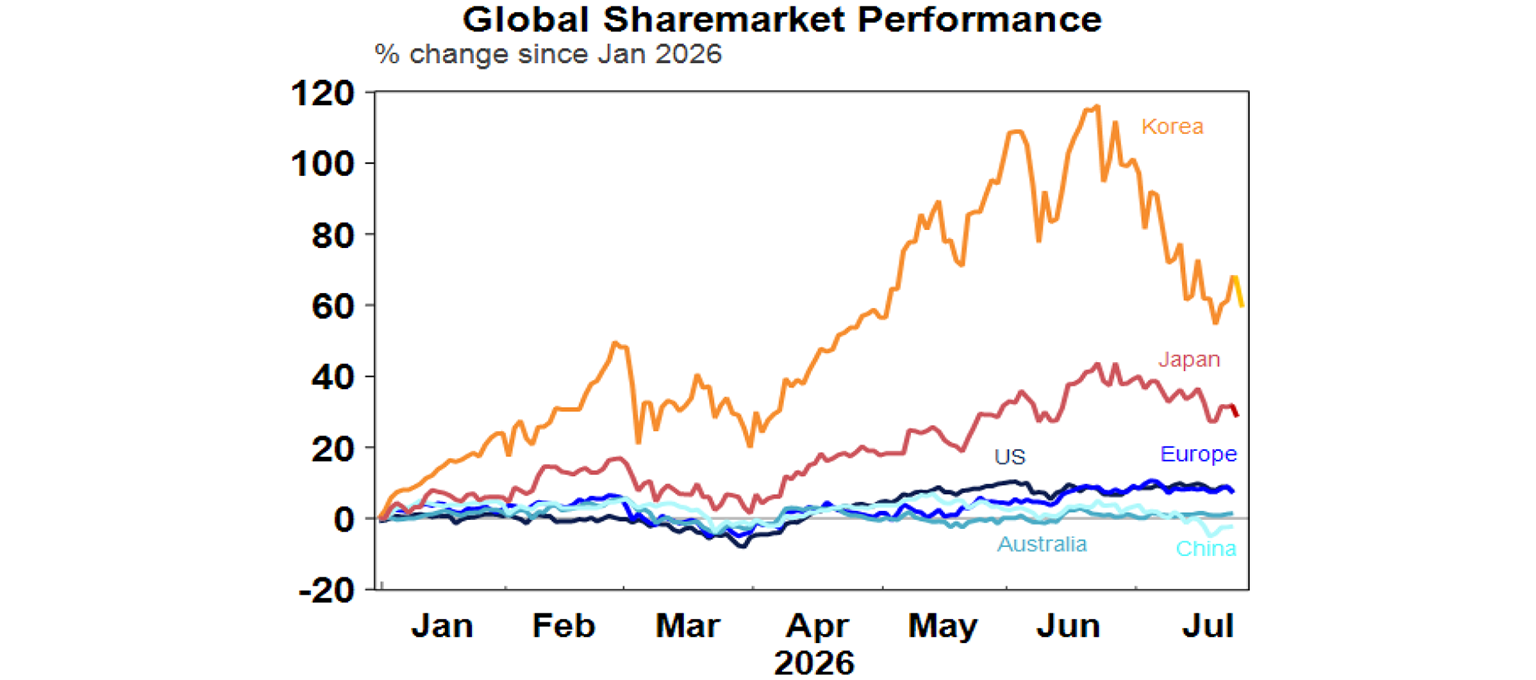
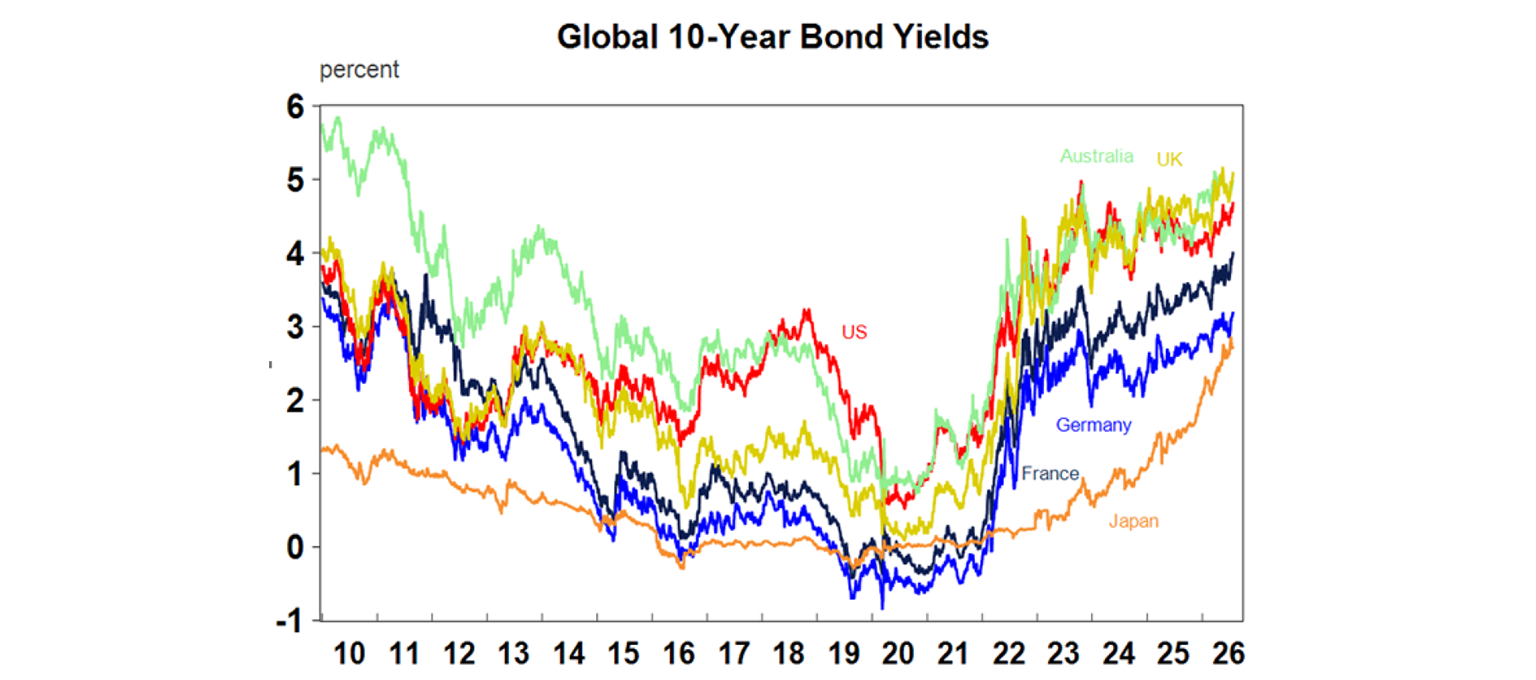
Bond yields surged over the last week on worries about higher inflation and more rate hikes with Australian and UK 10-year bond yields pushing back above 5%. Iron ore prices fell, but gold and copper prices rose. Bitcoin was little changed although it remains shaky given the softness in shares and a rise in the $US. The $A was little changed.
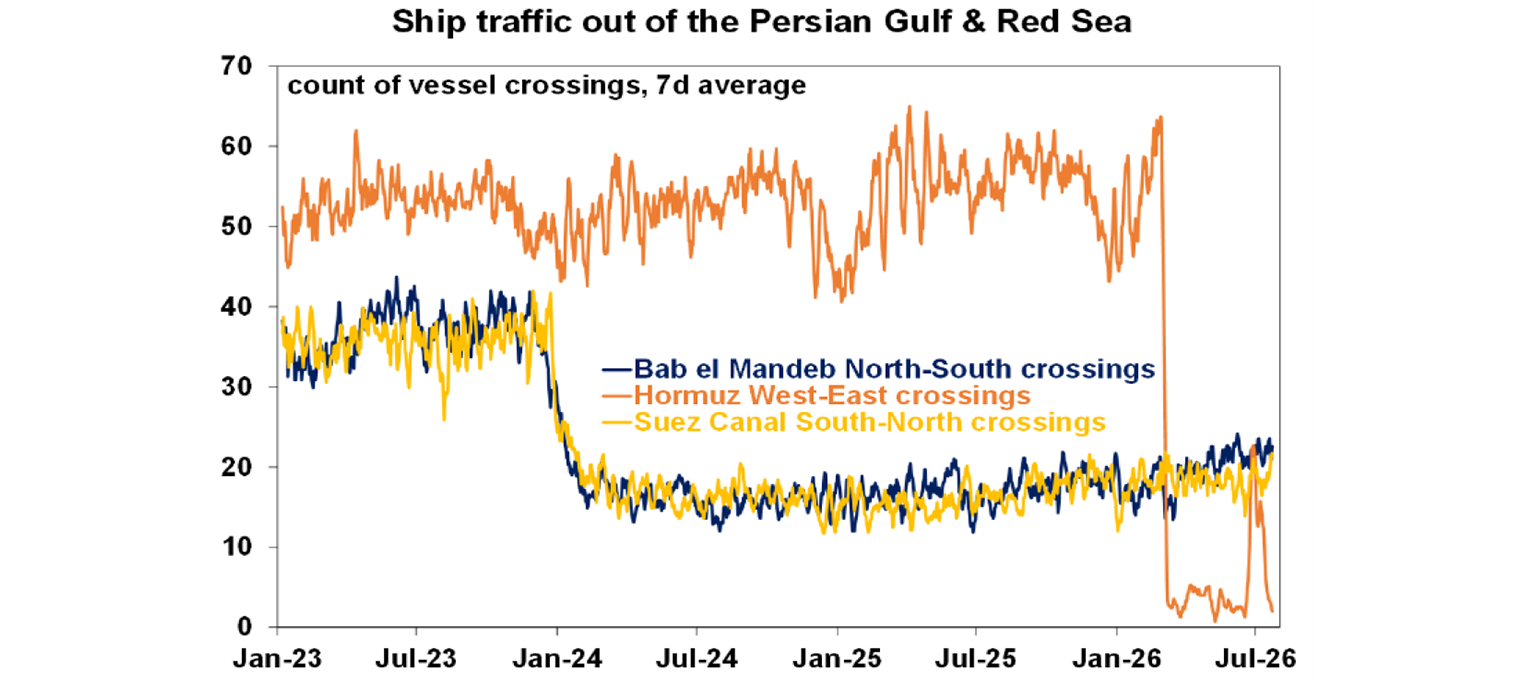
The past week has seen a further signficant military escalation in the US/Iran conflict, the Strait of Hormuz remaining effectively closed again and Iran backed Houthis reportedly targeting Saudi shipping in the Red Sea which goes out via the Bab el-Mandeb Strait to the south or the Suez Canal to the north. If the Bab-el-Mandeb Strait is fully blocked oil can get out through the Suez Canal or through an associated pipeline to the Mediteranean but to get to Asia it then has to travel around Africa adding to costs. So the Houthis intervention potentially threatens up to 7 million barrels per day of oil supplies which had been diverted through the Saudi East-West pipeline rather than have to go through Hormuz. See the map below.
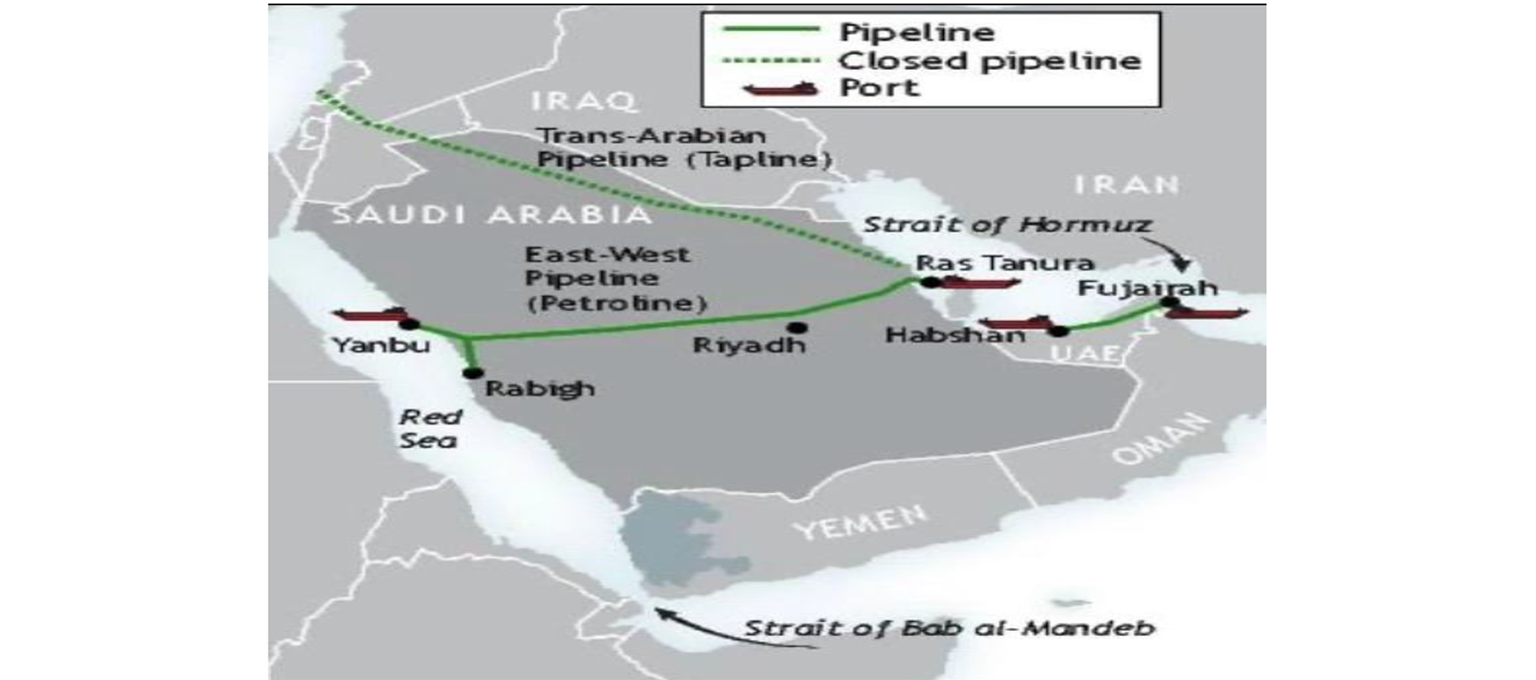
So we now need to track shipping moving out of the Red Sea as well.
The signficant escalation in the War and increased disruption to oil supplies has seen oil prices rise further with Brent now back above $US100/barrel – note that intra day Brent and West Texas spiked to around $US120 a barrel earlier in the War so we are still below that. But so far this month oil prices are up nearly $US30/barrel.
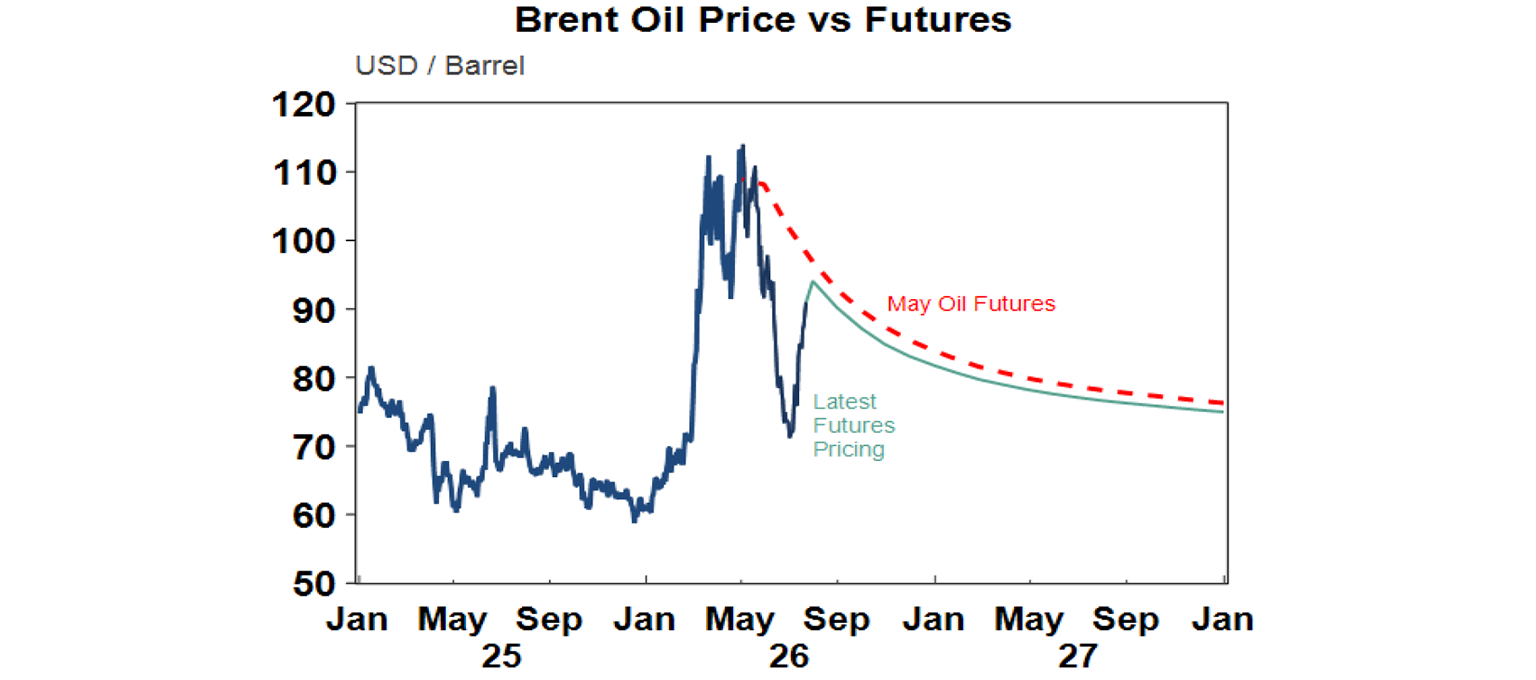
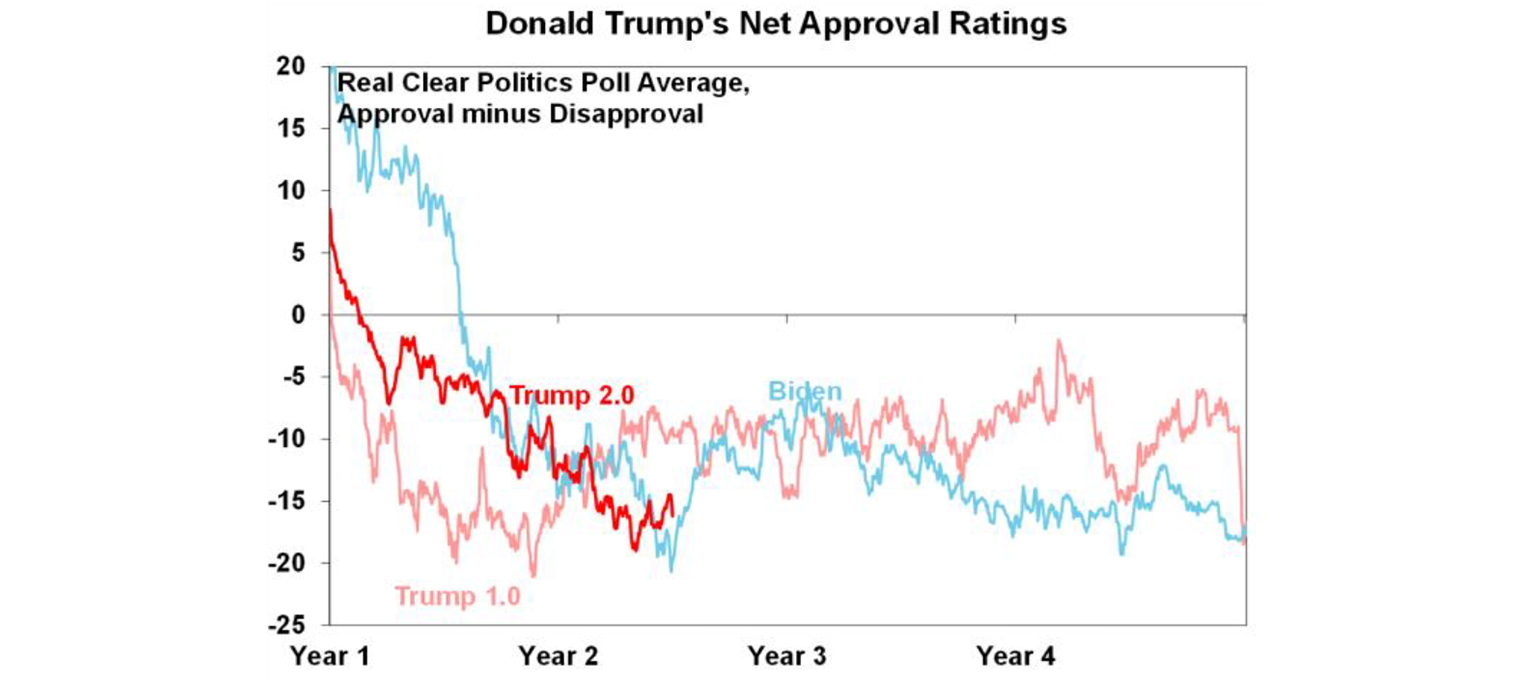
The ongoing escalation in the US/Iran War raises the risk again of a bigger stagflationary hit to the global and Australian economies. So far markets seem relatively relaxed with oil prices up sharply from June lows but still below their highs a few months ago and share markets have not had big falls yet. This likely reflects the view that the world can continue to run down reserves, profit growth has been strong and expectations that Trump will sooner or later announce another peace deal capping the spike in oil prices. Hope for talks helped ease oil prices again on Friday. Another TACO deal is our base case too as a rebound in US gasoline prices which are now back above $US4/gallon will crash Trump’s already low approval rating and the Republicans’ ability to keep the Senate in the mid-terms. Iran may also go along with another deal to buy some more time.
However, the risk is high that there will be no deal and that we will have to face ever higher oil prices as reserves run down – the US Strategic Petroleum Reserve is at its lowest since 1983 and it’s unclear how long China can continue to run on sharply reduced imports - and the global economy has to face a day of reckoning requiring the demand for oil to have fall back to match the fall in daily production levels. This could mean oil prices up to $US150-200 a barrel. It’s not our base case but it’s a high risk again. Ukrainian hits on Russian refineries arguably also now add to the upside risks to global refined oil product prices, particularly diesel.
The combination of surging oil prices, increasing pressure on central banks to raise rates, rising bond yields, AI earnings and valuation worries along with another ramp up in tariff noise leaves shares at high risk of another correction. Much of this turbulence is at the hands of President Trump, highlighting the risks he poses to the economic outlook – in terms of more inflation and less growth – and the threat that poses to share markets. Of course, just as Australian shares didn’t get much benefit on the way up in the AI boom they may not fall as much if and when it does really start to unwind.
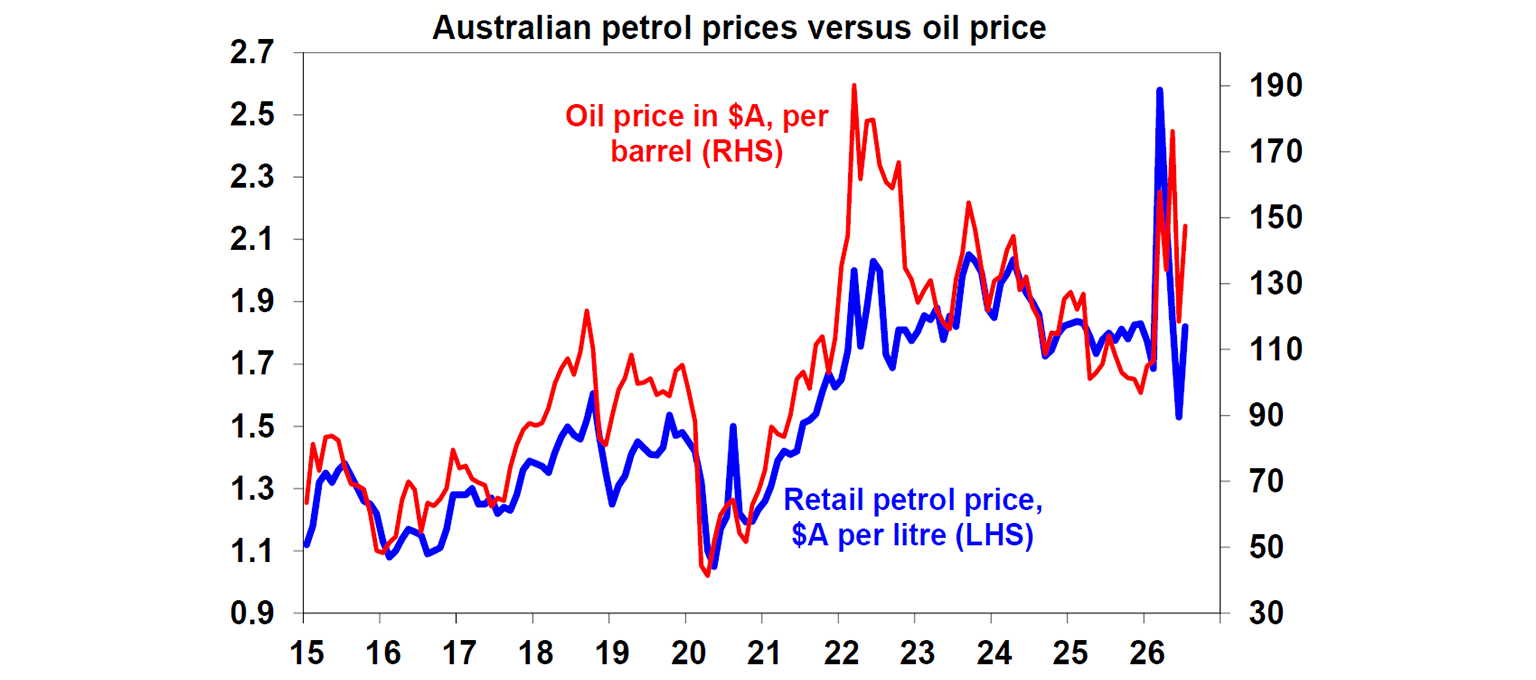
In Australia, petrol prices have risen from the 30 June low of around $1.53 a litre to now around $1.84 and could be above $2 early next month. The rise so far reflects +16 cents a litre from the halving of the 32 cents a litre fuel tax cut from 1 July and some flow through of the nearly $US30 a barrel rebound in oil prices. But the rebound in oil prices is yet to fully flow through and at current levels alone could add around another 5-10 cents a litre to petrol prices. So far, the Treasurer has said that the remaining 16 cents a litre fuel tax cut “will taper off in the first couple of days of August”. If so, it could mean another 21-26 cents a litre at least added on to petrol prices.
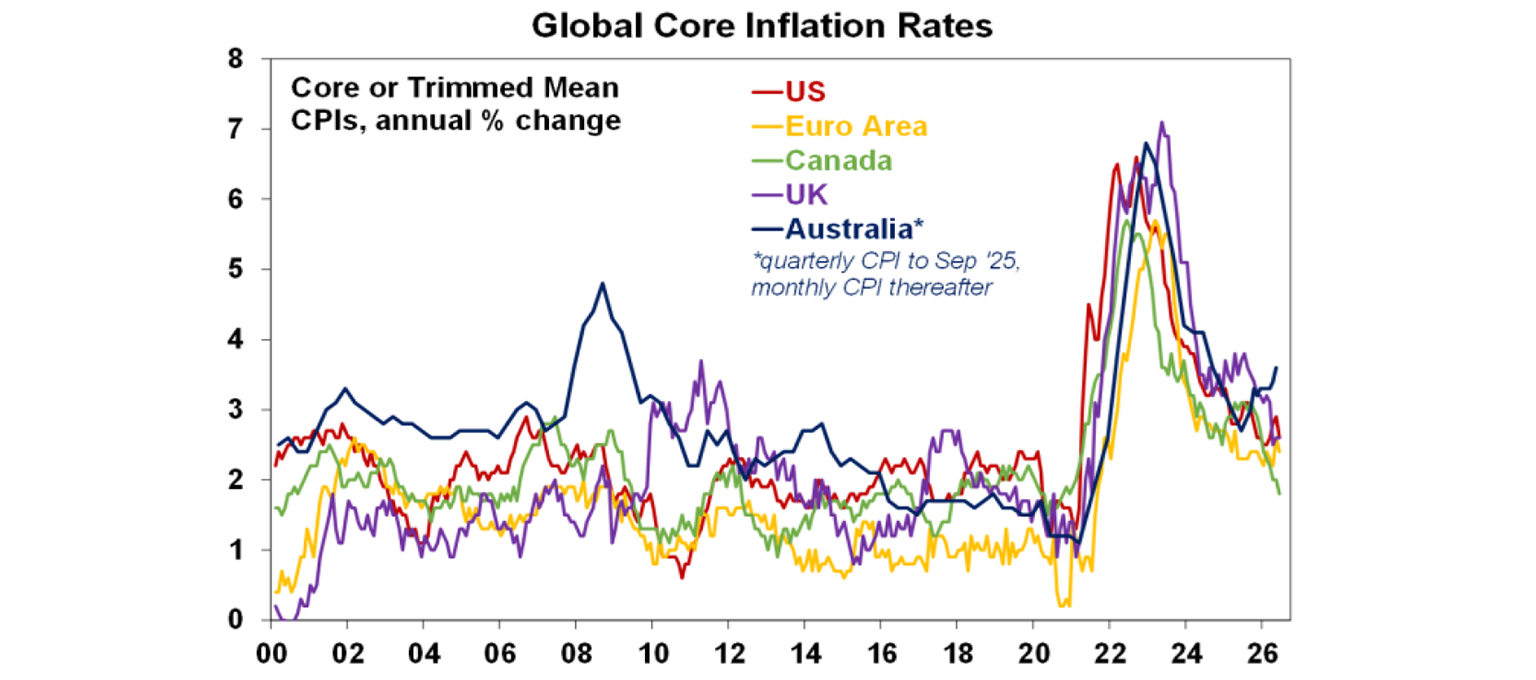
We remain of the view that the RBA will have to raise rates again. Canadian and UK underlying inflation at 1.8% and 2.6% respectively for June released in the last week highlight how out of whack we are globally with underlying inflation at 3.6%yoy in May. Of course, both these countries have higher unemployment at 6.5% and 4.9% which may partly explain the difference compared to 4.4% in Australia. But the problem for the RBA is that the rebound in oil prices with a potentially greater flow through to underlying inflation will see inflation potentially stay higher for longer, threatening higher inflation expectations making it even harder to get inflation back to target. This is already a big worry as, including this year, inflation will have been above the 2-3% target for five the last six years, which risks blowing the credibility of the inflation target. Jobs data for June was mixed but will likely still see the RBA characterise the labour market as a “bit tight” which in turn should clear the way for another rate hike next month. So, our base remains for an August rate hike, but with uncertainty about the growth outlook and home prices falling we see it as a close call. However, we would still see a further hike as being necessary this year even if the RBA does decide to pause so as to “wait and see” again next month. Next week’s inflation data for June will be key though. Another rise in trimmed mean inflation to 3.7%yoy or more will reinforce the case for another hike whereas an outcome around 3.5%yoy or less could weaken it.
RBA survey findings that only 25% of people correctly assess that higher interest rates will ultimately slow inflation and more than 50% think it will add to inflation are not particularly surprising. I have even had colleagues who think that! But it does mean that the RBA has to hike more than otherwise would have been the case if more understood how interest rates impact inflation. Which in turn highlights the need for more economic and financial literacy in Australia. But I doubt Australia is much different to other comparable countries in this regard.
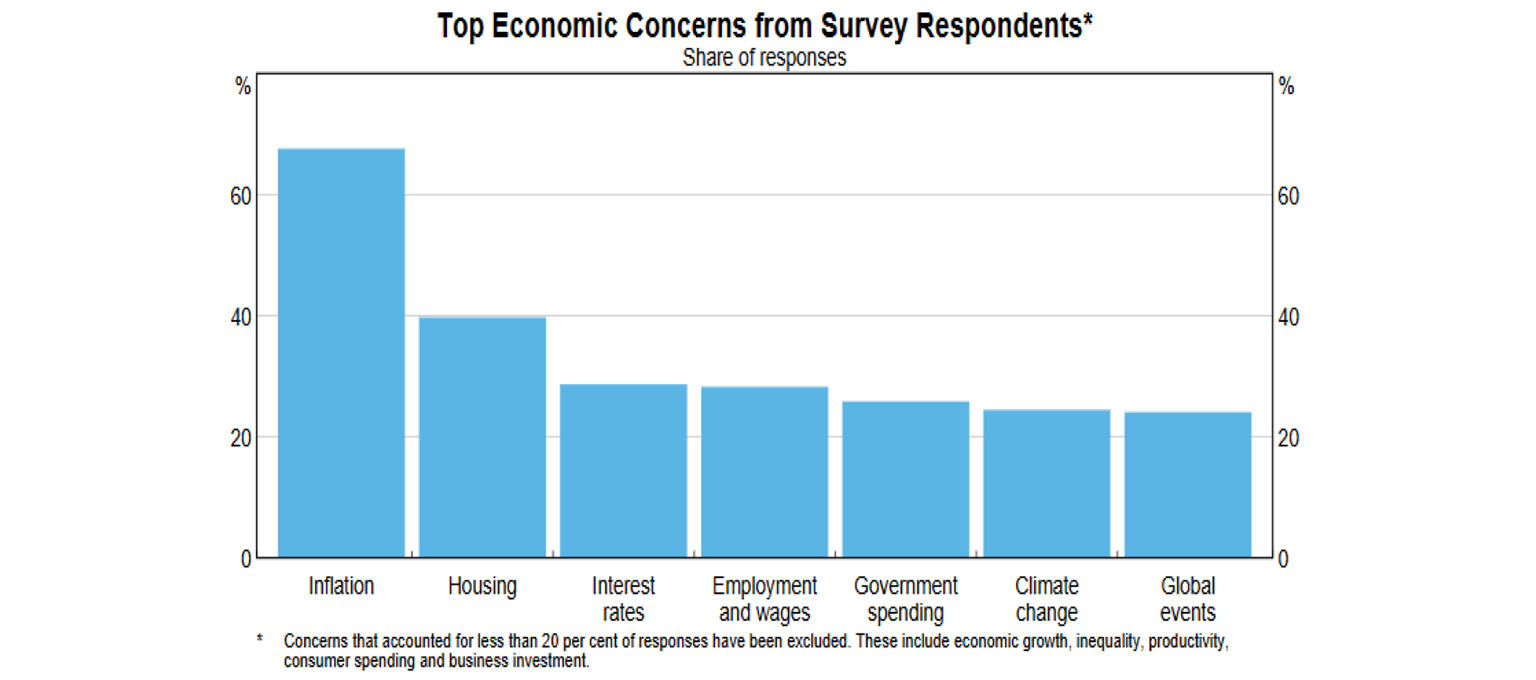
Meanwhile with around two thirds of respondents citing inflation as their main concern, and this particularly being the case amongst lower income households, the RBA is right to be focussed on getting it back down, ie not just because it’s part of their mandate.
Major global economic events and implications
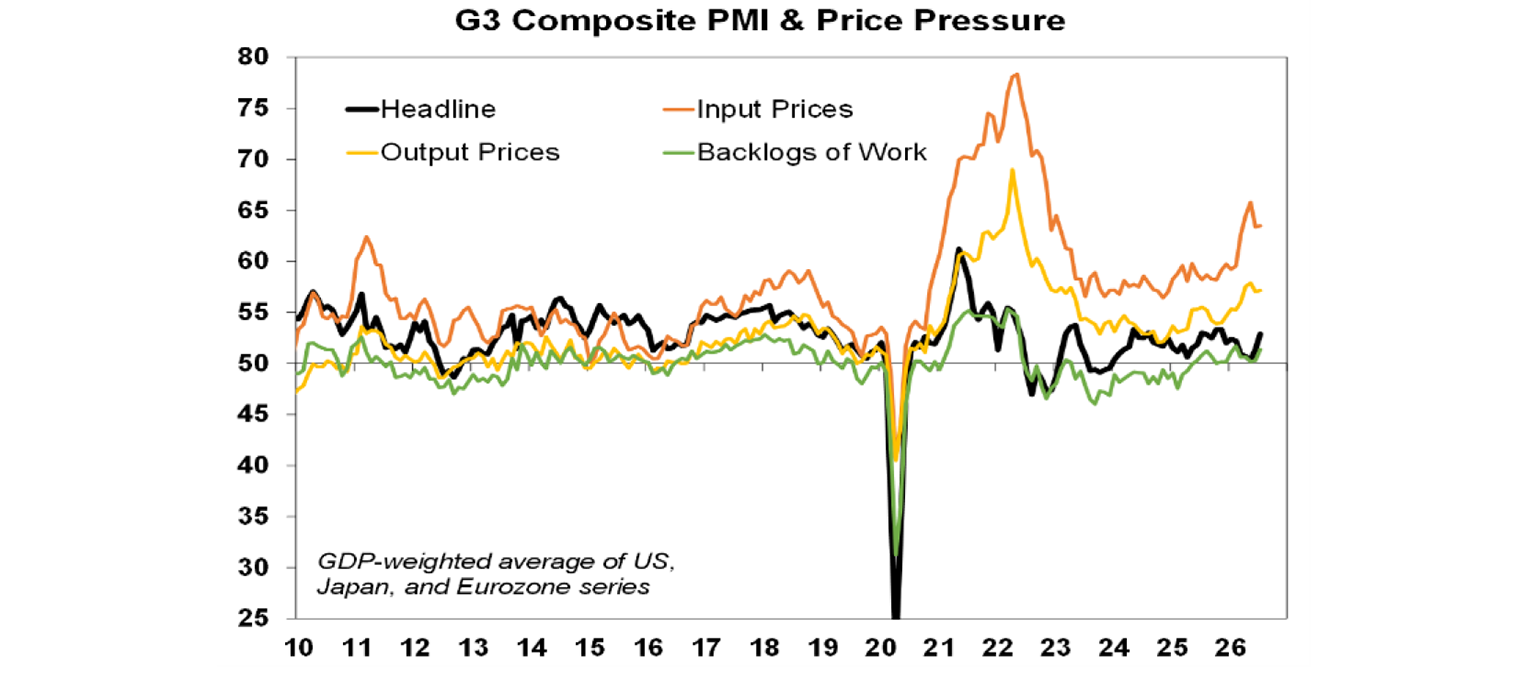
Developed country business conditions PMIs for July improved due to stronger services conditions with orders and employment up. Input and output prices remain elevated.
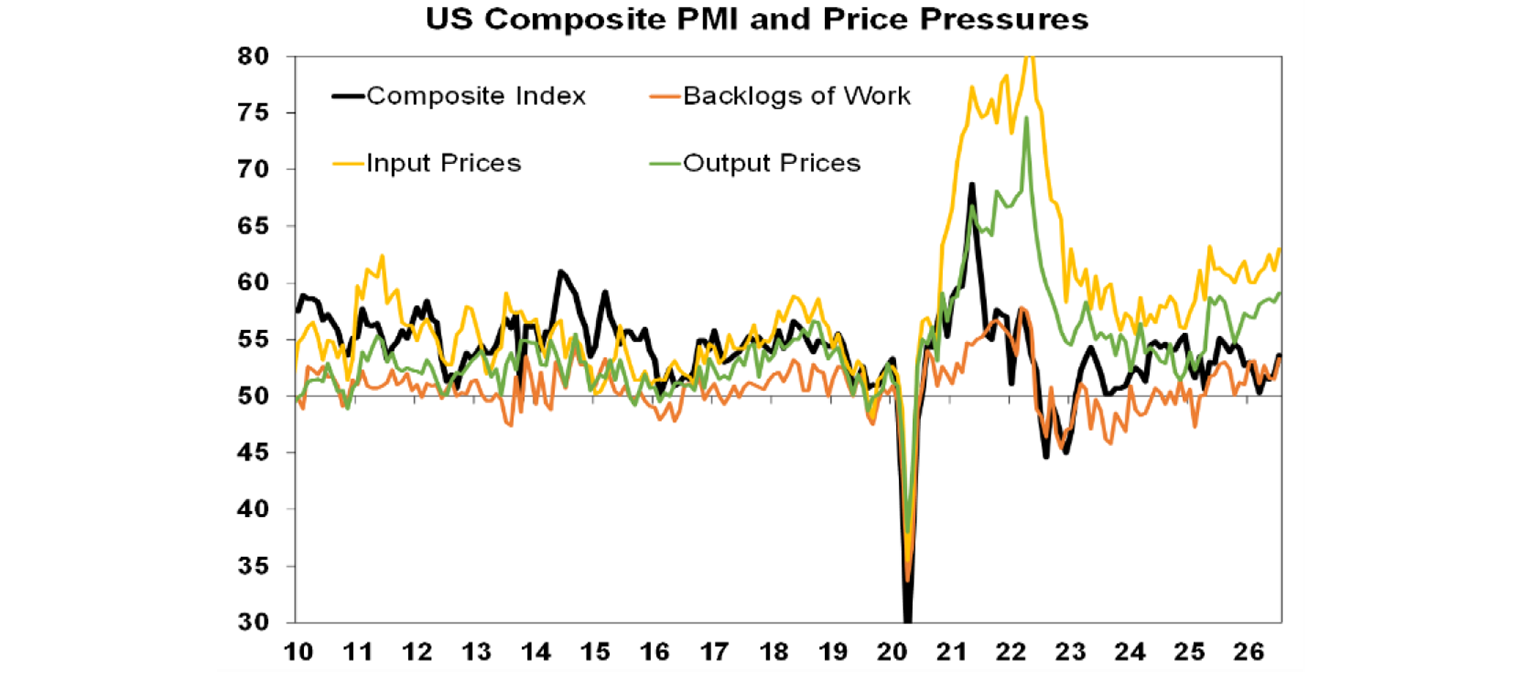
It’s a similar story in the US but with conditions being a stronger, particularly in manufacturing. And the US price indicators rose further.
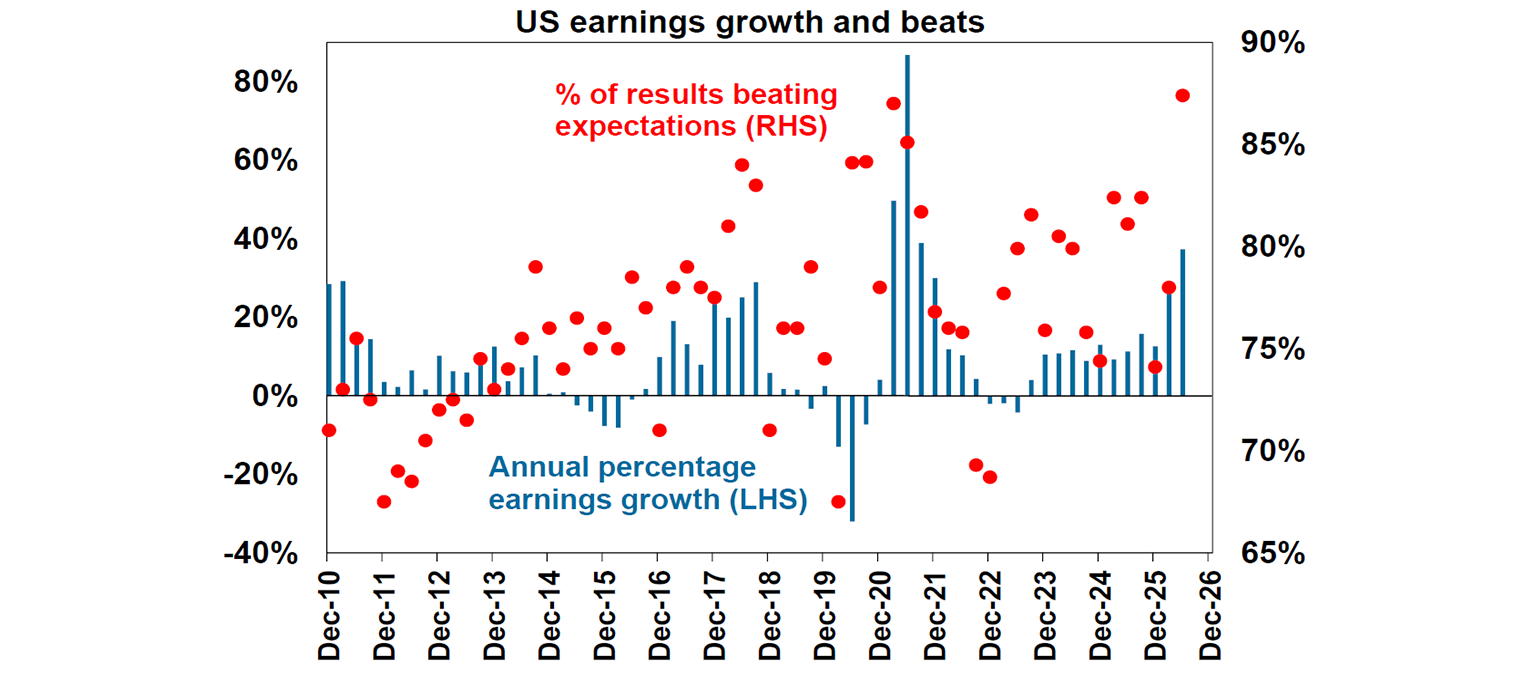
It was a quiet week in the US for other data releases, but jobless claims remained low. So far 88% of companies to have reported US June quarter earnings have exceeded expectations, but it’s still early days with only 27% of S&P 500 companies having reported so far. The consensus expectation for earnings growth has now risen to around 37%yoy and is likely to end up around 40%yoy! Earnings growth is being led by energy and tech companies. So far investors appear increasingly wary though of the AI spending boom with Alphabet beating bigly but its shares fell 7% following the announcement of more AI related capital spending. Shares selling off on good news is not a good sign.
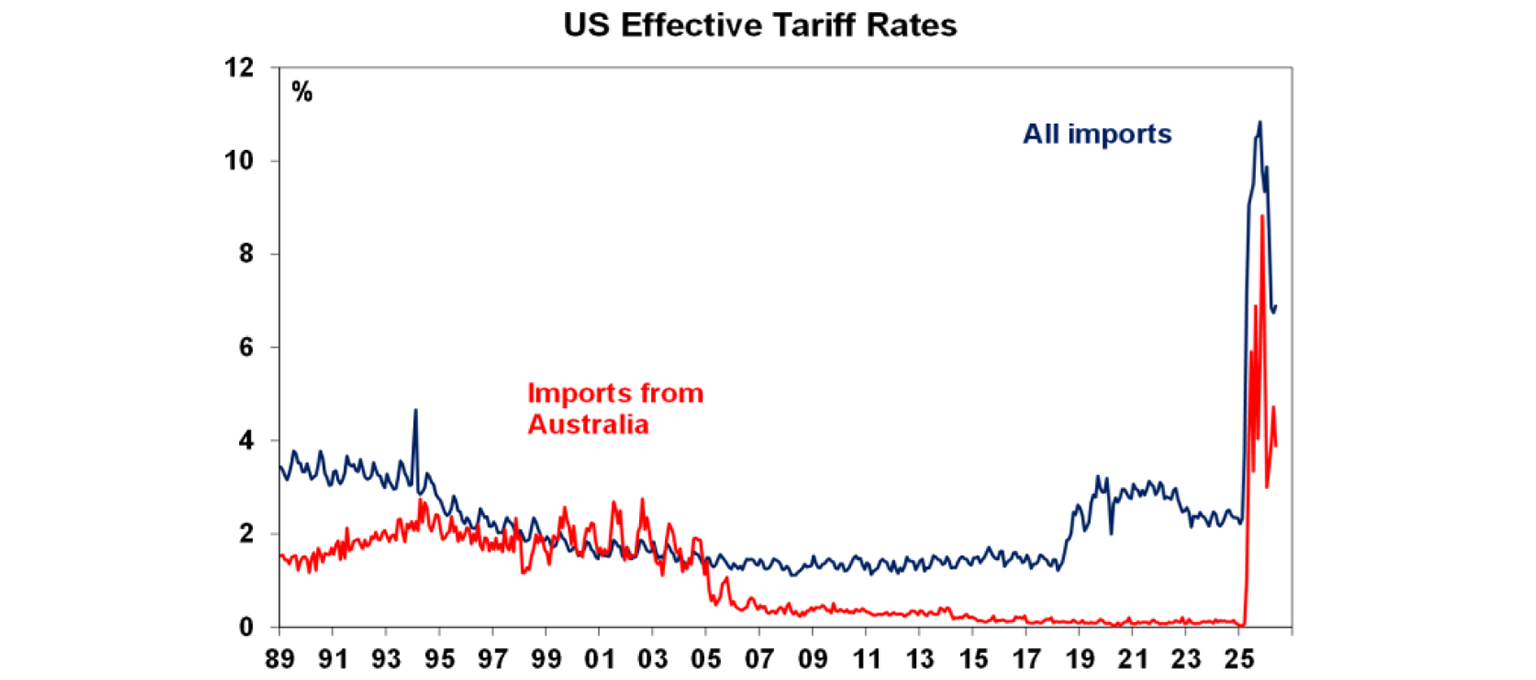
The past week saw more tariff announcements from the US, including confirmation that the temporary Section 122 10% tariff which expired on Friday 24 July will be replaced with 10% and 12.5% tariffs depending on the country under Section 301 to counteract allegations of “forced labour”. It’s all a bit of a joke because even if a country has an outright ban on forced labour imports, they still get a 10% tariff - but I guess the Trump Administration had to make up something to get back the tariffs that were struck down by the Supreme Court! And coming on the back of the 25% tariff on Brazil, Trump announced a 50% tariff on Canadian autos, dairy and alcohol after getting annoyed by smoke over US cities from Canadian bushfires and a tariff on generic drugs of 100% in two years and 200% in three years. Some of these may or may not eventuate and there are so many exemptions for Canadian goods that the impact will likely be minor. That said the bigger picture is the replacement of the Section 122 10% tariff with a 10% or 12.5% tariff under Section 301 to counteract allegations of “forced labour”. Further Section 301 tariffs to counteract alleged excess capacity and unfair practices in countries like China and Europe are likely in the months ahead. Once multiple exemptions across various goods and substitution from high to lower tariffed countries are allowed for the end result is that the average US effective tariff rate will end up being around where it was before the Supreme Court struck down the reciprocal tariffs in February, ie around 11% which is down from the 30% or so which was threatened post Liberation Day but up from the pre-2025 level of around 2.5%. The key is that US tariffs will remain a longer-term threat to global trade and US costs and efficiency but a new short-term disruption for share markets is unlikely.
Australia is illogically caught up in the forced labour tariff with a rate of 12.5% along with countries like Japan, Korea, Switzerland and the UK. As such we will lose our relative advantage versus countries like Europe that will only be tariffed at 10%. However, this likely won’t be for long as Europe and many other countries will likely be subject to the excess capacity tariffs when they start whereas Australia probably won’t be. And in any case around two thirds of our products by value going to the US are exempt anyway – eg gold, beef, copper and blood plasma – so the effective tariff on Australian exports to the US will remain way below 12.5%. So, the impact on Australia will be very mild – just like the tariffs last year were.
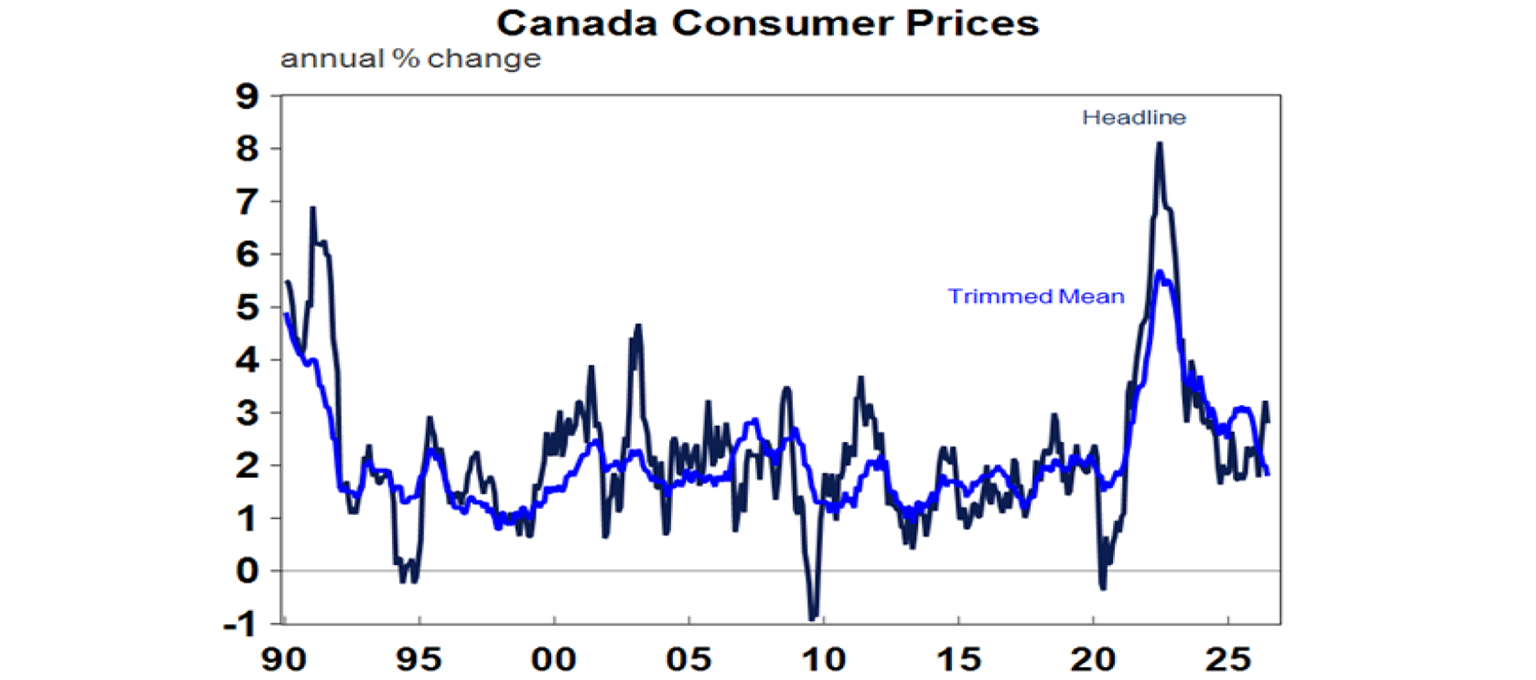
Canadian inflation fell more than expected in June with a fall in energy prices pulling headline CPI inflation down to 2.8%yoy from 3.2%, and the key underlying measures of inflation falling just below the 2%yoy target. This will keep the Bank of Canada on hold for now, although the rebound in oil prices still points to upside risk ahead.
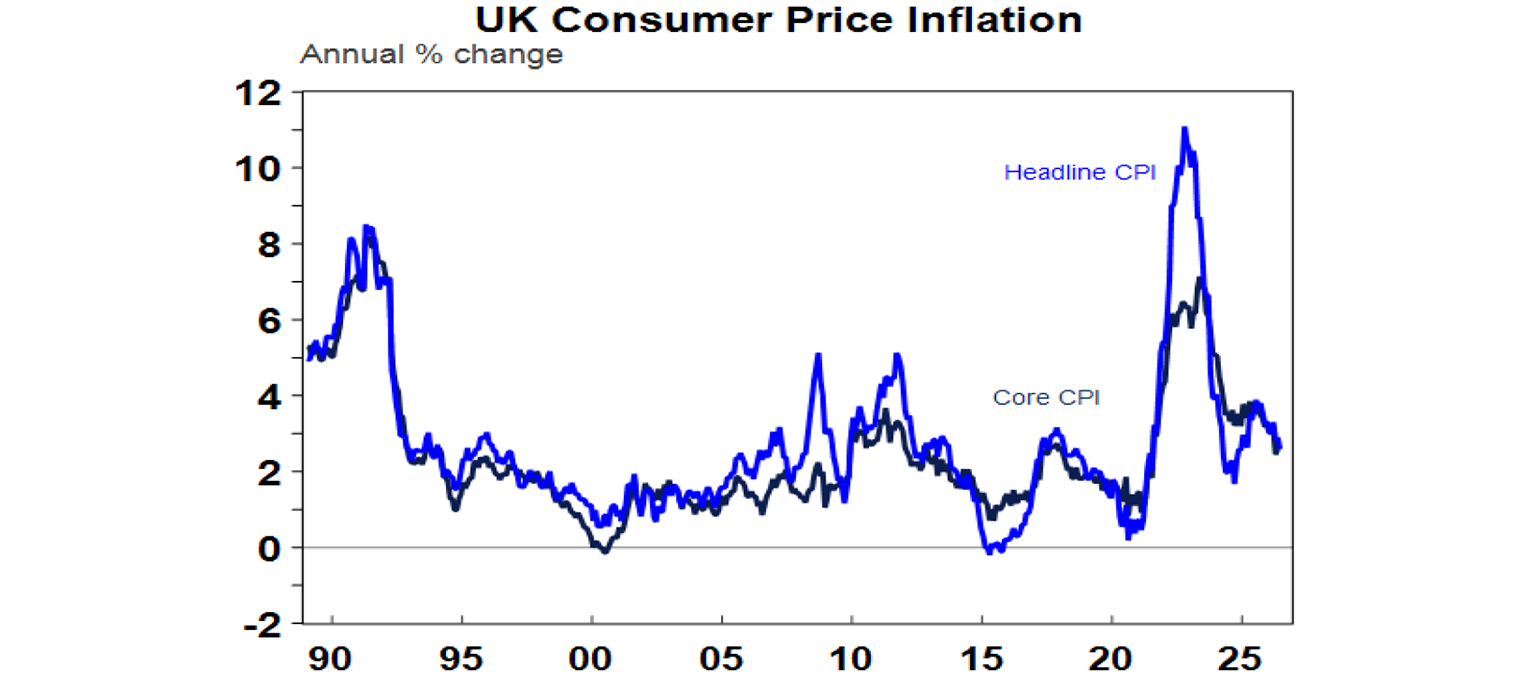
Similarly, UK CPI inflation also slowed more than expected in June to 2.6%yoy from 2.8%. Core inflation remained stuck at 2.6%yoy though. This leaves the Bank of England on hold for now but still potentially having to raise rates at some point as inflation remains above target.
Meanwhile, Andy Burnham has been confirmed as UK PM with a left leaning agenda. The reality though is that his ability to hike taxes and spend on new programs is limited by already high tax and spending shares of GDP. And his ability to borrow and spend is limited by a high budget deficit (more than three times that in Australia as a share of GDP) and high public debt (double that of Australia as a share of GDP) so any significant increase in the budget deficit would threaten another Liz Truss sell off in UK bonds. In fact, UK bond yields are already well above where they spiked to when Truss was briefly PM in 2022.
The Eurozone Central Bank left rates on hold at 2.25% as widely expected but commentary and guidance leaned hawkish with concern about the full inflationary impact of the oil supply shock. A September hike looks highly likely with a strong possibility of another one before year end.
Japanese CPI inflation rose to 1.7%yoy in June, with core rising but only to 1.2%yoy.
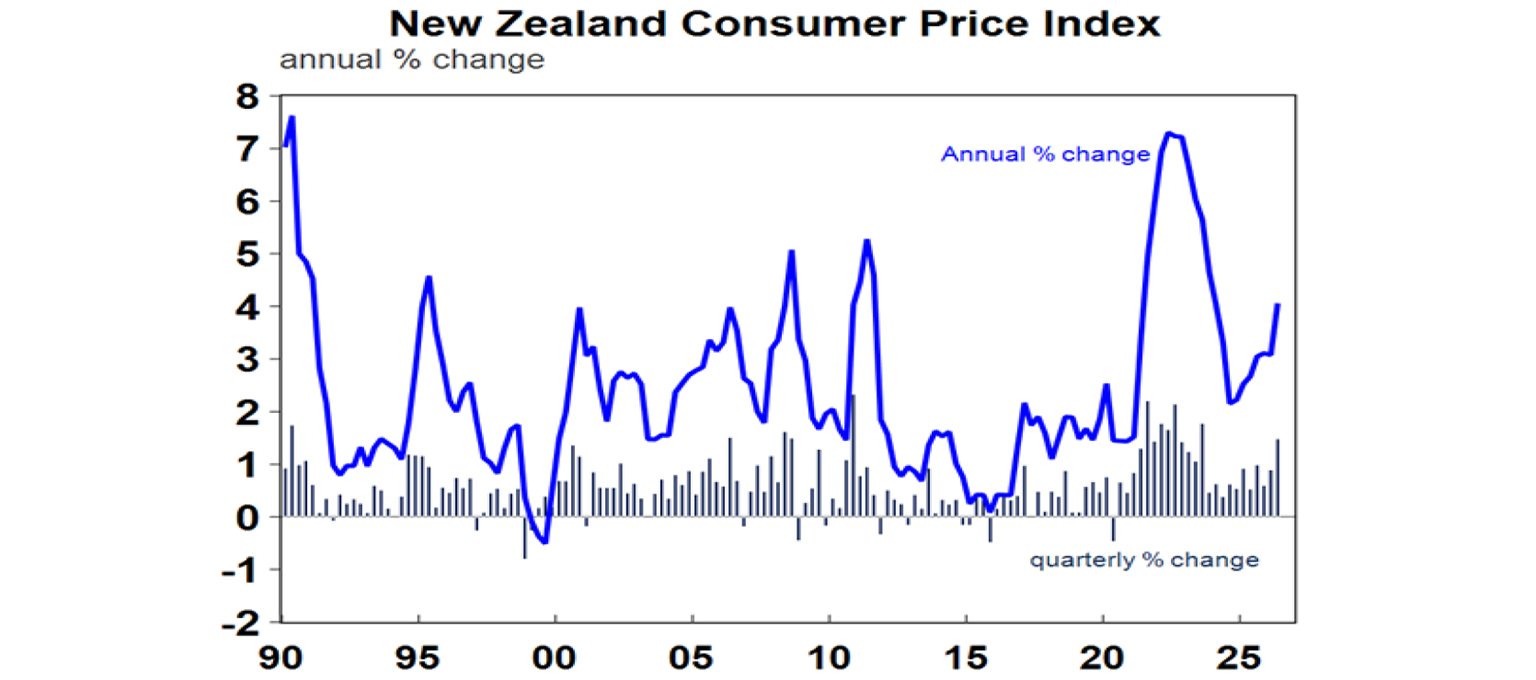
New Zealand June quarter inflation rose more than expected to 4.1%yoy reflecting the lagged impact of the higher energy prices with some measures of underlying inflation asor rising. This keeps the RBNZ on track for two more rate hikes this year with the next in September.
Australian economic events and implications
Jobs data for June as mostly very strong again. Employment rose by 76,300 after 44,000 in May, full time employment and hours worked were strong, labour force participation rose to near a record high and unemployment remained relatively low at 4.4%.
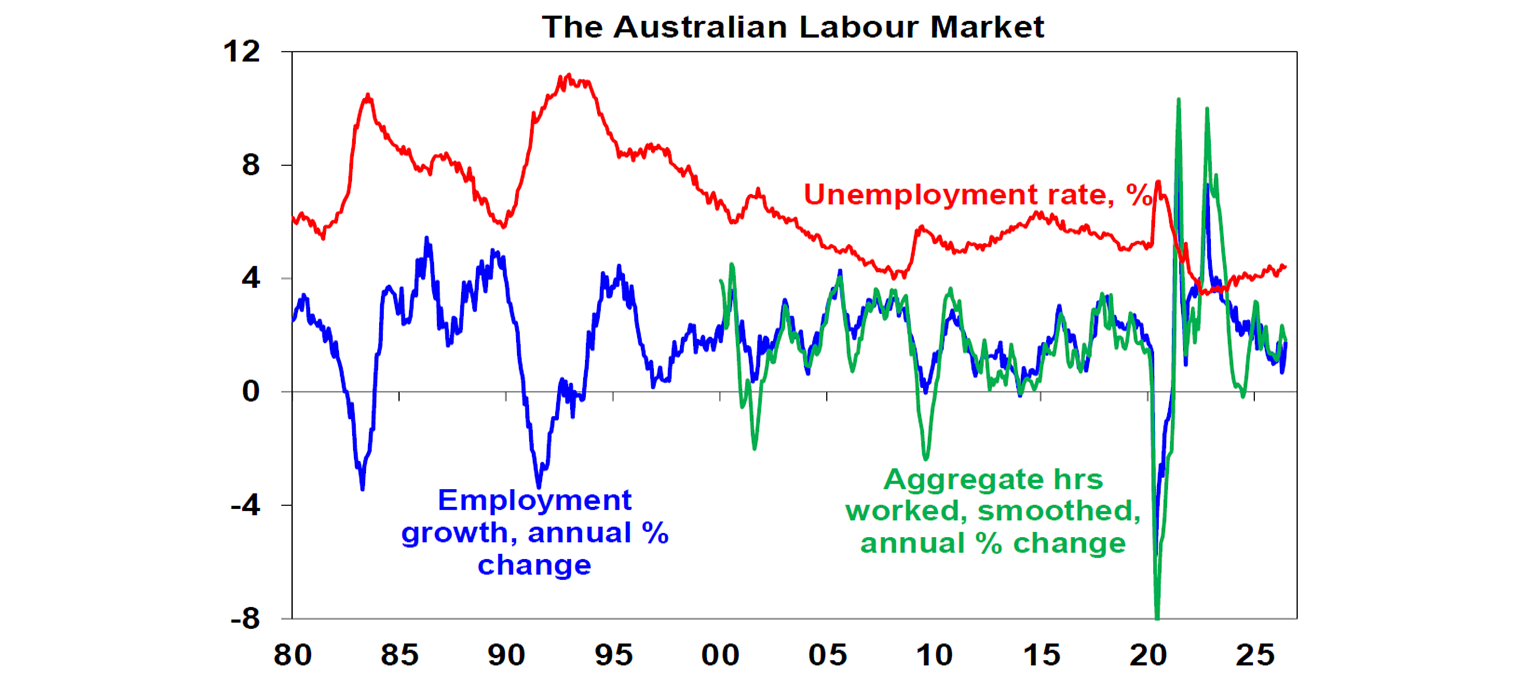
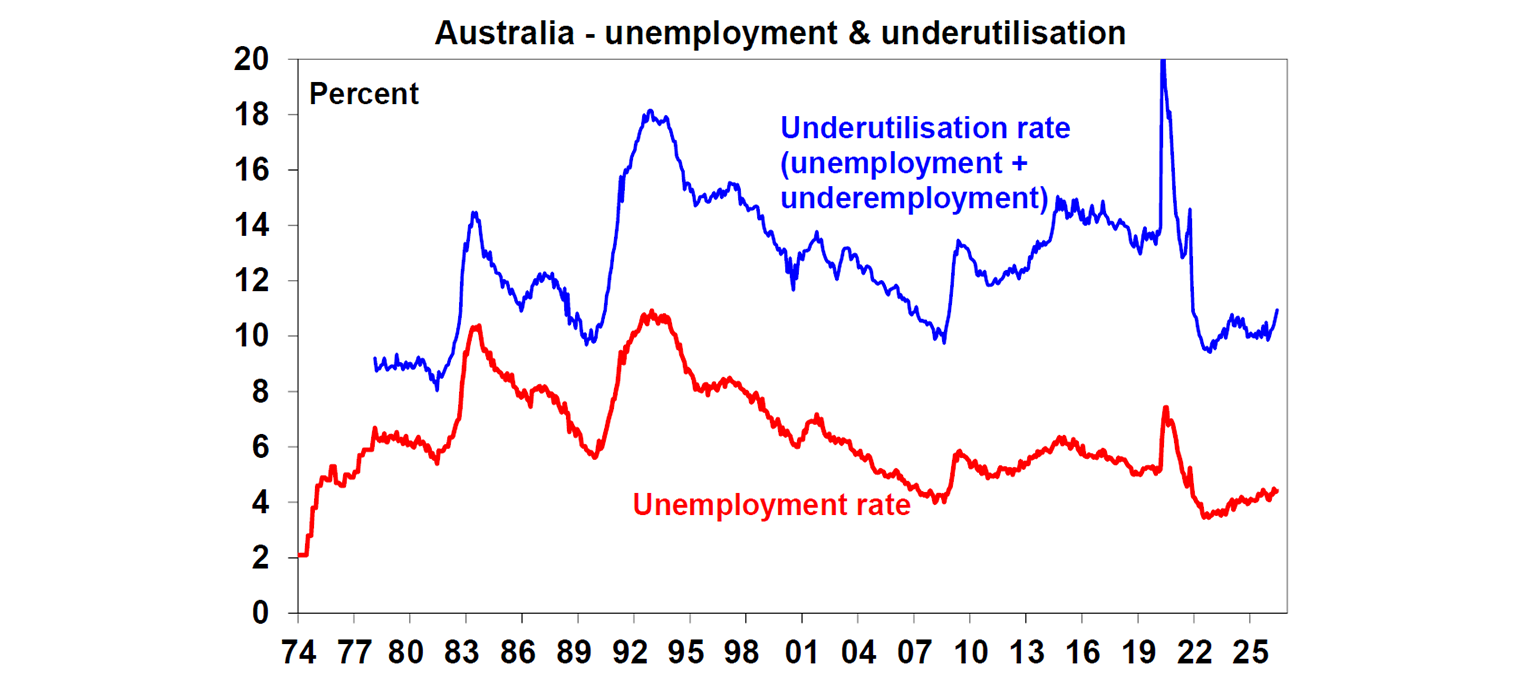
Against this, underemployment rose again as did the underutilisation rate suggesting a bit more spare capacity in the jobs market and the rise in participation could also reflect “cost of living pressures. And it’s possible that the rise in employment was exaggerated by statistical noise. All of which could give the RBA reason to remain in “wait and see” mode on rates. But overall, the RBA is more likely to see the jobs market as still a “bit tight” leaving space for higher rates to control inflation.
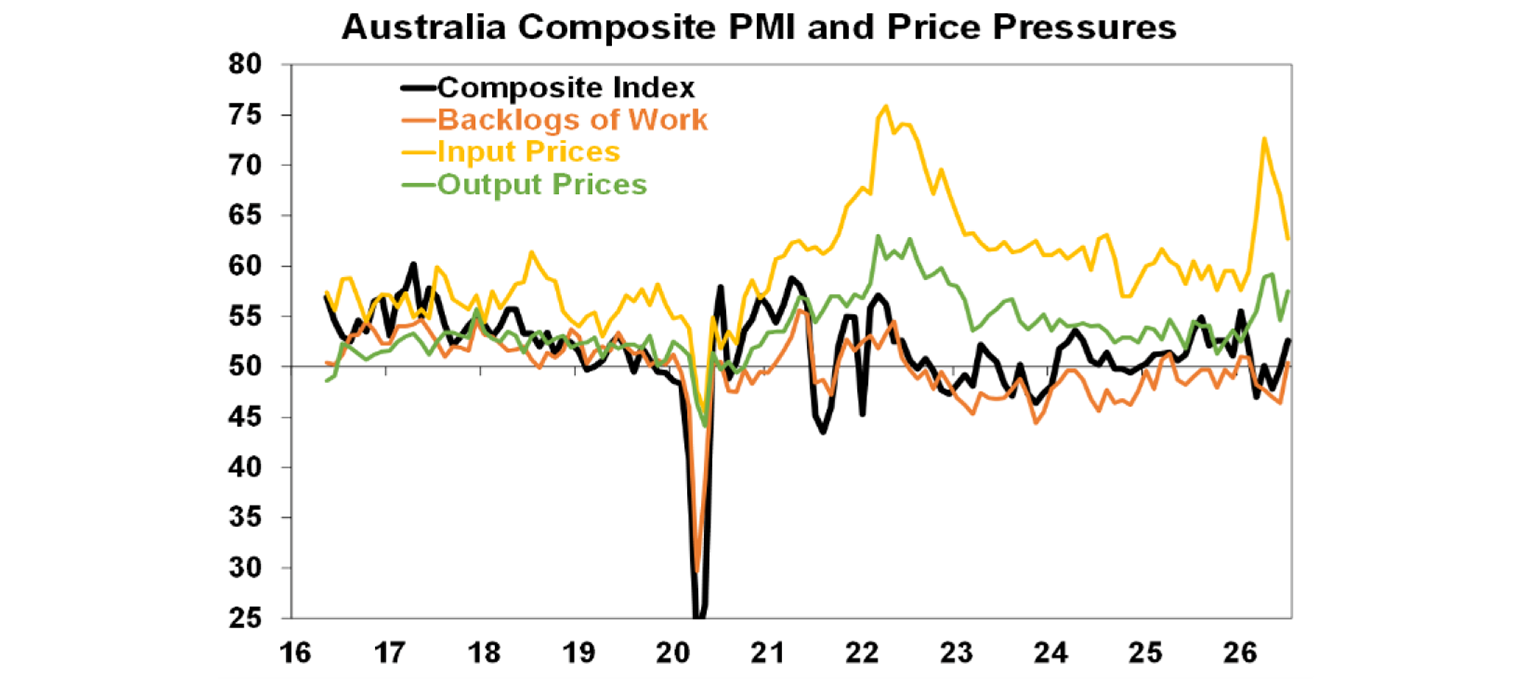
Australian business conditions PMIs for July rose 2.2pts to an okay 52.6 with gains in services, employment and orders, which is surprising given the rebound in oil prices. Input price pressures fell but output price pressures rose and remain high, which is a concern for inflation.
What to watch over the week ahead?
In the US, the Fed is expected to leave rates on hold at 3.5-3.75% (Wednesday) with softer June CPI inflation data providing a bit of breathing space. However, the commentary is likely to lean hawkish with some dissents possible in favour of a rate hike and many Fed officials lately appearing to lose patience with inflation. Expectations for a September hike are likely to firm. On the data front in the US, expect continued strong underlying growth in capital goods orders (Monday), a slight rise in consumer confidence but a further slowing in home price growth (Tuesday), June quarter GDP growth (Thursday) remaining at 2.1% annualised, continued solid growth in personal income and spending in June (also Thursday) and a slight moderation in employment cost growth in the June quarter (Friday). Core June private final consumption deflator inflation (Friday) is likely to slow slightly but remain elevated at 3.3%yoy. And the US June quarter earnings reporting season will ramp up.
Eurozone June quarter GDP growth is likely to be 0.2%qoq with unemployment holding at 6.2% (both Thursday). CPI inflation for July (Friday) is likely to have risen to 2.9%yoy reflecting the rebound in fuel prices but core inflation is likely to have remained around 2.4%yoy.
The Bank of England (Thursday) is likely to leave rates on hold at 3.75%, lean somewhat hawkish given the renewed threat to inflation from the rebound in oil prices.
The Bank of Japan (Friday) is expected to leave rates on hold at 1%, but signal that further tightening is likely this year.
Chinese business condition PMIs for July will be released Thursday and are likely to remain around the 50 level.
In Australia, the focus will be on June inflation data. Monthly inflation is likely to have remained at 4%yoy with a sharp fall in fuel prices but solid increases for new dwelling costs, rents and holiday travel with trimmed mean inflation rising slightly to 3.7%yoy. The quarterly trimmed mean inflation rate, which is what the RBA will mainly focus on, is expected to rise to 3.8%yoy, from 3.5% in the March quarter. Being consistent with the RBA’s forecasts this will leave the door open to another RBA rate hike in August. June home building approvals (Thursday) will likely see another fall on the back of rate hikes and credit data (Friday) will likely show a further slowing in housing credit growth. Addresses by RBA Governor Bullock and Chief Economist Hunter will be watched for any clues as to the outlook for interest rates.
Outlook for investment markets
Global and Australian share markets are likely to remain volatile with the risk of another correction given the resumption of the Iran War and surging oil prices, stretched valuations, sticky inflation, political uncertainty associated with Trump & the midterm elections and worries about the impact of AI and whether there is an AI bubble. However, returns should still be positive for the next 12 months as a whole thanks to continuing economic growth with recession avoided and solid profit growth.
Bonds are likely to see returns around running yield.
Unlisted commercial property returns are likely to be solid helped by strong demand for industrial property associated with data centres.
Australian home prices are expected to fall around 2% this year and by 6% over the next 12 months as a result of poor affordability, RBA rate hikes, reduced investor demand flowing from the winding back of negative gearing and the capital gains tax discount and poor confidence. This will mean roughly a 7% top to bottom fall.
Cash and bank deposits are expected to provide returns around 4-5%.
The $A is likely to rise reflecting the wider interest rate differential to the US, although a move to Fed hikes may limit this. Fair value for the $A is around $US0.72.
Dr. Shane Oliver,
Head of Invesment Strategy and Chief Economist, AMP


You may also like
-

Weekly Market Update - 09-10-2026 - AMP Weekly Market Update: US shares near record highs but risks are bubbling, tech rally remains narrow, credit markets turn wary on AI & Firmus IPO shelved, French bond yields surge, and another immigration debate. -
Five things that could stop the data centre boom As agentic commerce agents become an increasingly common way to shop, learn the risks that may come with them, and some ways to use them more safely. -

What are AI shopping agents, and are they safe to use As agentic commerce agents become an increasingly common way to shop, learn the risks that may come with them, and some ways to use them more safely.
Important information
Any advice and information is provided by AWM Services Pty Ltd ABN 15 139 353 496, AFSL No. 366121 (AWM Services) and is general in nature. It hasn’t taken your financial or personal circumstances into account. Taxation issues are complex. You should seek professional advice before deciding to act on any information in this article.
It’s important to consider your particular circumstances and read the relevant Product Disclosure Statement, Target Market Determination or Terms and Conditions, available from AMP at amp.com.au, or by calling 131 267, before deciding what’s right for you. The super coaching session is a super health check and is provided by AWM Services and is general advice only. It does not consider your personal circumstances.
You can read our Financial Services Guide online for information about our services, including the fees and other benefits that AMP companies and their representatives may receive in relation to products and services provided to you. You can also ask us for a hardcopy. All information on this website is subject to change without notice. AWM Services is part of the AMP group.