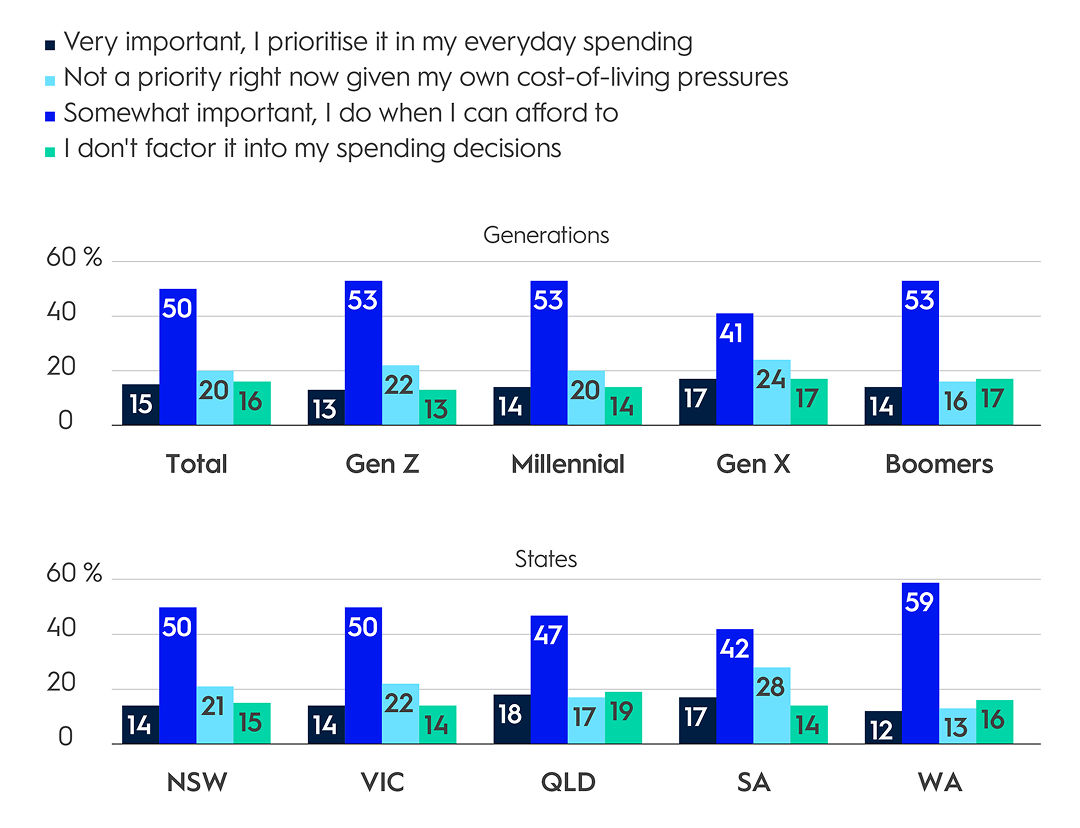




Half of Australians say they only support small businesses “if they can afford it”, as cost-of-living pressures reshape everyday spending decisions and send more consumers in search of value at bigger retailers.
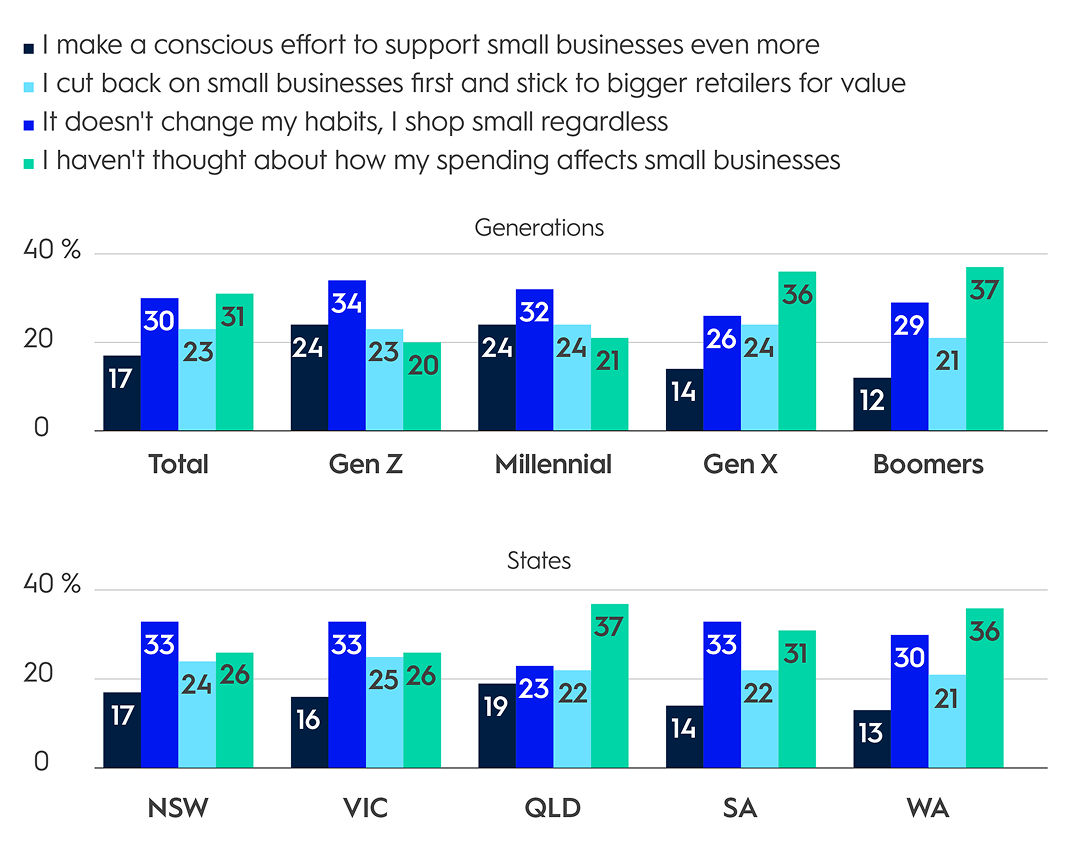
New research from Money.com.au1 reveals a growing gap between intent and behaviour, with nearly a quarter of Australians cutting back on small business spending first when budgets tighten – highlighting the disproportionate impact of household pressures on local operators.
The findings highlight the difficult position facing small businesses at the start of the new financial year, with higher wages, new Payday Super obligations, supplier and tax costs landing just as customers become more cautious. At the same time, softer customer demand means many small businesses have limited room to pass on higher costs without risking a further hit to sales.
Sean O’Malley, Group Executive, AMP Bank, said:
"What we're seeing is a growing 'only if I can afford it' mentality. People still want to shop local and support small businesses, but many are being forced to choose the cheapest option available.
"Nobody is blaming Australians for looking for value right now. Cost-of-living pressure is real.
“Small businesses are entering the new financial year being squeezed from both sides.
But if small businesses are forced into a race to the bottom that they can never win, ultimately, we all lose.”
What it looks like on the ground
Across Australia, small business owners are feeling the pressure.
Abby Wilson, owner of NSW-based fashion e-commerce business Dust and Bullets Western, said Australians want to support small businesses, but cost-of-living pressures are making that increasingly difficult.
“For the first time since we launched, our business has seen a decline in sales. Not because we’re working less or trying less, but because Australians are hurting and watching every dollar they spend.
"We see it everywhere we go – the crowds are still turning up, but the spending isn't. Small businesses are often treated as discretionary spending, and when household budgets are stretched, we're the first thing people cut back on.
"At the same time, our costs keep rising. Wages, super, freight, insurance, electricity and payment processing fees are all going up, while customers have less money to spend. Small businesses aren't asking for special treatment – we're asking for a fair chance to compete."
Margot Shannon, owner of homewares store Merchant Campbell in Yass, said rising costs and more cautious consumer spending were putting increasing pressure on independent retailers.
"People are still wanting to shop local and support small business, but they're being far more considered about where they spend their money.
"In a regional town, every sale matters. We don't have the benefit of shopping centre foot traffic, and we're competing with online retailers that don't carry many of the same overhead costs.
"It’s not all doom. There's still a great deal of loyalty from our customers and that's what keeps us going, but margins are tighter than they've ever been and the pressure on small business owners is constant."
Rebecca Bremner, owner of artisan bakery and café Ottimo Bakery, said rising costs and changing customer spending habits were creating daily challenges for small hospitality businesses.
"We're seeing price increases across almost every supplier, from ingredients to delivery charges, and at the same time we're speaking to customers every day who are feeling the pressure of higher living costs themselves.
"One of the hardest parts of running a small business is knowing that when we have to increase prices, some of our locals will no longer be able to support us in the same way they once did.
"We're seeing customers make different choices at the counter. Where they might have bought bread, a coffee and a pastry before, now they're choosing just one or two items because they're watching every dollar.
"I'm working seven days a week to keep costs under control, and every bit of waste feels personal because you know exactly what it has cost to produce. Small business owners are doing everything they can to absorb costs, but it's becoming increasingly challenging.
Jedd Manton, owner of Victoria-based electrical safety testing business Bendigo Test & Tag, said small businesses are increasingly competing against larger providers with significant advantages in scale and visibility.
"Larger providers can often win on price and brand recognition because of the scale they operate at.
"Small businesses like mine don't have the marketing budgets of the bigger players, so we rely on reputation, relationships and delivering a great service. The challenge is that many customers don't always realise there are local alternatives available.
"Many businesses automatically renew with the providers they know, but local operators can often offer a more personalised and flexible service.
"When you choose a small business, you're dealing directly with someone who has a personal stake in delivering a great outcome. That's something a call centre can't replicate."
Anne Duggan, owner of Australian pet supplement business Groke Pet, said competing against larger, well-funded players was becoming increasingly difficult for small businesses.
"We're proud to manufacture our products in Australia, and our customers love the difference they make for their pets, but it can feel like an uphill battle competing against larger players with enormous marketing budgets and greater resources.
"We know we have a great product, but for small businesses like ours, getting noticed and growing can be challenging when bigger competitors have such a significant advantage in scale and visibility."
AMP Bank GO launches cashback offer for small businesses
To help ease pressure at a critical time, AMP Bank GO has launched a new financial year cashback offer for new small business customers.
New small business customers can receive 10% cashback, up to $300 back, across July and August on eligible business purchases. The offer is designed to put money straight back into business cashflow as costs peak.
Sean O’Malley added:
“Our cashback is about recognising the pressure point small businesses are facing at the start of the financial year and giving something back when businesses need it most.
“If we reach a point where viable small businesses can't compete and begin disappearing, Australia loses far more than shops and services. We lose local jobs, entrepreneurship, innovation and the communities that those businesses help build.
"Behind every small business is a person, a family and often a local employer doing everything they can to keep the doors open. When a small business struggles, the impact is felt far beyond that business owner.”
About the research:
Money.com.au commissioned the survey from Pureprofile in May 2026, with a nationally representative sample of more than 1,000 Australians by gender, age, and location. Statistically relevant subsets included (e.g. generations). Full findings below:
When you’re feeling financially stretched, how does it affect your spending at small or local businesses?