






Key takeaways
- Deeming rates play a significant role in determining how much government support you’ll get when you retire. It’s important to know what they are so you can understand how they could impact your future
- On 20 March 2026, there were changes to deeming rates and deeming rate thresholds. These changes were made to better reflect current interest rates and market conditions
- Higher deeming rates may reduce your Age Pension eligibility
- The Government has also increased Age Pension payments to help with the cost of living
- The AMP Super Lifetime Boost feature uses deeming rates to potentially help you qualify for a higher Age Pension and boost your retirement income
Deeming rates have changed
On 20 March 2026, deeming rates have increased once again. This increase, to align deeming rates with higher market interest rates, follows an earlier increase in September 2025, which was the first increase to the deeming rate since 2020, when they were frozen to help pensioners cope with uncertainty brought on by the pandemic. If you don’t know what a deeming rate is, or why they matter? Don’t worry. We’re here to break it down in a simple way without the jargon, so you can stay ahead and make smarter moves for retirement (even if it still feels like a long way off).
What is a deeming rate?
To figure out out how much Age Pension you'll get, rather than dig through every bank account or investment everyone has (timely and costly!), the Government uses a deeming rate. A deeming rate is a standard interest rate used to estimate the income your assets could be earning, rather than what they’re actually earning. This estimated income helps Centrelink determine how much Age Pension support you’ll be entitled to when you retire.
Why do we use deeming rates?
As well as for efficiencies, deeming rates are used to help keep things fair, as they treat all financial assets the same, no matter where or how your money's invested. That means:
If you’re getting high interest on your investments: you aren’t penalised for being savvy.
If your returns are lower: you don’t get an unfair advantage.
What has changed for 2026?
On 20 March 2026, the lower deeming rate was raised from 0.75% to 1.25%, while the upper deeming rate was raised from 2.75% to 3.25%1. These two rates apply depending on how much you hold in financial assets, with lower rates applying up to a certain threshold ($64,200 for singles and $106,200 for couples), and higher rates kicking in above that.
Why have deeming rates gone up?
Twice a year, the Australian Federal Government reviews Age Pension payments to ensure they’re in line with changes in the cost of living. This is known as indexation. As part of Age Pension indexation, deeming rates are also reviewed and, where appropriate, adjusted to better align with current interest rates and investment conditions.
In 2020, deeming rates were frozen to protect pensioners from economic uncertainty due to the pandemic. Then, in September 2025, with interest rates and markets stabilising, the Government increased deeming rates for the first time in five years.
The most recent increase to deeming rates, which came into effect on 20 March 2026, are the result of the most recent review.
Why are deeming rates important?
While it might not seem like a thrilling topic, deeming rates can impact your future income as they can affect your pension and your overall retirement plan if you have one.
Here’s why deeming rates matter:
When deeming rates go up: the Government assumes you’re earning more from your assets (even if you’re not) and may result in a lower Age Pension
They coincide with changes to the Age Pension. Alongside the deeming rate increase, the Government is also raising Age Pension payments on March 20 to help with the cost of living. Singles on a full Age Pension will see an increase of $22.20 a fortnight and couples on a full Age Pension will see an increase of $33.40 combined per fortnight.
While deeming rates won’t change how much your investments earn, they do affect assumptions Centrelink makes when conducting income tests.
If you’re still unsure about how these changes in deeming rates affect you and your entitlements, you may wish to speak with a financial adviser.
How does AMP Super Lifetime Boost use deeming rates?
AMP Super Lifetime Boost is designed to increase your retirement income if you decide to convert at least some of your super into an AMP Lifetime Retirement Income when you reach retirement. It works with the Government’s deeming rates. Let’s break it down:
Once Lifetime Boost is added to your super account, iruns automatically in the background while your super grows, creating a separate purchase price (or “concessional balance”).
This balance grows using the Government’s deeming rate instead of your actual investment returns, so it usually ends up appearing smaller than your real super balance.
Since Centrelink uses this smaller balance to assess your Government Age Pension eligibility, you could potentially qualify for a higher Age Pension.
When you combine this with your savings, you’ll be set up to retire better, with an income that lasts for a lifetime.
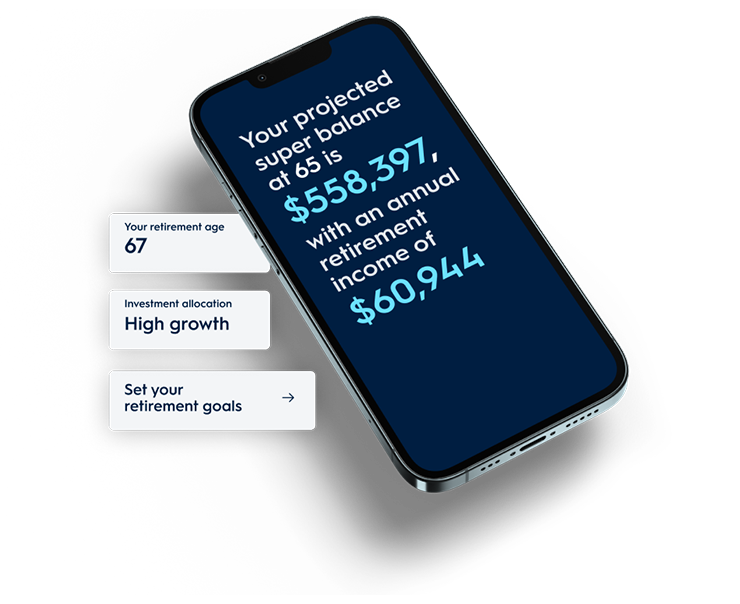
If you want to see how the Lifetime feature could boost your future retirement, AMP’s Retirement Simulator can show you.