





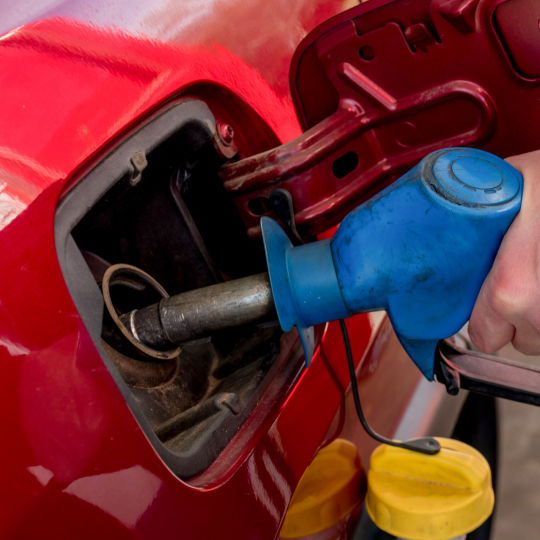
- Fuelshock accelerating cost pain for tradies on multiple fronts
- Tradies in survival mode as fixed price contracts lock in losses
- Consumers wearing the added pain amid their own pressures
- AMP Bank GO’s 10% fuel cashback aims to help tradies stay on the road
AMP Bank GO analysis1 finds if recent diesel price increases were sustained until the end of June, the added fuel bill across Australia’s construction workforce alone could approach half a billion dollars a year. The average diesel price for April is roughly 70% higher than in February, even with the cut to the fuel excise, representing a 25% increase to fuel costs so far this year.
But this only part of the problem, with the fuel crisis adding further pressure across freight, delivery and the supply chain – driving up the cost of basic building materials.
Locked in losses
Fuel prices surged in a matter of days, but for tradies on fixed-price contracts, the jobs they're completing today were quoted weeks or months ago.
A growing number of tradies say they’re being forced into impossible choices: absorb costs they can’t afford, delay work, or risk customer backlash by raising prices.
Justin Bartlett, owner Quick Plumbing Solutions, is finding it tough on multiple fronts:
"I took on a second apprentice in January because I had the work. Since then, four of my five big jobs have been shelved. Now I'm surviving on whatever's left - the small jobs with no profit - while fuel costs and two interest rate rises have hit at the same time. It's only going to get worse."
Michael Ryan, owner of Landscaping By Design explained how the fuel price surge is coming straight off his bottom line:
"In just 30 days, the fuel crisis has added to our overheads, and because we're locked into fixed-price contracts, we can't pass a cent of that on.
“For a Sydney landscaping business running excavators and trucks across multiple sites every single day, that's a hit that goes straight to our bottom line. And that's just the cost of fuel alone. We're still bracing ourselves for the flow on impact to the price of supplies from all our wholesalers, that bill is yet to come."
Jonno McCartney, Managing Director, ProLink Tradegroup, is feeling the pressure of cost increases:
“I built this business with the vision of creating a trusted network of tradies that could take on anything. What we’ve seen since the conflict began is a real tightening in confidence. Clients are delaying decisions, projects are slowing and the rising cost of fuel and supplies is putting pressure on operating costs across the board. Every increase at the pump flows through to getting to jobs, freight and materials, and that impacts small businesses like ours. The work hasn’t disappeared, but the cost of doing business has risen significantly and that pressure is being felt.”
Stef van den Berg, builder on Sydney's Northern Beaches, is facing cancelled jobs and has no choice but to pass through cost increases or go under:
"I've been building on the Northern Beaches for 30 years and I cannot remember it ever being this bad. I hired a first-year apprentice earlier this year, within weeks the jobs were cancelled, and I had to let him go almost straight away. In three decades, I've never had to do that.
"Before COVID I had 15 guys. Now there are five of us, one big job since last year, and there's just nobody ringing. Even the architects say they've never seen it this quiet.
"If I didn't pass the cost increases on, my business would have gone under by now. But the moment you do, customers pull the pin."
Supporting small businesses through the fuel crunch
As cost pressures mount, AMP Bank GO is stepping in with practical support, launching a fuel cashback offer designed to ease cash flow pressure for tradies and small business owners facing unavoidable fuel costs.
For a limited time, AMP Bank GO is offering 10% cashback on fuel at most service stations when purchased with an AMP Bank GO Everyday Business Account debit card – giving up to $100 cashback per month in May and June.
The offer is available for existing customers, and new customers who apply by 15 May 2026.
Learn more: AMP Bank GO Business Fuel
John Arnott, Director, AMP Bank GO said that tradies, and small businesses right across Australia, are feeling the effects of the fuel crisis.
“Tradies and service providers are trapped between rising costs and customers already under cost-of-living pressure.
“AMP Bank GO is stepping in with real help for small businesses being smashed by fuel prices.”
“Our offer is about helping businesses stay on the road while fuel prices remain unpredictable.
What small businesses can do now
Practical steps owners could take while volatility remains high:
1. Separate and track key operating costs
Split out fuel, energy and vehicle costs so you can see pressure building early –to help identify rising costs before they escalate. Where possible, build a modest buffer to absorb short term spikes.
2. Prioritise cashflow, not just profit
When margins tighten, speed matters. Faster invoicing, shorter payment terms and quicker collections can be just as powerful at protecting your business than cost cutting alone.
3. Treat every fill up like a purchase decision
The ACCC urges motorists to shop around. Use fuel comparison apps, regional pricing tools, stack discounts where you can – including offers like AMP Bank GO’s fuel cashback – to claw back savings on a cost you can’t avoid.
About the fuel cashback offer
Offer available to Australian businesses with an ABN or ACN holding an AMP Bank GO Everyday Business Account. New customers must apply for an AMP Bank GO Everyday Business Account before 15 May 2026.
Cashback is calculated at 10% of Eligible Transactions made from 1 May to 30 June. Eligible Transactions are settled debit card purchases of fuel made using an AMP Bank GO Everyday Business Account debit card at most service stations and as determined by merchant category codes. Eligible Transactions are based on information provided by merchants and payment networks, which is outside AMP Bank’s control. Some transactions may be excluded. Cashback is capped at AUD$100 per customer for the months of May and June 2026. A maximum cashback of AUD$200 applies.
For terms and conditions of the cashback offer, see AMP’s website.
Important information
The product issuer and credit provider is AMP Bank Limited ABN 15 081 596 009, AFSL and Australian credit licence 234517. This information is provided by AMP Bank Limited. Read our Financial Services Guide available at amp.com.au/fsg for information about our services, including the fees and other benefits that AMP companies and their representatives may receive in relation to products and services provided to you. For more information about the Everyday Business Account, visit AMP’s website. A target market determination for these products is available here.
AMP Bank is a member of the Australian Banking Association (ABA) and is committed to the standards in the Banking Code of Practice.
Information is correct as at 04/05/26.
[1] Methodology: Based on the Australian Institute of Petroleum data, assuming national average diesel prices stay at the current level of 275.0c/l until end of June as opposed to the pre-war average of 182.3c/l, , average annual light commercial vehicle travel of 16,700 km, fuel use of 7.4L/100km, and Australia’s 1.37 million construction workers as a proxy for the road-reliant construction workforce. Assumes one vehicle per worker. Sources: AIP, Bloomberg, ACCC fuel monitoring; ABS motor vehicle census/travel data; vehicle fuel consumption benchmark; ABS labourforce data.